 February 2024 in “PloS one”
 Tofacitinib and adalimumab are promising treatments for cicatricial alopecia with few side effects.
 January 2024 in “International journal of advanced biochemistry research”
 The dog fully recovered from demodicosis after treatment with Bravecto and supportive care.
 December 2023 in “International Journal of Advanced Research in Science, Communication and Technology”
 A reliable method was created to measure Minoxidil and Finasteride in a solution.
 December 2023 in “Acta Facultatis Medicae Naissensis”
 Cosmeceuticals are important for managing skin issues during the COVID-19 pandemic.
 November 2023 in “Berkala Ilmu Kesehatan Kulit dan Kelamin/Berkala ilmu kesehatan kulit dan kelamin (Periodical of dermatology and venerology)”
 A dermoscope helps accurately tell apart Pityrosporum folliculitis and Acne vulgaris.
 October 2023 in “Journal of Drug Delivery and Therapeutics”
 SANG5 niosomal gel effectively treats acne.
 August 2023 in “Journal of Knowledge Learning and Science Technology ISSN 2959-6386 (online)”
 New technologies help better understand and treat inflammatory skin diseases.
 June 2023 in “International Journal for Research in Applied Science and Engineering Technology”
 Emulgel improves skin delivery of various drugs better than traditional methods.

More research is needed to confirm the potential of various treatments, including Helichrysum plicatum, vitamins, bromelain, personalized medications, hydrogels, and bacteriophage therapy.
 March 2023 in “Scholars international journal of obstetrics and gynecology”
 PCOS is a complex condition that affects women's hormonal balance and metabolism, requiring lifestyle changes and medical management.
 January 2023 in “Postępy Dermatologii i Alergologii”
 Azelaic acid treats acne, rosacea, and hyperpigmentation with minimal side effects.
 July 2021 in “Journal of dermatology research and therapy”
 Using combined treatments can help manage acne by targeting the bacteria and skin changes that cause it.
 April 2021 in “BMJ Case Reports”
 Accurate diagnosis of pseudolymphomatous folliculitis is crucial to avoid mistaking it for more serious conditions.
Vaccination is crucial for public health, but anti-vaccine movements are a concern.
 December 2020 in “Skin appendage disorders”
 A young man with an unusual type of scarring hair loss suggests a possible new variant of a known scalp condition.

Spironolactone may be a better acne treatment for adult women than antibiotics.

The document is a detailed guide on skin conditions and treatments for dermatologists.
 August 2019 in “Journal of The American Academy of Dermatology”
 RV3466F lotion significantly reduces hair loss and improves acute telogen effluvium.

Low-dose sorafenib can cause severe facial acne, treatable with topical medication.
 January 2019 in “Springer eBooks”
 Acne can appear or persist in adulthood due to hormonal changes, external factors, or substance use, and requires appropriate treatment.
 January 2019 in “Advances in Environmental Biology”
 Propionibacterium acnes contributes to acne and antibiotic resistance, needing new treatments.
 October 2018 in “Springer eBooks”
 The document concludes that various hair disorders have different treatments, including medication, surgery, and addressing underlying causes.
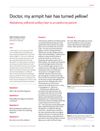
A 15-year-old boy's smelly, yellow armpit hair improved with clindamycin treatment.
 January 2018 in “Our Dermatology Online”
 Trichomycosis axillaris is a treatable bacterial infection of underarm hair.
 January 2018 in “Springer eBooks”
 The document says that early treatment of Acne Vulgaris is important to prevent scarring and that adult onset acne is common in women, often due to hormonal imbalances.
 January 2018 in “Elsevier eBooks”
 The document concludes that proper diagnosis and treatment of follicular disorders are crucial, with specific treatments for conditions like acne, drug-induced eruptions, and rosacea.
 September 2017 in “Pediatric Dermatology”
 The document concludes that an experimental drug may help wound healing in Epidermolysis Bullosa, links Hydroa vacciniforme to EBV, discusses diagnosing hair loss disorders, finds many children with eczema have allergies, reviews the safety of a skin medication in children, notes side effects of a Duchenne's treatment, and identifies a marker for pediatric mastocytosis.
 April 2017 in “Journal of Investigative Dermatology”
 Most patients with cutaneous dermatomyositis either improved or remained stable over 3.5 years.
 April 2017 in “Journal of Investigative Dermatology”
 Laser treatment may help with hair growth in some people with frontal fibrosing alopecia, but results vary and the exact way it works is unclear.
 April 2017 in “Journal of Investigative Dermatology”
 People with hidradenitis suppurativa who are more resilient tend to have better quality of life and less anxiety and depression.