 August 2026 in “Cosmetics”
 Biotics can help reduce acne and scalp issues, but more research is needed.
 August 2021 in “Journal of medical science and clinical research”
 An infant with seizures and hair loss was diagnosed with biotinidase deficiency and treated successfully with biotin.
January 2024 in “Editora In Vivo eBooks” A dog had a fungal skin infection that can also affect humans.
 November 2023 in “Journal of plant nutrition and soil science”
 Boron deficiency in maize affects leaf boron levels and nutrient uptake differently depending on root hair presence and soil type.
 October 2022 in “Gadua Journal of Pure and Allied Science”
 Terbinafine is the most effective treatment for tinea capitis, a scalp infection often confused with other conditions.
1 citations
,
September 1993 in “Archives of Disease in Childhood” Biotinidase deficiency can be easily diagnosed and treated with biotin to prevent serious harm.
 10 citations
,
January 2013 in “International journal of trichology”
10 citations
,
January 2013 in “International journal of trichology” A woman's scalp nodules were successfully treated with antifungal and anti-lice medications, revealing a rare case of mixed piedra infection.
January 2025 in “Veterinary Record Case Reports” The dog's skin condition improved quickly with treatment and did not return.
 January 2024 in “International Journal of Advanced Biochemistry Research”
 Staphylococcus in dogs with skin infections is most sensitive to Linezolid.
 December 2021 in “Journal of clinical images and medical case reports”
 Moth-eaten alopecia is linked to various skin diseases and requires early treatment to prevent worsening.
89 citations
,
January 2020 in “PubMed” Early detection and biotin treatment improve outcomes for biotinidase deficiency.
Four bacteria from the lab were found to be resistant to selenium.
4 citations
,
December 2017 in “Journal of zoo and wildlife medicine” Hormonal changes during the reproductive cycle may cause seasonal skin problems in captive female fossas.
 June 2024 in “Infection and Drug Resistance”
 An adult woman with scalp infection recovered after antifungal treatment, with no return of symptoms.
82 citations
,
May 2010 in “PLoS neglected tropical diseases” Secondary syphilis in Cali, Colombia, shows high Treponema pallidum presence and challenges in early diagnosis, needing better public health strategies.
December 2019 in “Saintika Medika” A woman with lupus also developed a severe skin condition linked to a genetic factor.
January 2014 in “ACTA SCIENTIAE VETERINARIAE” The cat's skin condition was resistant to treatment and did not improve.
 September 2024 in “Cermin Dunia Kedokteran”
 Improving medical training is key to eradicating frambusia by 2030.
 April 2017 in “Journal of Investigative Dermatology”
 SB414 may be an effective treatment for atopic dermatitis by reducing swelling and bacterial infection.
13 citations
,
August 1982 in “PubMed” Zinc deficiency causes skin issues and hair loss, treatable with zinc supplements.
 February 2025 in “Buletin Veteriner Udayana”
 The dog's scabies was successfully treated, leading to improved symptoms and hair regrowth.
 November 2023 in “Jundishapur journal of health sciences”
 Better training and awareness are needed to properly diagnose and treat tinea favosa in immigrant populations.
41 citations
,
April 1989 in “Experimental and Applied Acarology”  August 2021 in “Research Square (Research Square)”
 Borneol Essential Oil could be a natural and safe acne treatment.
21 citations
,
December 2014 in “Clinics in dermatology” Squaric acid dibutylester effectively treats alopecia areata.
 July 2023 in “New phytologist”
 The BUZZ gene is important for root hair growth and overall root structure in the plant Brachypodium distachyon.
 July 2023 in “Jurnal Ilmu Kesehatan Hewan”
 Sulfur-based treatments combined with simparica effectively treat scabies in puppies.
June 2025 in “Formosa Journal of Sustainable Research” Mangkokan leaf extract can fight bacteria and may help prevent hair loss and treat infections.
July 2023 in “International Journal of Molecular Sciences” Trapa bispinosa Roxb. extract may help reduce prostate size and cell growth in BPH.
 22 citations
,
December 2003 in “Veterinary clinical pathology”
22 citations
,
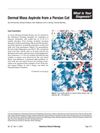
December 2003 in “Veterinary clinical pathology” The Persian cat has a skin infection caused by a fungus, treatable with antifungal medication.