8 citations
,
January 2017 in “Korean Journal of Physiology and Pharmacology” Pimecrolimus boosts melanin production and movement of skin pigment cells.
![Influence of FHIT on Benzo[a]pyrene-Induced Tumors and Alopecia in Mice: Chemoprevention by Budesonide and N-Acetylcysteine](/images/assets/f8f56777-f891-4879-8c45-c87d6aa82563/small/35499.jpg) 24 citations
,
May 2006 in “Proceedings of the National Academy of Sciences of the United States of America”
24 citations
,
May 2006 in “Proceedings of the National Academy of Sciences of the United States of America” Budesonide and N-acetylcysteine reduced tumors and alopecia in mice, regardless of FHIT gene status.
Baricitinib shows promise for treating alopecia areata with mild side effects.
 3 citations
,
January 2017 in “Yonsei Medical Journal”
3 citations
,
January 2017 in “Yonsei Medical Journal” Blocking 11β-HSD1 can lessen the harmful effects of glucocorticoids on hair growth cells.
May 2026 in “British Journal of Clinical Pharmacology” Hair analysis has potential but is currently limited for monitoring medication adherence.
25 citations
,
October 2010 in “Journal of Hepatology” Budesonide alone is less effective than standard treatment for autoimmune hepatitis.
9 citations
,
February 2002 in “International Journal of Dermatology” The patient's symptoms improved with treatment but recurred when the steroid dose was reduced, requiring ongoing therapy.
 September 2024 in “BMJ Case Reports”
 An adult had a rare scalp infection in the forehead area, treated successfully with itraconazole.
4 citations
,
January 2022 in “Dermatology Research and Practice” Methotrexate alone is as effective and safe as combining it with prednisolone for treating Lichen planopilaris.
September 2017 in “BAUST Journal”  September 2023 in “Journal of The American Academy of Dermatology”
 Reducing the dose of Baricitinib to 2mg led to a loss of hair regrowth benefits in nearly half of the patients by Week-104.
 1 citations
,
September 2023 in “Journal of the American Academy of Dermatology”
1 citations
,
September 2023 in “Journal of the American Academy of Dermatology” Baricitinib significantly improves hair regrowth in severe alopecia areata.
2 citations
,
January 2010 in “Side effects of drugs annual” Dermatological drugs and cosmetics can cause serious side effects like cancer, allergies, and heart issues.
June 2026 in “Clinical Cosmetic and Investigational Dermatology” High-dose baricitinib improved severe alopecia areata in most patients without severe side effects.
December 2025 in “DiRROS repository (University of Maribor)” This study assessed the effectiveness and safety of baricitinib, an oral JAK inhibitor, in treating severe alopecia areata (AA) over a 52-week period. Involving 87 patients with a mean age of 29.84 years, the study found that 37.20% of participants achieved a Severity of Alopecia Tool (SALT) score of ≤ 20, indicating significant hair regrowth. The mean baseline SALT score was 77.07%, and a significant reduction in scores was observed by the end of the study (p < 0.001). Additionally, 72.40% of patients experienced mild or no adverse events, with no serious adverse events reported. The findings suggest that baricitinib is both effective and well-tolerated for long-term management of severe AA.
July 2023 in “Indian Journal of Endocrinology and Metabolism” An 11-year-old girl's hair regrew after treating her thyroid condition with carbimazole.
 January 2025 in “Repository of the Academy's Library (Library of the Hungarian Academy of Sciences)”
 Baricitinib is effective and safe for treating severe alopecia areata.
 23 citations
,
September 2017 in “Journal of the American Academy of Dermatology”
23 citations
,
September 2017 in “Journal of the American Academy of Dermatology” Apremilast did not work for treating severe alopecia areata.
 September 2024 in “Journal of the American Academy of Dermatology”
 Baricitinib helps long-term hair regrowth in severe alopecia areata patients.
January 2024 in “Case Reports in Endocrinology” Cortisone tapering may help improve severe myasthenia gravis and alopecia areata after thymectomy.
39 citations
,
January 1980 in “Dermatology” Cyproterone acetate was effective in treating acne, hirsutism, and alopecia with few side effects.
 10 citations
,
February 2019 in “BMC pediatrics”
10 citations
,
February 2019 in “BMC pediatrics” An infant with scalp fungus was cured after extended treatment with antifungal medication.
August 2022 in “Journal of Investigative Dermatology” Baricitinib reduces inflammation and mitochondrial damage in skin cells.
 2 citations
,
March 2023 in “Experimental neurology”
2 citations
,
March 2023 in “Experimental neurology” Pregnenolone might help manage movement issues caused by Parkinson's disease treatment without reducing the medicine's effectiveness.
6 citations
,
June 2009 in “Clinical and Experimental Dermatology” Topical tacrolimus reduces certain growth factors in hair follicles.
 October 2022 in “The Journal of Family Practice”
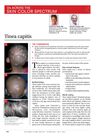
 Tinea capitis is a scalp fungal infection in children that can cause hair loss, scaling, and other symptoms.

Tinea capitis in adults often leads to misdiagnosis or delayed diagnosis due to atypical symptoms, requiring careful examination for proper treatment.
 97 citations
,
November 1986 in “Journal of Steroid Biochemistry”
97 citations
,
November 1986 in “Journal of Steroid Biochemistry” Antiandrogens affect androgen-dependent body functions and are used for various medical conditions, with some risks like fetus feminization, but new forms like 17α-propylmesterolone show promise for acne without systemic effects.
 March 2026 in “Indian Journal of Dermatology”
 Baricitinib can cause excessive hair growth.
 January 2018 in “SOJ microbiology & infectious diseases”
 Etanercept, a psoriasis treatment, caused hair loss in a patient.