48 citations
,
March 2007 in “The journal of investigative dermatology/Journal of investigative dermatology” Retinoic acid production and signaling in hair follicles are regulated by location and timing, affecting hair growth and cycling.
 January 1990 in “Irish Journal of Medical Science (1971 -)”
 Retinoids are important for treating skin conditions but should be used with caution due to serious side effects and risks during pregnancy.
87 citations
,
January 1996 in “Journal of cellular biochemistry” Over 30 potential cancer prevention treatments are being tested, with some showing promise in early research.
48 citations
,
August 1998 in “Journal of the American Academy of Dermatology” Retinoids help manage skin conditions in black individuals.
 January 2023 in “Journal for ReAttach Therapy and Developmental Diversities”
 Carthamus oxyacantha may help treat BPH by inhibiting 5α-reductase.
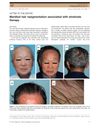 9 citations
,
July 2016 in “The Journal of Dermatology”
9 citations
,
July 2016 in “The Journal of Dermatology” An 82-year-old man's white hair regained color after taking etretinate for psoriasis.
24 citations
,
July 1994 in “Journal of Investigative Dermatology” January 1987 in “Toxicological sciences” SMR-2 and SMR-6 are much more toxic than retinoic acid, causing severe symptoms and organ damage in mice.
 October 2024 in “Asian Journal of Pharmaceutical and Clinical Research”
 Topical methotrexate is more effective and as safe as betamethasone for treating alopecia areata.
 3 citations
,
March 2016 in “Phytotherapy Research”
3 citations
,
March 2016 in “Phytotherapy Research” The new compound was more effective than finasteride in reducing markers of hair loss and prostate issues in cell tests.
24 citations
,
January 2023 in “Cancer Research” AMPK activation may reduce melanoma risk in red-haired individuals.
36 citations
,
July 2017 in “Journal of controlled release” A new method allows for controlled, long-lasting delivery of retinoic acid through the skin with fewer side effects.
39 citations
,
January 2017 in “Dermatologic Therapy” Topical calcipotriol may help treat alopecia areata, especially in those with low vitamin D.
July 2025 in “JAAD Case Reports”  November 2022 in “Journal of Investigative Dermatology”
 A new molecule was found to be a safe and effective skin lightener and anti-aging product.
1 citations
,
January 1980 in “Side effects of drugs annual” Taking too much vitamin A can cause health problems like bone pain and hair loss.
July 2025 in “Clinical Medicine” Oral betamethasone works faster than oral tofacitinib for hair regrowth in alopecia areata.
 5 citations
,
February 2024 in “Clinical Pharmacokinetics”
5 citations
,
February 2024 in “Clinical Pharmacokinetics” A 50 mg daily dose of ritlecitinib is effective for alopecia areata, with temporary treatment breaks up to 6 weeks not affecting results.
The treatment was not recommended due to limited effectiveness and significant side effects.
July 2024 in “Journal of Investigative Dermatology” 39 citations
,
January 1977 in “Dermatology” The treatment cleared psoriasis in some patients but caused side effects in most.
May 2003 in “Journal of clinical oncology” 143 citations
,
May 2002 in “PubMed” LGD1069 effectively prevents breast tumors in mice without toxicity.
Retinoids can help treat skin pigmentation disorders by affecting melanin production.
1 citations
,
April 2010 in “Cancer Research” WYE-130600 may cause skin thickening and irritation.
 11 citations
,
April 2020 in “Journal of Dermatological Treatment”
11 citations
,
April 2020 in “Journal of Dermatological Treatment” Taking oral isotretinoin with creams worked better for treating a type of hair loss than creams alone.
67 citations
,
September 2001 in “American Journal Of Pathology” Inhibiting ODC can prevent UV-induced skin cancer.
September 2019 in “Journal of Investigative Dermatology” PCE-DP brightens skin and promotes hair growth by enhancing cell growth and reducing melanin uptake.
9 citations
,
May 2002 in “PubMed” Retinoic acid affects skin and hair health by working with specific receptors, and its absence can lead to hair loss and skin changes.
4 citations
,
May 2018 in “Türk pediatri arşivi : İstanbul çocuk kliniği dergisi” Oral retinoic acid effectively treated collodion baby, with hair loss as the main side effect.