 4 citations
,
August 2011 in “Aktuelle Dermatologie”
4 citations
,
August 2011 in “Aktuelle Dermatologie” Topical melatonin is a safe treatment that may reduce hair loss in people with androgenetic alopecia.
 1 citations
,
May 2014 in “European Journal of Inflammation”
1 citations
,
May 2014 in “European Journal of Inflammation” A lotion with minoxidil, hydrocortisone butyrate, and 17a-estradiol can improve or stabilize Frontal Fibrosing Alopecia in some cases, but there's no universally-accepted treatment yet.
1 citations
,
April 2025 in “Drug Delivery and Translational Research”  January 2022 in “Turk Dermatoloji Dergisi”
 Topical procyanidin B2 significantly increases hair count and is a safe treatment for male pattern baldness.
 18 citations
,
March 2014 in “Drug Development and Industrial Pharmacy”
18 citations
,
March 2014 in “Drug Development and Industrial Pharmacy” New gel formulas without ethanol and propylene glycol, containing a minoxidil-methyl-β-cyclodextrin complex, have been created for treating hair loss.
 13 citations
,
January 2020 in “Nanoscale”
13 citations
,
January 2020 in “Nanoscale” Finasteride and baicalin in phospholipid vesicles effectively promote hair growth and increase follicle count.
 September 1987 in “International Journal of Dermatology”
 Dr. Baral observed that applying minoxidil can cause hair to grow in areas other than where it was applied.
April 2022 in “UNESP Institutional Repository (São Paulo State University)” Using both topical minoxidil and oral biotin together significantly boosts hair growth and density.
26 citations
,
March 1994 in “Archives of Dermatology” 2% topical minoxidil effectively promotes hair growth in women with androgenetic alopecia.
1 citations
,
June 2021 in “International journal of pharmaceutical compounding” Minoxidil in FOAMIL is stable for at least 180 days at various concentrations.
 145 citations
,
November 2017 in “Journal of The European Academy of Dermatology and Venereology”
145 citations
,
November 2017 in “Journal of The European Academy of Dermatology and Venereology” Use minoxidil for hair loss treatment; assess results after 6 months.
January 2011 in “The Internet Journal of Pharmacology” Minoxidil is cost-effective for regrowing hair on the scalp's top but not the front, requiring ongoing use.
 January 2025 in “International Journal of Research and Innovation in Applied Science”
 The developed glycerosome gel improves minoxidil delivery for better alopecia treatment.
1 citations
,
September 2025 in “Eye” Certain drugs can cause eyelid inflammation, so doctors should monitor and educate patients on eyelid care.
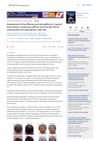 November 2023 in “Journal of Cosmetic Dermatology”
 The topical treatment with caffeine and Procapil 3% improved male pattern hair loss and was well tolerated after 12 weeks.
 219 citations
,
March 2004 in “Journal of The American Academy of Dermatology”
219 citations
,
March 2004 in “Journal of The American Academy of Dermatology” 5% and 2% minoxidil solutions effectively promote hair growth and reduce hair loss, with 5% being slightly more effective but having more side effects.
February 2026 in “International Journal of Pharmaceutics”  October 2025 in “Frontiers in Medicine”
 The minoxidil-finasteride combination is more effective for hair growth than minoxidil alone.
January 2026 in “Dermatologic Therapy” FOL100 lotion is safe and effective for increasing hair growth in men with male pattern baldness.
 11 citations
,
January 1961 in “Archives of dermatology”
11 citations
,
January 1961 in “Archives of dermatology” Corticosteroid injections helped eyebrow hair regrow in men with alopecia areata.
 October 2007 in “Inpharma Weekly” September 2010 in “Reactions weekly”
 The combination of tretinoin, minoxidil, and betamethasone valerate may cause severe scalp inflammation.
 16 citations
,
March 2017 in “Journal of inclusion phenomena and macrocyclic chemistry”
16 citations
,
March 2017 in “Journal of inclusion phenomena and macrocyclic chemistry” Minoxidil mixed with 2-hydroxypropyl-β-cyclodextrin in water can improve hair growth more than minoxidil alone.
 26 citations
,
March 1985 in “International Journal of Dermatology”
26 citations
,
March 1985 in “International Journal of Dermatology” Minoxidil helps hair growth, but results vary.
118 citations
,
January 1992 in “Experientia” October 2024 in “International Journal of Pharmaceutics” The finasteride patch effectively treats hair loss by enhancing skin absorption.
May 2013 in “DOAJ (DOAJ: Directory of Open Access Journals)” The multimodal microemulsion with minoxidil, diclofenac, and tea tree oil is more effective for hair growth than minoxidil alone.
 September 2022 in “Journal of The American Academy of Dermatology”
 Baricitinib was effective in regrowing eyebrow and eyelash hair in patients with severe alopecia areata.
April 2011 in “The FASEB Journal” Topical Minoxidil is cost-effective for managing baldness but requires continuous use.
 123 citations
,
February 2002 in “Journal of The American Academy of Dermatology”
123 citations
,
February 2002 in “Journal of The American Academy of Dermatology” Minoxidil can cause skin allergy; use alternative solvents or treatments if allergic.