1 citations
,
October 2008 in “PubMed” China made major progress in creating artificial skin for better burn treatment.
May 2010 in “Europe PMC (PubMed Central)” Near-infrared probes can safely and effectively image cysteine protease activity for disease diagnosis.
 5 citations
,
April 2021 in “Biomedicines”
5 citations
,
April 2021 in “Biomedicines” The engineered skin substitute helped grow skin with hair on mice.
 1 citations
,
January 2024 in “Theranostics”
1 citations
,
January 2024 in “Theranostics” Exosomes show promise for future tissue regeneration.

Forensic hair analysis for drugs is now more reliable and accurate.
73 citations
,
April 2006 in “BioTechniques” Protein microarrays are highly sensitive tools useful for disease diagnosis and studying proteins.
11 citations
,
April 2023 in “Frontiers in Pharmacology” Integrating biological networks improves drug repurposing and ADR prediction.
 42 citations
,
September 2017 in “Advances in protein chemistry and structural biology”
42 citations
,
September 2017 in “Advances in protein chemistry and structural biology” Surface Plasmon Resonance is a useful tool for studying protein interactions and has potential for future technological advancements.
117 citations
,
September 2003 in “Molecular & cellular proteomics” The technology can help diagnose and subtype autoimmune diseases by identifying specific autoantibodies.
12 citations
,
April 2023 in “Molecular Pharmaceutics” A new patch can deliver stable antibodies over time for potential HIV treatment.
9 citations
,
March 2017 in “Journal of Visualized Experiments” The assay effectively identifies compounds that affect immune cell activation.
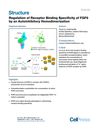 24 citations
,
July 2017 in “Structure”
24 citations
,
July 2017 in “Structure” FGF9 controls which receptors it binds to through a process where two FGF9 molecules join, and changes in FGF9 can lead to incorrect receptor activation.
10 citations
,
November 2017 in “Letters in drug design & discovery” Researchers identified promising inhibitors for the BRD4 protein, including finasteride and amentoflavone.
 40 citations
,
October 2009 in “Journal of Biomedical Nanotechnology”
40 citations
,
October 2009 in “Journal of Biomedical Nanotechnology” Pyrene excimer nucleic acid probes are promising for detecting biomolecules accurately with potential for biological research and drug screening.
March 2023 in “MDPI eBooks”  14 citations
,
January 2012 in “Proteins”
14 citations
,
January 2012 in “Proteins” Electrostatic interactions mainly stabilize the binding of peptides to hair keratin.
 January 2024 in “Biotechnology advances”
 Bioassays help find useful compounds in nature for making medicines, supplements, and cosmetics.
 April 2019 in “Molecular Informatics”
 Researchers developed reliable models to predict how well certain compounds bind to androgen receptors, emphasizing the importance of atomic electronegativity.
 23 citations
,
October 2012 in “ChemistryOpen”
23 citations
,
October 2012 in “ChemistryOpen” Probe detects finasteride with high selectivity and low detection limit.
6 citations
,
November 1977 in “International Journal of Legal Medicine” Human hair contains a substance that shows blood group A activity.
 18 citations
,
April 2001 in “Bioorganic & Medicinal Chemistry Letters”
18 citations
,
April 2001 in “Bioorganic & Medicinal Chemistry Letters” The nature of the side chain in RU 58841 derivatives greatly affects its AR affinity, with the N-(iodopropenyl) derivative 13 showing the highest AR binding affinity, suggesting its potential for developing high-affinity radioiodinated AR radioligands.
 26 citations
,
August 2016 in “ACS Applied Materials & Interfaces”
26 citations
,
August 2016 in “ACS Applied Materials & Interfaces” A boronic acid copolymer quickly forms cell clusters, useful for tissue and tumor modeling.
 April 2024 in “JMR. Journal of molecular recognition/Journal of molecular recognition”
 Hydrophilic carbon dots cause one protein to clump more and prevent another from clumping.
 8 citations
,
July 2018 in “Analytical sciences”
8 citations
,
July 2018 in “Analytical sciences” Using 5-butylpicolinate esters improves the sensitivity and reliability of detecting testosterone and dihydrotestosterone in saliva.
 6 citations
,
February 2025 in “Scientific Reports”
6 citations
,
February 2025 in “Scientific Reports” MEGA PROTAC improves prediction and ranking of protein complexes better than existing methods.
 March 2011 in “European Urology Supplements”
 The document concludes that a new biosensor can efficiently detect prostate cancer cells and that standardized referrals help find significant cancers effectively.

Polydopamine is promising for personalized medicine and biomedical technology due to its strong adhesion and biocompatibility.

AnnoPharma effectively identifies substances causing adverse drug reactions in medical abstracts.
22 citations
,
August 2015 in “PloS one” Keratin from hair binds well to gold and BMP-2, useful for bone repair.
 1 citations
,
January 2026 in “Frontiers in Cell and Developmental Biology”
1 citations
,
January 2026 in “Frontiers in Cell and Developmental Biology” AI improves biomaterial design by making it faster, cheaper, and more effective for personalized medicine.