 2 citations
,
March 2023 in “Annals of Translational Medicine”
2 citations
,
March 2023 in “Annals of Translational Medicine” The analysis shows the U.S. leads in tissue expansion research, mainly for breast reconstruction, with a slightly higher complication rate when using acellular dermal matrix.
May 2025 in “The Open Biomedical Engineering Journal” Adipose tissue and PRP together improve healing and surgery outcomes but need more research for consistent use.
August 2023 in “Fermentation” Scientists can use engineered microbes to make L-aspartate and related chemicals, but there's still room to improve their efficiency.
 January 2022 in “Sustainable development goals series”
 The document concludes that significant investment in agricultural innovation is necessary to achieve global food security and nutrition.
February 2009 in “Journal of the American Academy of Dermatology” May 2005 in “Journal of the American Academy of Dermatology”  July 2026 in “Stem Cell Research & Therapy”
 Growth-factor-based platelet mimetics could offer more consistent and reliable results for treating alopecia than traditional PRP.
July 2024 in “Journal of Investigative Dermatology” Bioengineered skin models aging well, useful for studying aging and testing treatments.
 April 2016 in “Journal of Investigative Dermatology”
 Scientists have found a way to grow hair follicles from human cells in a lab, which could help treat hair loss and skin damage.
8 citations
,
December 2017 in “Current Opinion in Cell Biology” 3D bioengineering can potentially regenerate complex oral organs for future therapies.
April 2017 in “The journal of investigative dermatology/Journal of investigative dermatology” Researchers developed a method to grow human hair follicles using 3D-printed skin models and modified cells.
 February 2024 in “Tissue & Cell”
 New tissue engineering strategies show promise for regenerating human hair follicles, which could improve hair loss treatments.
44 citations
,
January 2011 in “Journal of biotechnology” Scientists recreated human hair follicles in the lab that can grow hair.
 February 2024 in “Biomedical materials”
 Scientists created a lab-grown hair follicle model that behaves like real hair and could improve hair loss treatment research.
 November 2022 in “Bioengineering”
 The method can test hair growth products using a lab-made hair-like structure that responds to known treatments.
 June 2020 in “Journal of Investigative Dermatology”
 Scientists successfully grew mini hair follicles using human skin cells, which could help treat baldness.
7 citations
,
January 2019 in “Methods in molecular biology” Engineered skin with hair follicles can improve burn treatments.
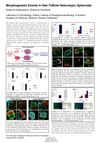
Researchers developed a method to create artificial hair follicles that may help with hair loss treatment and research.
July 2026 in “Biochemical and Biophysical Research Communications” 4 citations
,
January 2022 in “SSRN Electronic Journal” Bioprinting hair follicle germs can effectively regenerate hair and improve hair growth.
October 2022 in “Experimental Dermatology” New technologies show promise for better hair regeneration and treatments.
June 2021 in “Dermatologic Surgery” Tissue-engineered grafts can help regenerate hair follicles.
 15 citations
,
April 2014 in “Experimental Dermatology”
15 citations
,
April 2014 in “Experimental Dermatology” Scientists developed a system to study human hair growth using skin cells, which could help understand hair development and improve skin substitutes for medical use.
16 citations
,
November 2020 in “In Vitro Cellular & Developmental Biology - Animal” Microfollicles can effectively model human hair follicles for research and testing.
July 2026 in “Acta Biomaterialia” A method was developed to create early-stage hair structures in lab-grown skin.
January 1974 in “Almogaren” A new method shows promise for regenerating hair follicles to treat hair loss.
January 2026 in “Lab on a Chip” Organoids and hair-on-chip technologies show promise for hair regeneration but face clinical challenges.
 April 2018 in “The journal of investigative dermatology/Journal of investigative dermatology”
 Researchers created a 3D-printed skin model that grew human hair when grafted onto mice by improving blood supply to the grafts.
1 citations
,
June 2022 in “bioRxiv (Cold Spring Harbor Laboratory)” Reprogramming 3D environments can create hair follicles in the lab.