Search
for
Sort by
Research
690-720 / 1000+ results
research Molecular modeling of hair keratin/peptide complex: Using MM‐PBSA calculations to describe experimental binding results
Electrostatic interactions mainly stabilize the binding of peptides to hair keratin.
research Exploring Mechanical Niches Identified by Hair Follicle Compression and How These Transduce Proliferation and Differentiation Cues in Epidermally Derived cells.
Less stiff collagen promotes higher cell growth in hair follicles.

research Structural interspecies variability of mammals' hairs
Mammal hairs have different internal structures.
research 3D Bioprinting for Engineered Tissue Constructs and Patient‐Specific Models: Current Progress and Prospects in Clinical Applications
Bioprinting is advancing towards creating personalized tissues and organs, but challenges remain for clinical use.
research 965 In search of the common mechano-chemical pathways during the regeneration of spiny (acomys cahirinus) and laboratory (mus musculus) mouse skin
Spiny mice regenerate skin better than laboratory mice due to larger hair bulges, more stem cells, and different collagen ratios.
research Analysis of Physical Properties of Bleached Hair Treated with Hair Manicure
Hair manicure improves the strength and condition of bleached hair.
research Mechanical Instability of Adherens Junctions Overrides Intrinsic Quiescence of Hair Follicle Stem Cells
Weak cell junctions disrupt hair follicle stem cell rest.
research Investigation of human hair fibers using lateral force microscopy
Hair treatments like bleaching increase friction by exposing tiny pores on the hair surface.
research Effect of Temperature and Humidity on Mechanical Properties of Rabbit Hair Fibers
Higher temperatures improve rabbit hair strength up to 50°C, but moisture weakens it.
research Thermal and mechanical transitions in keratins and their relevance for hair cosmetics
High temperatures and cosmetic processes can damage hair keratin, affecting its structure and strength.
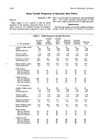
research Some Tensile Properties of Specialty Hair Fibers
Animal hair fibers like wool and mohair are strong when dry, but vicuna fibers are very brittle.
research 1469 Tissue mechanics partake in spatiotemporal patterning of wound-induced hair neogenesis in African spiny mouse
African spiny mice can regenerate skin and hair after wounds due to specific tissue mechanics.
research Mechanism research of yak hair stretching slenderization based on the changes of conformation and cell shape
Yak hair stretches mainly due to macromolecules slipping past each other.
research Cell/Tissue Microenvironment Engineering and Monitoring in Tissue Engineering, Regenerative Medicine, and In Vitro Tissue Models
Engineering the cell microenvironment is key for advancing tissue engineering and regenerative medicine.
research The Binding of Small Molecules and Polymers to Keratin and Their Effects on the Physicochemical and Surface Properties of Hair Fibers
Certain small molecules and polymers can change hair's physical properties and how it feels by affecting the bonds within the hair.
research Self-assembled monolayer enhanced support-free two-photon polymerisation for microscale kinematic pairs
A new method creates precise, stable microscale structures with reduced friction and potential for complex designs.
research Observation of different HHK groups with SEM
Different human hair keratin types have unique structures that affect how they dissolve and can be used to create self-tendons.

research Programmable viscoelastic hydrogels exhibit antimicrobial and regenerative properties to promote cell migration, wound healing, and tissue remodeling
HA-gel-dex hydrogels help heal wounds and regenerate tissue effectively.
research Wear characteristics of epoxy based hybrid composites reinforced with short hair fibers and glass micro spheres
Adding human hair fibers and glass micro-spheres to epoxy improves its wear resistance and strength.
research Optimizing Hyaluronic Acid: A Comprehensive Review of Rheological Insights for Clinical Practice
Understanding the properties of hyaluronic acid helps improve its use in facial aging treatments.
research Skin-type-dependent development of murine mechanosensory neurons
Mechanosensory neurons adapt to different skin types after birth.
research Penetration of different molecular weight hydrolysed keratins into hair fibres and their effects on the physical properties of textured hair
Different sizes of keratin peptides can strengthen hair, with smaller ones possibly increasing volume and larger ones repairing damage.
research Histologic Compatibility Investigation of Human-hair Keratin Art ificial Tendon Transplantation in the Muscle of Rabbits
Human-hair keratin artificial tendons are biocompatible and degrade well in rabbits.
research [A longitudinal elasticity study of hair from the human head in forensic medicine].
The method effectively measures hair elasticity and could be useful in forensics.
research Rational design of keratin-based injectable hydrogels for biomedical applications
Keratin-based hydrogels can be improved for medical use by adding PEG, making them more soluble and adjustable.
research Bone‐forming cells with pronounced spread into the third dimension in polymer scaffolds fabricated by two‐photon polymerization
Bone-forming cells grow well in 3D polymer scaffolds with 35 µm pores.
research Cuticle damage and the tensile properties of human hair
Cuticle damage doesn't affect hair's tensile strength; the cortex is responsible for it.
research Hair keratin molecular dynamics studies
Simulations of hair keratin help improve disease treatment and cosmetic products.
research Self-consistent field theory for the interactions between keratin intermediate filaments
Keratin filaments' elasticity is influenced by their terminal domains and surrounding medium.