 January 2025 in “Medicina”
 Advanced techniques and technologies can improve burn wound healing, but more research is needed.
 9 citations
,
April 2000 in “Plastic and Reconstructive Surgery”
9 citations
,
April 2000 in “Plastic and Reconstructive Surgery” The document concludes that appearance can be significantly improved after one hair restoration correction procedure, but often multiple operations are needed for the best results.
 January 2025 in “Journal of Fungi”
 Advanced dermoscopy techniques improve diagnosis and treatment monitoring for Kerion celsi but don't guarantee full hair regrowth.
 September 2023 in “Biomedical Optics Express”
 New imaging techniques show testosterone delays hair growth and shrinks follicles in mice, but have limited depth for viewing.
 7 citations
,
August 2015 in “Journal der Deutschen Dermatologischen Gesellschaft”
7 citations
,
August 2015 in “Journal der Deutschen Dermatologischen Gesellschaft” Scalp-to-scalp skin grafts quickly heal and hide well under regrown hair, making them good for repairing large scalp defects.
 35 citations
,
November 2010 in “Journal of Cutaneous Pathology”
35 citations
,
November 2010 in “Journal of Cutaneous Pathology” Dilated follicular infundibula and increased catagen/telogen follicles are key indicators for diagnosing alopecia areata.
December 2025 in “FEBS Open Bio” Long-term skin biopsy cultures can produce many fibroblasts that remain functional and can be reprogrammed.
 6 citations
,
June 2011 in “British Journal of Dermatology”
6 citations
,
June 2011 in “British Journal of Dermatology” People with alopecia areata have higher levels of RBP4 protein and antibodies against it.
 2 citations
,
January 2024 in “Journal of Emerging Investigators”
2 citations
,
January 2024 in “Journal of Emerging Investigators” A new algorithm effectively classifies Alopecia Areata, aiding early detection and treatment.
 16 citations
,
April 2014 in “Dermatologic Clinics”
16 citations
,
April 2014 in “Dermatologic Clinics” Dermatoscopy helps diagnose hair and scalp disorders in people with Afro-textured hair, but more research is needed for better understanding and treatment.
3 citations
,
January 2021 in “Medicinski arhiv” Trichoscopy, a hair loss evaluation technique, found that people with Androgenetic Alopecia have more thin hairs, yellow dots, and perifollicular discoloration than healthy individuals.
 January 2016 in “Elsevier eBooks”
 Trichoscopy is a key method for dermatologists to quickly and effectively diagnose hair and scalp conditions.
 10 citations
,
March 2015 in “PubMed”
10 citations
,
March 2015 in “PubMed” Scalp micropigmentation, a cosmetic tattoo technique, is a promising non-surgical treatment for hair and scalp deformities, despite potential complications.
 1 citations
,
July 2022 in “Clinical dermatology review”
1 citations
,
July 2022 in “Clinical dermatology review” Hair transplantation is an effective hair loss treatment with two main techniques, requires careful planning, and can improve beard and eyebrows appearance.
 1 citations
,
January 1999 in “Journal of the European Academy of Dermatology and Venereology”
1 citations
,
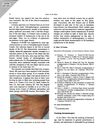
January 1999 in “Journal of the European Academy of Dermatology and Venereology” Dermatology residents need thorough training in dermatosurgery for better patient outcomes.
 96 citations
,
January 2013 in “International Journal of Trichology”
96 citations
,
January 2013 in “International Journal of Trichology” Trichoscopy is a useful, non-invasive way to diagnose different types of hair loss.
 26 citations
,
March 1986 in “Clinical and Experimental Dermatology”
26 citations
,
March 1986 in “Clinical and Experimental Dermatology” Scalp hair grows at 0.37 mm/day, forearm hair at 0.18 mm/day, and thigh hair at 0.30 mm/day, with no significant differences found in people with certain hair conditions.
15 citations
,
July 2014 in “The journal of investigative dermatology/Journal of investigative dermatology” iPSCs can help treat genetic skin disorders by creating healthy skin cells from a small biopsy.
 5 citations
,
July 1991 in “Irish Journal of Medical Science (1971 -)”
5 citations
,
July 1991 in “Irish Journal of Medical Science (1971 -)” Immunosuppressive therapy helps manage autoimmune diseases but carries risks like infection and potential for malignancy.
 April 2026 in “International Journal of Drug Delivery Technology”
 Trichoscopy is a reliable, non-invasive tool for diagnosing scalp alopecias.
 April 2017 in “Journal of Investigative Dermatology”
 The study found a link between the severity of Lichen Planopilaris seen by doctors and the details seen under a microscope, and created a new way to measure this severity.
 September 1997 in “Journal of The European Academy of Dermatology and Venereology”
 Skin lymphoproliferative disorders are hard to diagnose and often linked to systemic diseases, but most have a good prognosis with accurate diagnosis.
 7 citations
,
January 2013 in “Dermatology Research and Practice”
7 citations
,
January 2013 in “Dermatology Research and Practice” Trichoscopy is a valuable tool for diagnosing and managing hair and scalp disorders.
 1 citations
,
November 2017 in “Skin appendage disorders”
1 citations
,
November 2017 in “Skin appendage disorders” Ingrown hairs are a common feature in scarring alopecias due to follicular damage.
 October 2024 in “TURKDERM”
 Hair transplantation can lead to rare scalp complications, requiring careful follow-up and treatment.
 July 2005 in “Journal of The American Academy of Dermatology”
 Using a cotton-tipped applicator as a base for cutting sutures helps make them a uniform length and reduces the risk of skin cuts.
 January 2013 in “Dermatologic Clinics”
 Hair disorders need a holistic approach, including medical, cosmetic, and psychological support.
 36 citations
,
November 1961 in “Archives of Dermatology”
36 citations
,
November 1961 in “Archives of Dermatology” The document suggests that the traditional understanding of hair growth cycles and alopecia may be inaccurate and that blood supply plays a significant role in hair growth and loss.
 22 citations
,
March 2021 in “Journal of Cutaneous Medicine and Surgery”
22 citations
,
March 2021 in “Journal of Cutaneous Medicine and Surgery” Ultrasound is a useful, non-invasive tool in dermatology for diagnosing skin conditions and guiding treatments, but it has some limitations.
 17 citations
,
August 2019 in “Frontiers in Immunology”
17 citations
,
August 2019 in “Frontiers in Immunology” Non-invasive methods show promise for diagnosing skin diseases like psoriasis and lupus but need more research for regular use.