3 citations
,
January 2016 Certain beneficial microbes can fight fungi and help plants get nutrients.
April 2019 in “Journal of Investigative Dermatology” Alopecia Areata patients have too many Firmicutes and too few Bacteroides in their gut.
72 citations
,
July 1984 in “Journal of Investigative Dermatology”  6 citations
,
February 2023 in “Plant and Soil”
6 citations
,
February 2023 in “Plant and Soil” Bacillus subtilis strain WM13-24 helps plant root growth through volatile compounds.
 September 2018 in “Epsilon Archive for Student Projects (University of Southampton)”
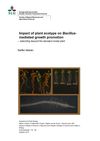
 Bacillus amyloliquefaciens can boost root hair growth in some Arabidopsis plants, potentially improving agriculture.
January 2026 in “Al-Furat Journal for Health and Medical Sciences” Enterococcus faecalis may be linked to the severity of alopecia areata.
 July 2025 in “Veterinarski arhiv”
 About 32.5% of stray cats in Bogor have a skin infection called Microsporum canis.
July 1990 in “British Journal of Dermatology”  8 citations
,
July 2024 in “PLoS ONE”
8 citations
,
July 2024 in “PLoS ONE” Botryococcus braunii's three chemical races should be reclassified as separate species.
April 2019 in “Journal of Investigative Dermatology” Gut microbiota influences the development of alopecia areata.
 13 citations
,
January 2022 in “Advances in Dermatology and Allergology”
13 citations
,
January 2022 in “Advances in Dermatology and Allergology” Alopecia areata may be linked to imbalanced gut bacteria.
January 2025 in “Bali Medical Journal” Certain bacteria are linked to female hair loss.
 November 2025 in “Jurnal Pendidikan Indonesia”
 All stray cats in the area have ectoparasite infestations.
 April 2023 in “Veterinary world/Veterinary World”
 Six types of bugs were found on goats in Bulgaria, with Linognathus stenopsis being the most common.
4 citations
,
July 2024 in “Skin Research and Technology” Certain bacteria may influence alopecia areata risk, but skin bacteria don't mediate gut-skin effects.
 September 2025 in “Media Kedokteran Hewan”
 90% of African pygmy hedgehogs in the study had fungal infections.
May 2023 in “The Journal of Immunology” BST2 is a key marker for hair loss disease alopecia areata.
September 2025 in “International Journal of Molecular Sciences” Bacteroides fragilis and Microbacterium sp. T32 may be linked to autoimmune activity in Hashimoto's thyroiditis and alopecia areata.
1 citations
,
June 2025 in “Fermentation” Lactic acid bacteria fermentation boosts the health benefits of Radix Angelica gigas.
 April 2018 in “The journal of investigative dermatology/Journal of investigative dermatology”
 Biotrinine® may be an effective treatment for chronic hair loss.
 2 citations
,
May 2022 in “Horticulturae”
2 citations
,
May 2022 in “Horticulturae” A plant protein biostimulant improved growth, photosynthesis, and nutrient content in hydroponically grown basil.
 156 citations
,
October 1996 in “Science of The Total Environment”
156 citations
,
October 1996 in “Science of The Total Environment” Tributyltin exposure causes sex changes, sterilization, and decline in the snail Ocinebrina aciculata, risking its extinction.
 193 citations
,
February 2015 in “Nature Communications”
193 citations
,
February 2015 in “Nature Communications” Fungi-produced compounds can change plant root growth.
January 1994 in “Memorial University Research Repository (Memorial University)” Oleosomes help cell growth in Sesbania rostrata nodules but don't aid nitrogen fixation.
5 citations
,
January 2021 in “Pakistan Journal of Nematology” Citrullus colocynthis is a valuable natural option for medicine and pest control.
10 citations
,
April 2017 in “Journal of Investigative Dermatology” The gut microbiome affects the development of alopecia areata.
December 2025 in “Mycoses” The study developed a successful mouse model to study skin infections, highlighting the importance of choosing the right fungal strains.
January 2025 in “SSRN Electronic Journal” January 2024 in “E3S Web of Conferences” Stray cats in Bogor have skin issues, stress signs, possible parasites, and low water intake.
 March 2026 in “Israel Journal of Plant Sciences”
 Endophytic bacteria in Eclipta prostrata help the plant tolerate stress and boost its medicinal properties.