 January 2025 in “Natural Product Research”
 Nyctanthes arbor-tristis has potential health benefits and needs more research for safe medicinal use.
 4 citations
,
July 2012 in “Linguistic Annotation Workshop”
4 citations
,
July 2012 in “Linguistic Annotation Workshop” Root hairs in barley improve growth and zinc uptake in zinc-deficient soil.
 September 2022 in “Medical Mycology”
 Three different methods were compared for creating Titan cells, a type of fungus cell. The OZ method made the most cells initially, but the number dropped quickly. The EB method also made a lot of cells, but the number also dropped. The AA method made fewer cells, but the number stayed steady. The methods also affected which genes were active in the cells.
January 2009 in “Nova Science Publishers (Nova Science Publishers, Inc.)” Tick bites cause skin damage and long-lasting reactions.
 14 citations
,
March 2020 in “Cold Spring Harbor Perspectives in Biology”
14 citations
,
March 2020 in “Cold Spring Harbor Perspectives in Biology” Mouse spermatogenesis shows that stem cells can behave flexibly and move widely in open environments.
 March 2026 in “Journal of Clinical and Basic Psychosomatics”
 Tianmeng oral liquid may help with insomnia, anxiety, and depression.
2 citations
,
October 1931 in “Archives of Dermatology and Syphilology” A rare scalp infection in a child developed into a kerion with additional skin symptoms.
1 citations
,
May 2025 in “Current Issues in Molecular Biology” Centipeda minima and brevilin A protect skin cells from damage and aging.
 4 citations
,
September 2024 in “Jurnal Pengolahan Hasil Perikanan Indonesia”
4 citations
,
September 2024 in “Jurnal Pengolahan Hasil Perikanan Indonesia” Bruguiera gymnorhiza leaf extracts show potential for developing anti-inflammatory drugs.
December 2021 in “Figshare” BBS7 is crucial for maintaining healthy gums by regulating important signaling pathways.
3 citations
,
January 2021 in “Molecular genetics & genomic medicine” The study found two new mutations in a Chinese patient with severe biotinidase deficiency.
September 2025 in “Frontiers in Microbiology” Modifying gut bacteria may help treat and prevent osteoarthritis.
 February 2024 in “Buletin Veteriner Udayana”
 The dog with severe hair loss and itching improved after treatment for ehrlichiosis and demodicosis.
 7 citations
,
September 2004 in “대한의생명과학회지”
7 citations
,
September 2004 in “대한의생명과학회지” An extract made from Polygoni multiflori Radix, Angelica gigantis Radix, and Lycii Fructus was found to increase hair density and prevent hair loss in most users when applied daily for 18 months.
 5 citations
,
November 2017 in “Asian journal of pharmaceutical and clinical research”
5 citations
,
November 2017 in “Asian journal of pharmaceutical and clinical research” Pakis Gajah (Angiopteris evecta) water extract may promote hair growth in rabbits, but more research is needed for human use.
April 2025 in “Frontiers in Genetics” Combining genetic models helps improve heat tolerance in beef cattle.
16 citations
,
August 2022 in “Biogerontology” Introducing the OTC gene improved symptoms in mice with OTC deficiency.
7 citations
,
January 1995 in “The Indian Journal of Animal Sciences” The Indian buffalo teat has a melanin-rich epidermis, no hair follicles, and a complex structure with muscle, blood vessels, and immune cells.
July 2026 in “Journal of Investigative Dermatology”  April 2024 in “Animal models and experimental medicine”
 PRP treatment helps hair growth and rebalances scalp bacteria in androgenetic alopecia patients.
 September 2025 in “Ankara Universitesi Eczacilik Fakultesi Dergisi”
 Certain medicinal plants may help treat alopecia areata by promoting hair growth and reducing inflammation.
 15 citations
,
January 2021 in “Cellular and Molecular Biology”
15 citations
,
January 2021 in “Cellular and Molecular Biology” Prosopis farcta has strong antioxidants, useful for food and medicine.
35 citations
,
April 2021 in “Current Biology” 34 citations
,
July 1958 in “Biochimica et Biophysica Acta” 14 citations
,
January 2014 in “Tropical Journal of Pharmaceutical Research” Urtica dioica L. extract may help treat tinea corporis but is less effective than terbinafine.
Ajuga reptans L. extracts have strong antioxidant, anti-inflammatory, liver-protective, antimicrobial, and wound-healing properties.
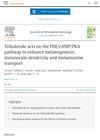 December 2023 in “Journal of ethnopharmacology”
 Tribuloside can increase skin pigmentation by enhancing melanin production and distribution.
September 2025 in “Medicine & Science in Sports & Exercise” Gender-affirming hormone therapy and surgery affect gut bacteria differently.

Experts created guidelines to better diagnose and treat uncommon fungal skin infections.