July 2023 in “International journal of physiology” Hypertrichosis lanuginosa causes excessive fine hair growth, often linked to genetics or cancer, with limited treatment options.
2 citations
,
July 2001 in “Dermatologic Surgery” Trichoblastic carcinoma may be a distinct type of skin cancer different from basal cell carcinoma.
15 citations
,
August 2010 in “Annals of saudi medicine/Annals of Saudi medicine” Hair tourniquet syndrome is a rare condition where hair wraps around an infant's body part, needing quick removal to prevent damage.
 January 2025 in “Indian Journal of Paediatric Dermatology”
 Biopsy is crucial to correctly diagnose granuloma annulare, which can mimic other conditions like alopecia mucinosa.
86 citations
,
February 2012 in “Journal of Clinical Investigation” Stem cells in hair follicles are diverse and change throughout the hair cycle.
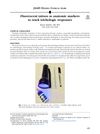 July 2018 in “Journal of The American Academy of Dermatology”
 Fluorescent tattoos are a good way to mark the scalp for hair treatments because they're accurate, invisible in normal light, and have low risk.
13 citations
,
February 2002 in “Archives of dermatology” A 32-year-old woman's hair loss was linked to skin nodules and severe headaches.
44 citations
,
July 2013 in “Journal of the American Academy of Dermatology” Poliosis circumscripta is a patch of white hair caused by lack of melanin, linked to genetic and acquired conditions.
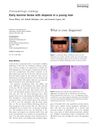 3 citations
,
April 2016 in “International Journal of Dermatology”
3 citations
,
April 2016 in “International Journal of Dermatology” A young man was diagnosed with trichoepitheliomas, causing thick skin and hair loss.
2 citations
,
June 2022 in “Life” A 14-year-old boy is the youngest person reported with a rare, benign tumor related to hair follicles, usually found in older people.
 19 citations
,
October 1985 in “British Journal of Dermatology”
19 citations
,
October 1985 in “British Journal of Dermatology” The document concludes that unruly hair can be congenital or acquired, often lacks specific treatments, and can be managed with oils and short hairstyles.
June 2025 in “Clinical and Experimental Dermatology” Baricitinib treatment led to dark brown hair regrowth in a red-haired woman with alopecia areata.
26 citations
,
October 2002 in “Journal of Investigative Dermatology” A specific gene mutation causes congenital hair loss.
 6 citations
,
July 2011 in “Journal of Plastic Reconstructive and Aesthetic Surgery”
6 citations
,
July 2011 in “Journal of Plastic Reconstructive and Aesthetic Surgery” Eyebrow reconstruction using hair follicle grafts was successful in a man with a benign hereditary disorder affecting his eyebrows.
70 citations
,
May 2008 in “The journal of investigative dermatology/Journal of investigative dermatology” Notch/RBP-J signaling is crucial for proper placement and timing of melanocyte development in hair follicles.
 January 2025 in “Turkiye Klinikleri Journal of Ophthalmology”
 Pilomatrixoma is a rare, harmless tumor near the eyebrow in kids, best treated with surgery.
 December 2024 in “Indian Journal of Dermatology”
 Dermoscopy is useful for diagnosing Atrichia with Papular Lesions in children without needing a biopsy.
 1 citations
,
July 2019 in “Case reports in dermatology”
1 citations
,
July 2019 in “Case reports in dermatology” A Thai boy was diagnosed with a rare hair disorder causing hair thinning and shedding.
June 2011 in “European Journal of Pediatric Dermatology” An 11-year-old girl with hair thinning was diagnosed with monilethrix and early androgenetic alopecia.
Hedgehog signaling can create new hair follicles in adult skin but may increase cancer risk.
 February 2024 in “Cureus”
 Pilomatrixoma should be considered for nodular lesions in adults.
 January 2012 in “Journal of Investigative Dermatology”
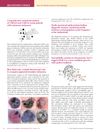
 Some Greek melanoma patients have gene mutations linked to increased cancer risk, a new color feature helps diagnose melanoma, the incidence of a skin condition in the Netherlands is rare, and a gene possibly affects male-pattern baldness.
5 citations
,
May 2009 in “American Journal of Dermatopathology” A rare hair follicle tumor showed unusual high levels of mucin.
 13 citations
,
January 2011 in “International Journal of Trichology”
13 citations
,
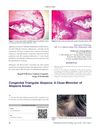
January 2011 in “International Journal of Trichology” CTA is often mistaken for AA but doesn't respond to steroids and may require hair transplantation.
 9 citations
,
July 2010 in “British Journal of Dermatology”
9 citations
,
July 2010 in “British Journal of Dermatology” The document suggests a rare skin condition might be caused by a genetic phenomenon.
36 citations
,
July 1996 in “The journal of investigative dermatology/Journal of investigative dermatology” Mice with the 'lanceolate hair' mutation have abnormal hair and skin similar to human Netherton's syndrome.
 April 2016 in “Actas Dermo-Sifiliográficas”
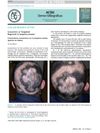
 The document concludes that a unique target-like hair regrowth pattern in alopecia areata may be more common than thought and should be properly identified.
54 citations
,
September 1999 in “PubMed” K15 staining helps distinguish basal cell carcinoma from trichoepithelioma.
 August 2010 in “Journal of Investigative Dermatology”
 New hair regrowth model introduced, imiquimod kills skin cancer cells, T-cadherin loss makes skin cancer more invasive, no strong link between PTCH1 gene and skin cancer after transplant, and male teens more likely to have hereditary hair loss.
15 citations
,
March 2009 in “Pediatric dermatology” A young girl developed unusually long eyelashes with a hair loss condition without other health issues or medication causes.