June 2024 in “Bioscientia Medicina Journal of Biomedicine and Translational Research” Most children with alopecia areata have patchy hair loss and common trichoscopic features like yellow and black dots.
 February 2024 in “Skin research and technology”
 LC-OCT is a promising tool for diagnosing and monitoring Alopecia areata.
 December 2023 in “Portuguese journal of dermatology and venereology”
 Trichoscopy can reliably distinguish between alopecia areata and trichotillomania.
October 2023 in “Asian journal of pharmaceutical and clinical research” Standardized data is essential for diagnosing scalp and hair conditions in males.
 June 2023 in “International Journal of Research in Dermatology”
 Early diagnosis and treatment of alopecia areata in children is crucial to prevent severe progression.
 June 2023 in “International journal of pharmaceutical quality assurance”
 Videodermoscopy is effective for diagnosing different types of non-scarring hair loss.
Non-invasive methods can effectively diagnose and manage alopecia areata.
April 2023 in “Media Dermato Venereologica Indonesiana” COVID-19 reinfection may trigger alopecia areata.
 April 2023 in “Our Dermatology Online”
 Trichoscopy is effective in diagnosing trichotillomania by showing specific hair patterns.
 March 2023 in “Photodiagnosis and Photodynamic Therapy”
 Low vitamin D levels are linked to severe and active alopecia areata.
February 2023 in “International Journal of Advanced Research” Trichoscopy is a cost-effective and non-invasive tool for diagnosing alopecia areata.
February 2023 in “Zenodo (CERN European Organization for Nuclear Research)” Trichoscopy is a useful and affordable tool for diagnosing Alopecia areata.
 January 2023 in “Asian Journal of Pediatric Research”
 Trichoscopy is crucial for diagnosing and assessing alopecia areata in children.
 October 2022 in “International journal of dermatology and venereology”
 A woman's sudden hair loss was linked to azathioprine use despite normal enzyme levels, and improved after stopping the drug and starting treatment.
 July 2022 in “المجلة العراقية للصيدلة”
 Most women with excessive hair growth (hirsutism) also experience a common type of non-scarring hair loss called Androgenetic alopecia with telogen effluvium.
 January 2022 in “Journal of Dermatology and Dermatologic Surgery”
 Trichoscopy is useful for quickly diagnosing different types of hair loss without needing biopsies.
 October 2021 in “International journal of research in dermatology”
 No link between scalp patterns and alopecia severity in children, but more severe cases often had nail abnormalities.
 July 2021 in “Indian journal of dermatopathology and diagnostic dermatology”
 Trichoscopy is a reliable method for diagnosing hair and scalp disorders quickly and non-invasively.
 January 2021 in “International journal of dermatology, venereology and leprosy sciences”
 Trichoscopy shows black dots, yellow dots, and empty follicles are common in Alopecia Areata, with broken and exclamation mark hair as typical patterns.
May 2020 in “The Journal of Pediatrics” Tinea capitis can be quickly diagnosed and treated using dermoscopy to prevent hair damage.
July 2019 in “Indian dermatology online journal” Alopecia areata can show unusual red-dotted vessels and dithranol treatment may mask typical patterns.
More research is needed to understand chemotherapy-induced hair loss and its phases.
August 2018 in “Turkish Journal of Dermatology” A handheld dermoscope helps assess treatment success in alopecia areata.
 August 2017 in “Journal of evolution of medical and dental sciences”
 Trichoscopy is effective for diagnosing different types of non-scarring hair loss.
 May 2017 in “InTech eBooks”
 Trichoscopy and trichogram are useful for diagnosing hair and scalp conditions.
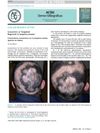 April 2016 in “Actas Dermo-Sifiliográficas”
 The document concludes that a unique target-like hair regrowth pattern in alopecia areata may be more common than thought and should be properly identified.
 April 2012 in “Journal of the American Academy of Dermatology”
 Dermoscopy can help diagnose tinea capitis in children by looking for comma hairs, black dots, and broken hairs with white bands.
The ProScope HR is an effective, user-friendly, and affordable tool for diagnosing hair loss.
January 2015 in “프로그램북(구 초록집)” Trichoscopy effectively diagnoses and assesses hair loss severity in androgenetic alopecia and alopecia areata.
83 citations
,
September 2021 in “Advanced functional materials” The DNA hydrogel helps heal diabetic wounds by absorbing fluids, warming, sticking to tissue, killing bacteria, and aiding tissue and hair regrowth.