13 citations
,
January 2001 in “Pediatric dermatology” A dark-haired Chinese girl had hair that looked banded under certain light but was normal under a microscope.
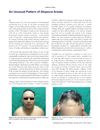 January 2014 in “International Journal of Trichology”
 A man had an unusual type of hair loss that didn't match known patterns and didn't improve with treatment.
9 citations
,
November 2004 in “SKINmed Dermatology for the Clinician” A man with hair loss developed a condition causing scarring and inflammation in both bald and non-bald areas of his scalp.
 October 2021 in “International journal of research in dermatology”
 No link between scalp patterns and alopecia severity in children, but more severe cases often had nail abnormalities.
8 citations
,
May 2003 in “Clinical and Experimental Dermatology” A 14-year-old girl's black hair showed unique color changes, suggesting early greying.
2 citations
,
May 2022 in “The journal of immunology/The Journal of immunology” BST2 protein and certain T cells increase in early alopecia areata.
2 citations
,
January 2017 in “International Journal of Trichology” Trichoscopy can reveal specific hair and scalp changes in linear morphea.
75 citations
,
September 1985 in “Archives of dermatology” Two boys had a rare skin condition needing to be differentiated from similar disorders, with unclear inheritance due to few cases.
October 1991 in “Archives of Dermatology” The woman has a skin condition involving nodules, scars, and hair loss.
5 citations
,
July 2009 in “Clinical and experimental dermatology”  November 2021 in “CRC Press eBooks”
 Fibrosing alopecia in a pattern distribution is a new type of scarring hair loss that resembles common baldness and an autoimmune skin disease.
 January 2018 in “Skin appendage disorders”
 A woman's hair loss was correctly diagnosed as Lichen planopilaris after initial misdiagnosis, highlighting the usefulness of trichoscopy in diagnosing hair disorders.
9 citations
,
June 2017 in “The American journal of dermatopathology/American journal of dermatopathology” The study found increased skin pigmentation and variable melanocyte density in a patient with Addison's disease.
 26 citations
,
August 2013 in “Australasian Journal of Dermatology”
26 citations
,
August 2013 in “Australasian Journal of Dermatology” Certain scalp patterns can indicate the severity and activity of hair loss in Turkish alopecia patients.
 September 2023 in “Cureus”
 Early recognition and treatment of atypical alopecia areata in infants are crucial.
February 2022 in “Authorea (Authorea)” PAON shows skin patterns due to genetic mosaicism.
4 citations
,
January 2011 in “European journal of dermatology/EJD. European journal of dermatology” A boy had a rare scalp condition with thickened skin and different-colored hair.
 December 2024 in “Australian Journal of General Practice”
 The woman's hair loss pattern doesn't match typical conditions like alopecia areata or female pattern hair loss.
 19 citations
,
February 2016 in “Journal of The American Academy of Dermatology”
19 citations
,
February 2016 in “Journal of The American Academy of Dermatology” CD3+ T-cell presence is a reliable marker to tell apart alopecia areata from pattern hair loss.
September 2018 in “CRC Press eBooks” Hair and nail disorders can cause changes in scalp pigmentation, especially with sun exposure and alopecia.
15 citations
,
October 1996 in “Archives of Dermatology” Researchers identified a new hair loss pattern called "sisaipho type," where hair is lost across the scalp except around the edges.
 October 2020 in “Our Dermatology Online”
 Chronic bacterial infections of hair follicles can cause ongoing skin inflammation.
4 citations
,
August 2018 in “Journal of pediatric neurology” Becker's Nevus Syndrome is a rare condition with a skin patch and possible bone and muscle abnormalities, treated mainly for appearance.
March 2023 in “Journal of Cosmetic Dermatology” Trichoscopy is effective for diagnosing scalp ACC in darker skin tones.
June 2025 in “Australasian Journal of Dermatology” Pigmented rings with central clearing help diagnose melasma more accurately.
 12 citations
,
May 2011 in “Dermatologic Clinics”
12 citations
,
May 2011 in “Dermatologic Clinics” Hair loss in autoimmune blistering skin diseases varies and may regrow with disease control.
18 citations
,
February 2001 in “Der Hautarzt” A woman with myotonic dystrophy had multiple skin tumors on her scalp, suggesting a genetic link.
13 citations
,
March 2000 in “Veterinary Dermatology” Dogs have a skin condition like human pseudopelade, causing hair loss that doesn't improve with treatment.
 October 2025 in “Indian Journal of Dermatology”
 Dermoscopy can help diagnose tuberous sclerosis by identifying unique skin patterns.
8 citations
,
August 2017 in “Skin appendage disorders” Red dots on the upper chest may be an early sign of certain types of hair loss.