152 citations
,
December 2003 in “Micron” As people age, their hair follicles produce less pigment, leading to gray and white hair, due to factors like reduced enzyme activity and damage to melanocyte DNA.
3 citations
,
December 2024 in “International Journal of Dermatology” Premature hair graying is caused by genetics, stress, and lifestyle, and affects mental health.
49 citations
,
April 2007 in “Pediatric Dermatology” Biotin improved hair appearance in uncombable hair syndrome but didn't change hair structure.
 3 citations
,
June 2023 in “ACS sustainable chemistry & engineering”
3 citations
,
June 2023 in “ACS sustainable chemistry & engineering” The study found a green method for strengthening hair works on all hair colors and is eco-friendly.
24 citations
,
October 2008 in “PubMed” Excessive sun exposure damages hair, causing protein loss and color changes.
Hair can naturally regain color after greying, and this change may be linked to stress levels.
73 citations
,
October 2013 in “International Journal of Cosmetic Science” Chemical hair straightening can damage hair and health, needing safer alternatives and stricter regulations.
21 citations
,
December 2023 in “Journal of Investigative Dermatology” Hair graying is caused by damage and cell depletion but might be temporarily reversible with drugs and hormones.
 April 2024 in “Nepal journal of dermatology, venereology & leprology”
 Premature graying of hair is common and stressful, but not well understood or treated.
December 2024 in “Minia Journal of Medical Research” White hair in alopecia areata may be linked to reduced Sox10 expression.
 12 citations
,
February 2019 in “Skin research and technology”
12 citations
,
February 2019 in “Skin research and technology” White hair has less lipid content and absorbs water differently than brown hair.
14 citations
,
September 2016 in “Journal of Photochemistry and Photobiology B Biology” UV exposure damages hair, increasing thiols and altering protein structure.
 31 citations
,
April 2019 in “Journal of Cutaneous Pathology”
31 citations
,
April 2019 in “Journal of Cutaneous Pathology” Hair becomes gray and thin as we age, and while most hair loss in older people is due to genetics, there's a chance for gray hair to regain color under certain conditions.
Gray hair affects hair's movement and appearance, making it less bouncy and more wavy.
4 citations
,
May 2020 in “The journal of pediatrics/The Journal of pediatrics” A boy with monilethrix has brittle hair that breaks easily due to a genetic condition, which might improve by puberty.
 19 citations
,
July 2009 in “Clinical and Experimental Dermatology”
19 citations
,
July 2009 in “Clinical and Experimental Dermatology” The study found that long-term sun exposure does not significantly affect follicular plugs on the scalp, and the scalp's appearance is unique compared to other body parts.
January 2000 in “Cambio 16” Bcl-2 affects hair growth and pigmentation by controlling cell death.
February 2016 in “Seoul National University Open Repository (Seoul National University)” Photodynamic therapy can temporarily remove nonpigmented hair but is less effective than lasers for black hair.
 6 citations
,
June 2013 in “British Journal of Dermatology”
6 citations
,
June 2013 in “British Journal of Dermatology” Intense pulsed light treatment mainly damages pigmented hair parts but spares stem cells, allowing hair to regrow.
Surgical repigmentation can permanently restore color to white hair in vitiligo patients.
 March 2026 in “International Journal of Science and Research Archive”
 Hair coloring in 2026 requires precise science and safe techniques.
 January 2013 in “Elsevier eBooks”
 Hair loss from cancer treatment is a major emotional burden for patients because it affects their appearance and constantly reminds them of their illness.
 December 2025 in “International Journal of Research in Dermatology”
 The Ayurvedic treatment safely and effectively restores natural hair color by increasing black hair and reducing grey hair.
4 citations
,
June 2022 in “Journal of cleaner production” New eco-friendly method strengthens and sets hair using light and causes less damage.
 5 citations
,
June 2019 in “British Journal of Dermatology”
5 citations
,
June 2019 in “British Journal of Dermatology” Chemical hair straightening may be linked to a type of permanent hair loss.
13 citations
,
September 2014 in “Journal of photochemistry and photobiology. B, Biology” UV radiation increases protein loss from hair and reduces hair protein quality.
 20 citations
,
June 2011 in “ISRN Dermatology (Print)”
20 citations
,
June 2011 in “ISRN Dermatology (Print)” A woman lost most of her hair due to an allergic reaction to a hair dye ingredient.
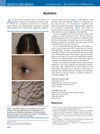 6 citations
,
August 2012 in “The Journal of Pediatrics”
6 citations
,
August 2012 in “The Journal of Pediatrics” A 12-year-old girl was diagnosed with monilethrix, a genetic condition causing fragile, beaded hair that breaks easily, with no effective treatment available.
 4 citations
,
June 2020 in “JAAD case reports”
4 citations
,
June 2020 in “JAAD case reports” Permanent hair dye may cause total hair loss.
 20 citations
,
January 2015 in “Current problems in dermatology”
20 citations
,
January 2015 in “Current problems in dermatology” Graying hair happens due to aging and might be delayed by new treatments.