17 citations
,
May 1969 in “American Journal of Physical Anthropology” The silver marmoset's skin is thin, lacks pigment cells, and has unique features like keratinized spines and specialized glands.
12 citations
,
January 2013 in “Indian dermatology online journal” The document reports a unique case of woolly hair with a combination of conditions not previously seen together.
January 2011 in “Maofang ke-ji” Rabbit hair research improved its use in textiles and new applications.
A 5% pomegranate peel water extract optimally enhances hair growth.
August 2020 in “Prosiding Farmasi” Bidara Arab leaves may help promote hair growth.
 18 citations
,
November 2014 in “Journal of Agricultural and Food Chemistry”
18 citations
,
November 2014 in “Journal of Agricultural and Food Chemistry” Brazilian propolis was found to speed up hair growth in mice by increasing the growth of skin cells that form hair.
1 citations
,
May 2025 in “International Immunopharmacology” L-borneol helps skin wound healing by promoting stem cell differentiation.
 3 citations
,
October 2020 in “Dermatology Practical & Conceptual”
3 citations
,
October 2020 in “Dermatology Practical & Conceptual” Bubble hair damage is caused by high heat from styling tools, and trichoscopy helps diagnose it.
 5 citations
,
January 2015 in “Skin appendage disorders”
5 citations
,
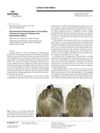
January 2015 in “Skin appendage disorders” Colored hair-thickening fibers can help hide hair loss in some people with Epidermolysis Bullosa but may cause scalp irritation.
11 citations
,
August 1995 in “Journal of Investigative Dermatology”  28 citations
,
December 2010 in “Langmuir”
28 citations
,
December 2010 in “Langmuir” Hair fibers interact through classical forces, which are influenced by treatments and products, important for hair care and other applications.
December 2022 in “Laboratory Animal Research” Trichoblastomas in aged house musk shrews show unique features and may involve serum amyloid A in inflammation.
 19 citations
,
July 2018 in “ACS biomaterials science & engineering”
19 citations
,
July 2018 in “ACS biomaterials science & engineering” Bleaching and combing damage hair's surface and mechanical properties.
January 2024 in “Medycyna Weterynaryjna” Horse breed significantly affects skin and hair thickness.
February 2026 in “Contact Dermatitis” Avoiding exposure to certain grasses can prevent skin allergies, highlighting the importance of proper sanitation.
January 2026 in “Biospecies” A 70% black ear mushroom extract hair tonic effectively stops M. furfur growth.
 13 citations
,
August 2017 in “International Journal of Dermatology”
13 citations
,
August 2017 in “International Journal of Dermatology” Trichoscopy helps quickly identify autoimmune diseases on the scalp but should be used with other standard tests.
 10 citations
,
January 2014 in “BioMed research international”
10 citations
,
January 2014 in “BioMed research international” Rat whisker cells can help turn other cells into nerve cells and might be used to treat brain injuries or diseases.
18 citations
,
November 2007 in “Acta Veterinaria Hungarica” The ovine interdigital sinus has a complex structure with three layers and various skin-like features.
 April 2025 in “INTERANTIONAL JOURNAL OF SCIENTIFIC RESEARCH IN ENGINEERING AND MANAGEMENT”
 Hair histology helps identify animal species in forensic investigations.
January 1981 in “Purdue e-Pubs (Purdue University)” Pig skin is similar to human skin, with no major changes as they age.
 January 2025 in “Journal of Clinical Medicine”
 Unsanitary barber practices can spread scalp infections, treatable with oral antifungals.
1 citations
,
August 2024 in “Journal of Morphology” Mammary glands evolved from hair organs in Monodelphis domestica.

Beta vulgaris L. fruit extracts, especially ethanolic, effectively promote hair growth.
July 2023 in “Cosmoderma”  4 citations
,
March 2021 in “Journal of Surfactants and Detergents”
4 citations
,
March 2021 in “Journal of Surfactants and Detergents” Shampoo B, which uses water-soluble silicone, is better at detangling hair in wet conditions due to its two-layer conditioning film.
 January 1957 in “Nihon Chikusan Gakkaiho”
 Rabbit hair color is influenced by the shape and distribution of pigment granules.
 7 citations
,
March 2022 in “Molecules”
7 citations
,
March 2022 in “Molecules” 5-Bromo-3,4-dihydroxybenzaldehyde could potentially help hair growth by activating certain cell pathways and inhibiting others.
 7 citations
,
January 2013 in “Journal of Cosmetics, Dermatological Sciences and Applications”
7 citations
,
January 2013 in “Journal of Cosmetics, Dermatological Sciences and Applications” Argan oil and cupuassu butter can protect hair after dyeing.
 1 citations
,
May 2018 in “jurnal veteriner”
1 citations
,
May 2018 in “jurnal veteriner” Scraping is the best method to diagnose demodicosis in dogs.