 February 2025 in “Journal of Biophotonics”
 Dual-wavelength laser therapy promotes better hair regrowth than single-wavelength treatments.
11 citations
,
May 2012 in “Genesis” Bmpr2 and Acvr2a receptors are crucial for hair retention and color.
June 2026 in “British Journal of Dermatology” Regional prescribing of ritlecitinib mostly follows national guidance, but psychological assessments and consistent scoring need improvement.
 5 citations
,
January 2015 in “Current Topics in Developmental Biology”
5 citations
,
January 2015 in “Current Topics in Developmental Biology” Fish teeth and taste bud densities are linked and can change between types due to shared genetic and molecular factors.
9 citations
,
June 2024 in “BMC Genomics” Wool color in Gangba sheep is influenced by multiple genes and genetic mechanisms.
 1 citations
,
August 2021 in “Journal of The American Academy of Dermatology”
1 citations
,
August 2021 in “Journal of The American Academy of Dermatology” Baricitinib helped improve hair, eyebrow, and eyelash growth in alopecia areata patients.
 161 citations
,
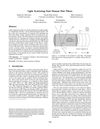
July 2003 in “ACM Transactions on Graphics”
161 citations
,
July 2003 in “ACM Transactions on Graphics” Researchers developed a new model for more realistic computer graphics rendering of hair by considering how light scatters on hair fibers.
 October 2023 in “Indian Dermatology Online Journal”
 Schimmelpenning Syndrome requires careful evaluation and tailored treatment for skin, eye, and developmental issues.
12 citations
,
April 2023 in “Molecular Pharmaceutics” A new patch can deliver stable antibodies over time for potential HIV treatment.
 April 2016 in “The journal of investigative dermatology/Journal of investigative dermatology”
 BMP signaling controls hair growth and skin color.
 5 citations
,
February 2015 in “Dermatologica Sinica”
5 citations
,
February 2015 in “Dermatologica Sinica” Computer-aided imaging system helps measure balding area in female pattern hair loss.
 September 2024 in “Journal of the American Academy of Dermatology”
 Baricitinib 4 mg is effective and safe for treating severe alopecia areata.
January 2009 in “Heilongjiang xumu shouyi” Stem cells are present in goat hair follicles but decrease over time.
7 citations
,
March 2004 in “Journal of the American Academy of Dermatology” Tiger tail banding and hair abnormalities are reliable indicators for diagnosing trichothiodystrophy.
 April 2026 in “Zenodo (CERN European Organization for Nuclear Research)”
 Natural plant-based hair dyes are safer and eco-friendly alternatives to synthetic dyes.
July 2026 in “Bioactive Materials” A new method using tiny needles can help regrow hair in a controlled way.
 October 2024 in “American Journal of Case Reports”
 Baricitinib improved hair loss and arthritis in a lupus patient.
1 citations
,
April 2019 in “PubMed” The medulla in Asian scalp hair has a tubular structure that allows ions and large molecules to flow through it.
61 citations
,
June 2019 in “BMC Genomics” lncRNAs significantly influence koi carp skin color.
July 1993 in “Journal of Radioanalytical and Nuclear Chemistry” Mouse hair element patterns vary, making it unreliable for tracking time.
 January 2024 in “Wiadomości Lekarskie”
 A multidisciplinary approach is crucial for managing Silver-Russell syndrome effectively.
 February 2026 in “Molecules”
 BBR-SA nanomedicine is a safe and effective treatment for breast cancer.
 November 2025 in “Zenodo (CERN European Organization for Nuclear Research)”
 Oxidative dyes damage hair more than semi-permanent dyes, but new technologies help protect hair while coloring.
20 citations
,
October 2021 in “Applied materials today” A new microneedle patch and yellow light therapy significantly promote hair regrowth.
 January 2025 in “International Journal of Veterinary Science”
 Hibiscus leaf ointment helps hair growth and reduces UV skin damage in rats.
 July 1989 in “British Journal of Dermatology”
 Long-term use of canthaxanthin may cause reversible changes in the eye, including crystal deposits and altered vision responses.
January 2026 in “Ethnobiology” 
The model explains how mammal ear hair cells respond to sound and adapt.
 April 2018 in “Journal of Investigative Dermatology”
 Light can activate hair growth through a pathway from the eyes to hair follicles.
January 2025 in “Medical Research Archives” A new classification and scoring system is needed for alopecia areata to better assess severity.