
Plant roots respond to fungus smells by possibly using certain proteins and a plant hormone to change root growth, but more research is needed.
 January 2021 in “Middle East journal of applied sciences”
 Zinc is essential for plant growth and human health, but many soils lack enough zinc, affecting crops and potentially leading to health problems.
 January 2021 in “Online Publication Service of Würzburg University (Würzburg University)”
 Diphenylcyclopropenon treatment for Alopecia areata is effective and safe, improving patients' quality of life.
 December 2020 in “TURKDERM”
 A 3-year-old boy was diagnosed with a rare, non-scarring hair loss condition called temporal triangular alopecia.
 December 2019 in “University of Malaya Students Repository”
 Mimosine from Leucaena leucocephala can enhance biodiesel stability.
The document is a detailed guide on skin conditions and treatments for dermatologists.
 April 2019 in “The journal of investigative dermatology/Journal of investigative dermatology”
 Scientists discovered a new way UVB light increases skin pigmentation through the ATP-P2X7 pathway.
 September 2018 in “Epsilon Archive for Student Projects (University of Southampton)”
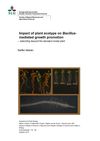
 Bacillus amyloliquefaciens can boost root hair growth in some Arabidopsis plants, potentially improving agriculture.
 July 2018 in “Elsevier eBooks”
 The most common cause of hair loss in children is tinea capitis, followed by alopecia areata and telogen effluvium.
 May 2018 in “Cell stem cell”
 Myoepithelial cells can repair airways after severe injury.
 January 2018 in “Elsevier eBooks”
 The document concludes that alopecia has significant social and psychological effects, leading to a market for hair loss treatments.
 December 2017 in “International Journal of Current Research in Biosciences and Plant Biology”
 Nutrients and hormones affect root hair growth, but more research is needed to understand the genetic mechanisms.
 July 2016 in “American Journal of Dermatopathology”
 The meeting showcased rare skin disease cases, highlighting the need for accurate diagnosis and treatment.
 January 2016 in “Springer eBooks”
 New materials and methods could improve skin healing and reduce scarring.
 January 2016 in “Elsevier eBooks”
 Trichoscopy is a key method for dermatologists to quickly and effectively diagnose hair and scalp conditions.
 December 2013 in “Research Portal (King's College London)”
 Hair loss in Lichen Planopilaris is caused by immune system issues damaging hair follicles and stem cells.

Higher cholesterol levels increase aggressive prostate cancer risk.
 April 2012 in “Informa Healthcare eBooks”
 Lichen planopilaris is a rare, chronic condition causing hair loss, mainly in middle-aged women, and early treatment is important to prevent permanent baldness.
 January 2012 in “heiDOK (Heidelberg University)”
 Dormant melanoma cells in mice interact minimally with memory T cells due to a suppressive tumor environment.
 January 2012 in “Human health handbooks”
 Traditional Indian remedies are used for hair health, but more scientific evidence is needed to prove their safety and effectiveness.
 January 2012 in “Durham e-Theses (Durham University)”
 Keratin 15 affects cell behavior and characteristics in skin cells.
 June 2011 in “CRC Press eBooks”
 Low-Level Laser Therapy can stimulate healing and cell function, potentially leading to wider medical use.
Type II spiral ganglion neurites avoid high concentrations of laminin and fibronectin.
Online tools are effective and cost-efficient for recruiting dermatology research participants, especially among younger people.
The ProScope HR is an effective, user-friendly, and affordable tool for diagnosing hair loss.
The digital system for measuring melasma shows promise but needs more development for better accuracy and automation.
 August 2009 in “Mechanisms of Development”
 Adult hair follicle cells can create new hair follicles from corneal cells with the right support.
 January 2005 in “Elektronische Hochschulschriften der LMU München (Ludwig-Maximilians-Universität München)”
 Topical immunotherapy with DPCP is most effective for certain alopecia areata types, with success linked to age and disease duration, and influenced by a gene polymorphism.
 April 2003 in “Experimental Dermatology”
 The workshop highlighted the genetic links and psychological impacts of hair loss and skin disorders.
 January 2003 in “Springer eBooks”
 Children with diabetes often have skin problems, which can be better managed with good blood sugar control.