May 2025 in “International Journal of Trichology” Oral Acitretin effectively resolved symptoms in a child with Netherton syndrome.
 September 2024 in “International Journal of Contemporary Pediatrics”
 A multidisciplinary approach is crucial for treating complex cases of Rapunzel syndrome in children.
 January 2025 in “Clinical Dermatology Review”
 Trichoscopy helps accurately diagnose Netherton syndrome, often mistaken for atopic dermatitis.
101 citations
,
July 1985 in “Journal of the American Academy of Dermatology” Biotin improved hair growth and combability in one child with uncombable hair syndrome.
 November 2022 in “Journal of Investigative Dermatology”
 Most Recessive Dystrophic Epidermolysis Bullosa patients with a specific mutation likely have Sephardic ancestry from about 500 years ago.
53 citations
,
September 2004 in “American journal of medical genetics. Part C, Seminars in medical genetics” Mutations in keratin genes cause cell fragility and various skin disorders.
October 2017 in “The American Journal of Gastroenterology” Early diagnosis and nutritional support are crucial for managing Cronkhite-Canada Syndrome.
 4 citations
,
May 2020 in “Cureus”
4 citations
,
May 2020 in “Cureus” A new genetic mutation causing Werner's syndrome was found in an Indian man.
5 citations
,
January 2017 in “Arquivos Brasileiros de Oftalmologia” A rare genetic disorder causes sparse hair and vision loss due to a CDH3 gene mutation.
30 citations
,
October 1994 in “Journal of Cutaneous Pathology” Multiple perifollicular fibromas may actually be unrecognized cases of Birt-Hogg-Dubé syndrome.
 January 2023 in “World Journal of Clinical & Medical Images”
 Early diagnosis and prednisone treatment can improve outcomes in Cronkhite-Canada syndrome.
 6 citations
,
February 2004 in “Clinical and Experimental Ophthalmology”
6 citations
,
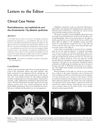
February 2004 in “Clinical and Experimental Ophthalmology” The document concludes that careful diagnosis is crucial for chromosome 13q deletion syndrome, tamoxifen can cause reversible eye damage, finasteride may be linked to cataracts, and OCT is useful for diagnosing macular diseases.
58 citations
,
November 1969 in “British Journal of Dermatology” Netherton's disease causes multiple hair defects.
32 citations
,
January 1971 in “Annals of Internal Medicine” People with anhidrotic ectodermal dysplasia may get severe bronchitis if exposed to dust.
April 2016 in “Journal of the American Academy of Dermatology” A 4-year-old girl had a rare hair disorder affecting only part of her scalp.
December 2025 in “JGH Open” Early diagnosis and treatment with corticosteroids can improve outcomes in Cronkhite–Canada syndrome.
 2 citations
,
August 2017 in “British Journal of Dermatology”
2 citations
,
August 2017 in “British Journal of Dermatology” Hair loss in Cronkhite-Canada syndrome may be due to an autoimmune response.
11 citations
,
December 2017 in “Orphanet Journal of Rare Diseases” A new mutation in the ST14 gene broadens the understanding of ichthyosis-hypotrichosis syndrome.
 December 2022 in “American journal of medical genetics. Part A”
 A person got uncombable hair syndrome from two copies of chromosome 1 from their mother.

Endoscopic evaluation is crucial for diagnosing complex conditions like Satoyoshi syndrome.

Brunsting-Perry pemphigoid can cause scarring hair loss and may be underdiagnosed.
13 citations
,
October 2003 in “Clinical pediatrics” Steroid treatment greatly improved the symptoms of a boy with a rare disorder called Satoyoshi syndrome.
2 citations
,
May 2023 in “Indian Journal of Dermatology Venereology and Leprology” A new genetic mutation in the CAST gene may link PLACK syndrome to alopecia areata.
 19 citations
,
August 2020 in “Gastroenterology report”
19 citations
,
August 2020 in “Gastroenterology report” There is no standard treatment for the rare Cronkhite–Canada syndrome, which can be fatal and lead to cancer.
 1 citations
,
June 2015 in “Australasian Journal of Dermatology”
1 citations
,
June 2015 in “Australasian Journal of Dermatology” A patient with Cronkhite-Canada syndrome improved with nutritional support and steroids, but early diagnosis is key due to high mortality.
A new genetic mutation was found causing hair and eye issues in a boy.
21 citations
,
September 2013 in “Pediatric Dermatology” Growth hormone therapy can improve growth in Netherton syndrome patients with growth hormone deficiency.
October 2019 in “European Journal of Dermatology” The boy's hair and skin color differences are due to a pigmentation disorder.
July 2024 in “Journal of Investigative Dermatology” Brepocitinib improves cicatricial alopecia and reduces key immune markers.
7 citations
,
April 2004 in “International Journal of Dermatology” The newborn's skin blistering is due to a genetic condition called epidermolytic hyperkeratosis.