13 citations
,
September 1997 in “Archives of Dermatology” The boy likely has a fungal infection causing hair loss.
 12 citations
,
September 2020 in “Journal of cosmetic dermatology”
12 citations
,
September 2020 in “Journal of cosmetic dermatology” Trichoscopy is useful for diagnosing and monitoring alopecia areata treatment.
 10 citations
,
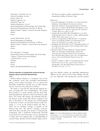
March 2014 in “International Journal of Dermatology”
10 citations
,
March 2014 in “International Journal of Dermatology” A hand-held dermatoscope helped differentiate between pressure-induced alopecia and alopecia areata in a young patient, who then experienced hair regrowth within a month.
 8 citations
,
January 2020 in “International Journal of Trichology”
8 citations
,
January 2020 in “International Journal of Trichology” Different patterns on the scalp help diagnose types of hair loss without needing a biopsy.
 8 citations
,
November 2021 in “The Journal of Dermatology”
8 citations
,
November 2021 in “The Journal of Dermatology” The article simplifies trichoscopy terms and offers a new diagnostic flowchart.
 8 citations
,
June 2021 in “Acta dermato-venereologica”
8 citations
,
June 2021 in “Acta dermato-venereologica” Trichoscopy is a reliable method for diagnosing hair-pulling disorder.
 6 citations
,
January 2020 in “Postepy Dermatologii I Alergologii”
6 citations
,
January 2020 in “Postepy Dermatologii I Alergologii” Trichoscopy is useful for diagnosing hair-pulling disorder.
 6 citations
,
August 2012 in “The Journal of Pediatrics”
6 citations
,
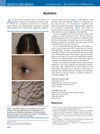
August 2012 in “The Journal of Pediatrics” A 12-year-old girl was diagnosed with monilethrix, a genetic condition causing fragile, beaded hair that breaks easily, with no effective treatment available.
6 citations
,
November 1977 in “Archives of Dermatology” A 6-year-old girl in the U.S. had a rare scalp infection caused by *Trichophyton soudanense*.
 4 citations
,
March 2018 in “Daehan han'yi hag'hoeji/Journal of Korean medicine”
4 citations
,
March 2018 in “Daehan han'yi hag'hoeji/Journal of Korean medicine” Astragalus membranaceus helps regrow hair and reduce hair loss symptoms.
 4 citations
,
January 2019 in “Annals of dermatology/Annals of Dermatology”
4 citations
,
January 2019 in “Annals of dermatology/Annals of Dermatology” Changing hairstyles can help hair regrow in children with hair loss from tight braids or ponytails.
4 citations
,
February 2022 in “Journal of Cosmetic Dermatology” Dermatoscopy can quickly help distinguish between alopecia areata and tinea capitis in children.
 3 citations
,
July 2017 in “International journal of medicine”
3 citations
,
July 2017 in “International journal of medicine” Intralesional triamcinolone acetonide effectively treats alopecia areata, as shown by significant improvements in hair regrowth and dermoscopic indicators.
 3 citations
,
April 2021 in “Berkala ilmu kedokteran/Journal of the medical sciences”
3 citations
,
April 2021 in “Berkala ilmu kedokteran/Journal of the medical sciences” A fungus called Epidermophyton floccosum can cause scalp infections.
2 citations
,
September 2023 in “Journal of the Egyptian Womenʼs Dermatologic Society” Exclamation mark hairs and broken hairs best indicate active alopecia areata.
 2 citations
,
June 2023 in “Skin Research and Technology”
2 citations
,
June 2023 in “Skin Research and Technology” Yellow dots and short vellus hairs are the most common signs of Alopecia Areata (AA), and trichoscopy can help diagnose AA and track treatment progress.
 1 citations
,
October 2020 in “International Journal of Research in Dermatology”
1 citations
,
October 2020 in “International Journal of Research in Dermatology” The study concluded that short vellus hair and yellow dots were the most common signs of alopecia areata, indicating disease activity and remission.
 1 citations
,
June 2020 in “IP Indian journal of clinical and experimental dermatology”
1 citations
,
June 2020 in “IP Indian journal of clinical and experimental dermatology” Yellow dots were the most common sign of alopecia areata found using trichoscopy.
1 citations
,
July 2025 in “Indian Dermatology Online Journal” Certain hair and scalp features indicate a worse outcome in alopecia areata.
1 citations
,
June 2023 in “Cosmoderma” Trichoscopy is better than the hair pull test for tracking alopecia areata.
 April 2026 in “Research Square”
 Trichoscopy is reliable for diagnosing different types of frontal non-scarring hair loss.
July 2025 in “Clinical Medicine” Oral betamethasone works faster than oral tofacitinib for hair regrowth in alopecia areata.
 December 2023 in “Portuguese journal of dermatology and venereology”
 Trichoscopy can reliably distinguish between alopecia areata and trichotillomania.
 October 2021 in “International journal of research in dermatology”
 No link between scalp patterns and alopecia severity in children, but more severe cases often had nail abnormalities.
 January 2021 in “International journal of dermatology, venereology and leprosy sciences”
 Trichoscopy shows black dots, yellow dots, and empty follicles are common in Alopecia Areata, with broken and exclamation mark hair as typical patterns.
 August 2017 in “Journal of evolution of medical and dental sciences”
 Trichoscopy is effective for diagnosing different types of non-scarring hair loss.
June 2025 in “British Journal of Dermatology” Certain hair and scalp features can predict the severity of alopecia areata.
September 2024 in “Dermatology Reports” Sonidegib often causes hair loss, and LC-OCT helps identify early signs.
 January 2024 in “Pan African Medical Journal”
 Non-scarring hair loss is common in lupus patients and can be diagnosed with specific hair and tissue tests.
 April 2023 in “Our Dermatology Online”
 Trichoscopy is effective in diagnosing trichotillomania by showing specific hair patterns.