 April 2023 in “Our Dermatology Online”
 Trichoscopy is effective in diagnosing trichotillomania by showing specific hair patterns.
 March 2023 in “Photodiagnosis and Photodynamic Therapy”
 Low vitamin D levels are linked to severe and active alopecia areata.
February 2023 in “International Journal of Advanced Research” Trichoscopy is a cost-effective and non-invasive tool for diagnosing alopecia areata.
February 2023 in “Zenodo (CERN European Organization for Nuclear Research)” Trichoscopy is a useful and affordable tool for diagnosing Alopecia areata.
January 2022 in “Clinical Cases in Dermatology” A 4-year-old boy has a rare type of hair loss in a line pattern on his scalp.
September 2021 in “CRC Press eBooks” Traumatic alopecia causes hair loss from pulling or rubbing, leading to broken hairs and changes in the scalp.
December 2020 in “Journal of Face Aesthetics” Trichoscopy effectively helps diagnose different types of hair loss in women.
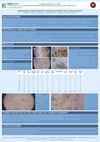
More research is needed to understand chemotherapy-induced hair loss and its phases.
 April 2019 in “Dermatology reports”
 A 12-year-old boy's hair fully regrew after 8 weeks of treatment for tinea capitis, and dermoscopy was useful for diagnosis and monitoring.
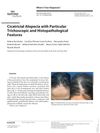 November 2018 in “Skin appendage disorders”
 The document concludes that a woman has both Frontal Fibrosing Alopecia and Lichen Simplex Chronicus, a previously unreported combination of conditions.
August 2018 in “Turkish Journal of Dermatology” A handheld dermoscope helps assess treatment success in alopecia areata.
 April 2012 in “Journal of the American Academy of Dermatology”
 Dermoscopy can help diagnose tinea capitis in children by looking for comma hairs, black dots, and broken hairs with white bands.
The ProScope HR is an effective, user-friendly, and affordable tool for diagnosing hair loss.
January 2020 in “Revista Dermatológica Centro Uraga” Recognizing trichoscopic features is crucial for diagnosing various hair loss conditions.
 December 2023 in “Portuguese journal of dermatology and venereology”
 Trichoscopy can reliably distinguish between alopecia areata and trichotillomania.
 October 2021 in “International journal of research in dermatology”
 No link between scalp patterns and alopecia severity in children, but more severe cases often had nail abnormalities.
 August 2017 in “Journal of evolution of medical and dental sciences”
 Trichoscopy is effective for diagnosing different types of non-scarring hair loss.
 39 citations
,
January 2011 in “Archives of Dermatology”
39 citations
,
January 2011 in “Archives of Dermatology” Reflectance confocal microscopy confirms that yellow dots are signs of damaged hair follicles in alopecia areata.
 6 citations
,
August 2012 in “The Journal of Pediatrics”
6 citations
,
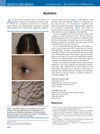
August 2012 in “The Journal of Pediatrics” A 12-year-old girl was diagnosed with monilethrix, a genetic condition causing fragile, beaded hair that breaks easily, with no effective treatment available.
 1 citations
,
October 2020 in “International Journal of Research in Dermatology”
1 citations
,
October 2020 in “International Journal of Research in Dermatology” The study concluded that short vellus hair and yellow dots were the most common signs of alopecia areata, indicating disease activity and remission.
 April 2026 in “Research Square”
 Trichoscopy is reliable for diagnosing different types of frontal non-scarring hair loss.
 February 2023 in “Journal of vaccines and immunology”
 Alopecia areata causes sudden hair loss, often on the scalp, and can be severe, especially with early onset or related health issues.
 4 citations
,
March 2018 in “Daehan han'yi hag'hoeji/Journal of Korean medicine”
4 citations
,
March 2018 in “Daehan han'yi hag'hoeji/Journal of Korean medicine” Astragalus membranaceus helps regrow hair and reduce hair loss symptoms.
 1 citations
,
June 2020 in “IP Indian journal of clinical and experimental dermatology”
1 citations
,
June 2020 in “IP Indian journal of clinical and experimental dermatology” Yellow dots were the most common sign of alopecia areata found using trichoscopy.
July 2025 in “Clinical Medicine” Oral betamethasone works faster than oral tofacitinib for hair regrowth in alopecia areata.
 January 2021 in “International journal of dermatology, venereology and leprosy sciences”
 Trichoscopy shows black dots, yellow dots, and empty follicles are common in Alopecia Areata, with broken and exclamation mark hair as typical patterns.
 October 1988 in “Pediatric research”
 Certain maturity signs appear before and after the first release of sperm in boys.
 26 citations
,
September 2016 in “International Journal of Dermatology”
26 citations
,
September 2016 in “International Journal of Dermatology” Trichoscopy is good for telling apart tinea capitis and alopecia areata in kids.
 July 2023 in “Al-Azhar Assiut Medical Journal”
 Trichoscopy helps diagnose and manage hair and scalp disorders in children.
 1 citations
,
November 2022 in “Journal of the Endocrine Society”
1 citations
,
November 2022 in “Journal of the Endocrine Society” Adults with classic congenital adrenal hyperplasia value medication that prevents weight gain from glucocorticoids the most.