 48 citations
,
May 1991 in “The journal of investigative dermatology/Journal of investigative dermatology”
48 citations
,
May 1991 in “The journal of investigative dermatology/Journal of investigative dermatology” Trichohyalin is also found in the outer layers of normal human skin.
 47 citations
,
January 2013 in “Indian Journal of Dermatology, Venereology and Leprology”
47 citations
,
January 2013 in “Indian Journal of Dermatology, Venereology and Leprology” Premature graying of hair may suggest health issues and currently lacks effective treatments.
47 citations
,
September 1997 in “Journal of Pharmaceutical Sciences” Properly formulated large molecules can reach active levels at the hair bulb.
 47 citations
,
July 1967 in “Science”
47 citations
,
July 1967 in “Science” Not eating enough protein can cause hair roots to shrink and lose color, and hair to become thinner.
46 citations
,
November 1998 in “Experimental Cell Research” K15 gene is mainly active in the basal layers of hair follicles and epithelia, aiding early skin cell development.
46 citations
,
May 1991 in “British Journal of Dermatology” Heparin can inhibit hair growth in mice when injected.
 45 citations
,
December 2014 in “Journal of the European Academy of Dermatology and Venereology”
45 citations
,
December 2014 in “Journal of the European Academy of Dermatology and Venereology” Plasmacytoid dendritic cells are a key factor in causing hair loss in alopecia areata and could help differentiate it from other hair loss conditions.
45 citations
,
December 2004 in “Forensic Science International” Laser microdissection helps get DNA from single hair follicles for better forensic analysis.
 41 citations
,
March 2007 in “Journal of dermatological science”
41 citations
,
March 2007 in “Journal of dermatological science” Taking L-cystine and vitamin B6 can prevent hair loss caused by smoke in mice.
39 citations
,
July 1993 in “The journal of investigative dermatology/Journal of investigative dermatology” FGF and EGF are crucial for hair follicle development and growth.
38 citations
,
December 2006 in “Journal of Investigative Dermatology” Keratin patterns in hair follicles help understand hair growth and potential hair and nail disorders.
36 citations
,
November 1990 in “The Journal of Dermatology” Dermal papillae enhance hair follicle growth and structure.
 35 citations
,
October 2015 in “International Journal of Pharmaceutics”
35 citations
,
October 2015 in “International Journal of Pharmaceutics” Tiny particles carrying roxithromycin can effectively target and deliver the drug to hair follicles without irritation.
35 citations
,
August 2006 in “Molecular genetics and metabolism” Tissue-specific variation in mutant load complicates genetic counseling and prenatal diagnosis.
34 citations
,
June 2005 in “Developmental dynamics” Runx3 helps determine hair shape.
33 citations
,
March 2015 in “Experimental Dermatology” LHX2 and SOX9 identify unique hair follicle cell groups, crucial for hair maintenance.
 33 citations
,
February 1999 in “The journal of investigative dermatology/Journal of investigative dermatology”
33 citations
,
February 1999 in “The journal of investigative dermatology/Journal of investigative dermatology” IGF-1 increases whisker growth in transgenic mice.
 33 citations
,
August 1973 in “American Heart Journal”
33 citations
,
August 1973 in “American Heart Journal” Propranolol can cause reversible hair loss.
 32 citations
,
December 1969 in “The Lancet”
32 citations
,
December 1969 in “The Lancet” Children with marasmus have more resting hair follicles and thinner, less pigmented hair, showing long-term malnutrition.
 31 citations
,
April 2019 in “Cell reports”
31 citations
,
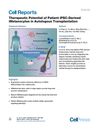
April 2019 in “Cell reports” Patient-derived melanocytes can potentially treat vitiligo by restoring skin pigmentation.
31 citations
,
September 1996 in “Differentiation” The upper dermal sheath can regenerate hair in rats.
 30 citations
,
April 2017 in “European Journal of Cell Biology”
30 citations
,
April 2017 in “European Journal of Cell Biology” CIP/KIP proteins help stop cell division and support hair growth.
 29 citations
,
January 2003 in “Dermatology”
29 citations
,
January 2003 in “Dermatology” The condition called 'acute diffuse and total alopecia of the female scalp' is actually a known condition named alopecia areata incognita.
 28 citations
,
September 2019 in “International Journal of Nanomedicine”
28 citations
,
September 2019 in “International Journal of Nanomedicine” Minoxidil nanoparticles can potentially be a more effective treatment for hair growth than current treatments.
 28 citations
,
January 2007 in “Dermatology”
28 citations
,
January 2007 in “Dermatology” Chemotherapy can cause rapid, extensive hair loss, with patterns varying between individuals.
 28 citations
,
October 2004 in “Differentiation”
28 citations
,
October 2004 in “Differentiation” A gene deletion causes the "hairless" trait in Iffa Credo rats.
 27 citations
,
February 2017 in “Biomedicine & Pharmacotherapy”
27 citations
,
February 2017 in “Biomedicine & Pharmacotherapy” White wax and policosanol from white wax effectively reduced hair loss and promoted hair growth in mice better than a known hair growth drug.
26 citations
,
July 2006 in “International Journal of Cosmetic Science” Taurine helps protect and promote hair growth.
26 citations
,
January 1983 in “PubMed” Trichothiodystrophy involves brittle hair due to low sulfur amino acids, not a transport defect.
![Influence of FHIT on Benzo[a]pyrene-Induced Tumors and Alopecia in Mice: Chemoprevention by Budesonide and N-Acetylcysteine](/images/assets/f8f56777-f891-4879-8c45-c87d6aa82563/small/35499.jpg) 24 citations
,
May 2006 in “Proceedings of the National Academy of Sciences of the United States of America”
24 citations
,
May 2006 in “Proceedings of the National Academy of Sciences of the United States of America” Budesonide and N-acetylcysteine reduced tumors and alopecia in mice, regardless of FHIT gene status.