November 2025 in “Journal of Investigative Dermatology” BTNL2 helps protect hair follicles from immune attacks.
November 2025 in “The Journal of Immunology” BTNL2 helps protect hair follicles from immune attacks, which could aid in treating alopecia areata.
 5 citations
,
January 2016 in “Journal of The American Academy of Dermatology”
5 citations
,
January 2016 in “Journal of The American Academy of Dermatology” Skin doctors should know about skin and kidney disease links to prevent serious kidney problems.
60 citations
,
September 2023 in “Science” BTNL proteins help control inflammatory bowel disease by maintaining specific immune cells.
 9 citations
,
April 2021 in “Frontiers in Immunology”
9 citations
,
April 2021 in “Frontiers in Immunology” Unconventional lymphocytes are important for quick immune responses and healing of skin and mucosal barriers.
181 citations
,
December 2017 in “Trends in immunology” Intestinal intraepithelial lymphocytes are crucial for gut immunity and maintaining the mucosal barrier.
October 2024 in “Frontiers in Immunology” Pertussis toxin may contribute to hair loss in alopecia areata.
April 2019 in “Journal of Investigative Dermatology” Blocking LFA-1 prevents hair loss in mice.
 23 citations
,
January 2024 in “Nature Immunology”
23 citations
,
January 2024 in “Nature Immunology” γδ T cells adapt uniquely to different tissues in mice.
1 citations
,
October 2024 in “Medicina” CLEC4D gene variants may increase the risk of alopecia areata in Jordanians.
22 citations
,
January 1990 May 2010 in “Europe PMC (PubMed Central)” Near-infrared probes can safely and effectively image cysteine protease activity for disease diagnosis.
 October 2023 in “Journal of dermatological science”
 New mutations in MBTPS2 reduce its function and cause IFAP syndrome with unusual symptoms.
33 citations
,
June 2007 in “Gene Expression Patterns” CTIP2 may help in skin development and maintenance.
37 citations
,
January 1993 in “Journal of Investigative Dermatology” 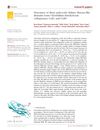 18 citations
,
February 2015 in “Acta Crystallographica Section D: Structural Biology”
18 citations
,
February 2015 in “Acta Crystallographica Section D: Structural Biology” The study concludes that certain domains in Clostridium histolyticum enzymes are structurally unique, bind calcium to become more stable, and play distinct roles in breaking down collagen, with potential applications in medicine and drug delivery.
 March 2026 in “Folia Histochemica et Cytobiologica”
 LTBP1 is a key regulator in diseases and a potential target for new treatments.
1 citations
,
January 2022 in “Annals of Dermatology” A new mutation in the MBTPS2 gene causes a mild form of IFAP syndrome.
 April 2016 in “The journal of investigative dermatology/Journal of investigative dermatology”
 RPGRIP1L helps skin cells stick together by blocking PKCβII, which can prevent skin blistering like in pemphigus.
 12 citations
,
February 1998 in “Gene”
12 citations
,
February 1998 in “Gene” The B2 genes are crucial for hair growth in rats.
24 citations
,
March 2016 in “Journal of Investigative Dermatology” TIP39 and PTH2R help control calcium levels and skin cell development.
 72 citations
,
November 2012 in “PloS one”
72 citations
,
November 2012 in “PloS one” The protein folliculin, involved in a rare disease, works with another protein to control how cells stick together and their organization, and changes in this interaction can lead to disease symptoms.
161 citations
,
June 1993 in “Journal of Biological Chemistry” Trichohyalin helps in hair and skin cell structure and function by binding calcium and linking proteins.
13 citations
,
September 2012 in “Cell & tissue research/Cell and tissue research” pCLCA2 protein may help maintain skin structure and function.
2 citations
,
January 1993 Trichohyalin is a versatile protein involved in hair and skin structure.
1 citations
,
October 2023 in “PROTOPLASMA” 1 citations
,
February 1991 in “Journal of Biological Chemistry” 15 citations
,
January 1993 in “DNA sequence” KRT2.13 gene is similar to KRT2.9 but not expressed in hair follicles.
3 citations
,
February 2018 in “Experimental and Molecular Medicine/Experimental and molecular medicine” A protein called PCBP2 controls the production of a hair growth protein by interacting with its genetic message and is linked to hair loss when this control is disrupted.