 1 citations
,
April 2018 in “Journal of Investigative Dermatology”
1 citations
,
April 2018 in “Journal of Investigative Dermatology” Tofacitinib helped most patients with alopecia areata regrow hair and changes in immune cells were linked to the treatment's effectiveness.
 March 2026 in “Clinical Cosmetic and Investigational Dermatology”
 Upadacitinib improved multiple immune-related conditions in one patient.
2 citations
,
May 2008 in “Journal of Clinical Oncology” AZD6244 treatment causes skin aging effects by depleting skin stem cells.
 June 2024 in “Journal of Clinical Oncology”
 Dalpiciclib is the safest and most satisfying CDK4/6 inhibitor for advanced breast cancer patients in China.
 September 2022 in “Journal of The American Academy of Dermatology”
 Baricitinib was effective in regrowing eyebrow and eyelash hair in patients with severe alopecia areata.
4 citations
,
March 2007 in “British Journal of Dermatology” Gefitinib therapy can cause unusual hair growth on the nose.
10 citations
,
August 2016 in “Dermatology Online Journal” Nilotinib can cause skin issues like red bumps and hair loss.
January 2013 in “대한피부과학회지” Gefitinib can cause rare scarring hair loss.
 1 citations
,
October 2023 in “Life science alliance”
1 citations
,
October 2023 in “Life science alliance” Pantethine may boost the immune system's ability to fight sarcoma.
13 citations
,
June 2008 in “International Journal of Dermatology” Sorafenib can cause a unique skin reaction.
Low-dose sorafenib can cause severe facial acne, treatable with topical medication.
 April 2026 in “Journal of Cancer”
 Cepharanthine shows promise as a natural anticancer treatment.
 2 citations
,
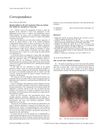
June 2005 in “Clinical Oncology”
2 citations
,
June 2005 in “Clinical Oncology” A man's bald spot grew hair after starting cancer treatment with gefitinib.
10 citations
,
November 2017 in “Letters in drug design & discovery” Researchers identified promising inhibitors for the BRD4 protein, including finasteride and amentoflavone.
 January 2025 in “SKIN The Journal of Cutaneous Medicine”
 Baricitinib significantly regrows hair in severe alopecia areata patients.
19 citations
,
April 2014 in “Expert opinion on emerging drugs” New treatments for a type of skin cancer show promise but have side effects and may work better with other therapies.
 May 2024 in “Journal of molecular structure”
 A new compound, 3a, effectively fights prostate cancer better than finasteride.
2 citations
,
December 2013 in “Cancer research” Enobosarm may effectively treat androgen receptor-positive breast cancer with fewer side effects.
2 citations
,
September 2024 in “PLoS ONE” Bendamustine combined with tucidinostat may effectively treat adult T-cell leukemia.
 1 citations
,
January 2023 in “Cutis”
1 citations
,
January 2023 in “Cutis” The paper concludes that the new medication baricitinib needs further testing in a more diverse group of patients with alopecia areata.
 5 citations
,
January 2021 in “Inflammatory Bowel Diseases”
5 citations
,
January 2021 in “Inflammatory Bowel Diseases” Tofacitinib improved ulcerative colitis, skin ulcers, and hair loss in a patient who didn't respond well to other treatments.
5 citations
,
January 2016 in “International Journal of Trichology” Erlotinib can cause hair loss and texture changes.
21 citations
,
April 2008 in “Toxicologic Pathology” CI-1033 causes skin lesions in rats, similar to humans, due to EGF receptor inhibition.
 14 citations
,
November 2016 in “Annals of Internal Medicine”
14 citations
,
November 2016 in “Annals of Internal Medicine” Tofacitinib, an arthritis drug, helped hair growth in alopecia universalis but long-term safety needs more research.
1 citations
,
May 2025 in “BMC Cancer” CDK4/6 inhibitors affect safety and quality of life differently, requiring careful use.
23 citations
,
October 2008 in “Journal of medicinal chemistry” PF-998425 is a new, effective, and non-phototoxic treatment for skin conditions related to androgens.
4 citations
,
June 2025 in “MedComm” PROTACs show promise for cancer treatment, but designing them effectively is challenging.
![Discovery of 7-Methoxy-6-[4-(4-Methyl-1,3-Thiazol-2-yl)-1H-Imidazol-5-yl]-1,3-Benzothiazole (TASP0382088): A Potent and Selective Transforming Growth Factor-β Type I Receptor Inhibitor as a Topical Drug for Alopecia](/images/assets/9620bd26-3366-4f2a-bcac-f511697bbc41/small/35997.jpg) 6 citations
,
January 2013 in “Chemical & pharmaceutical bulletin/Chemical and pharmaceutical bulletin”
6 citations
,
January 2013 in “Chemical & pharmaceutical bulletin/Chemical and pharmaceutical bulletin” A new compound shows promise as a topical treatment for hair loss.
 September 2024 in “Skin Appendage Disorders”
 Tofacitinib helped a woman regrow her hair without relapses after other treatments failed.
11 citations
,
February 2022 in “JAAD case reports” Abrocitinib, a JAK inhibitor, may help treat atopic dermatitis and alopecia universalis together.