 41 citations
,
January 2011 in “Nippon Ishinkin Gakkai Zasshi”
41 citations
,
January 2011 in “Nippon Ishinkin Gakkai Zasshi” Tinea incognito in Iran commonly affects adults and mimics other skin conditions.
 1 citations
,
January 2022 in “Advances in animal and veterinary sciences”
1 citations
,
January 2022 in “Advances in animal and veterinary sciences” Ketoconazole cream effectively treats fungal skin infections in cats.
 January 2026 in “Academic Journal of Medicine & Health Sciences”
 Phage therapy could be a safe and effective new treatment for acne.
1 citations
,
November 2023 in “Acta Dermato Venereologica”  March 2023 in “PARIPEX INDIAN JOURNAL OF RESEARCH”
 Tofacitinib helped regrow hair in most patients with severe hair loss.
 August 2021 in “Annals of Agricultural and Environmental Medicine”
 The article concludes that understanding Frontal Fibrosing Alopecia (FFA) is crucial for effective treatment, which includes medication like 5α-reductase inhibitors and hydroxychloroquine.
 45 citations
,
January 1998 in “Dermatology”
45 citations
,
January 1998 in “Dermatology” Some skin conditions look like acne but are caused by drugs, and they usually get better when the drug is stopped.
6 citations
,
February 2019 in “Journal of dermatology” Favus, a rare fungal infection, has reappeared in Japan.
 5 citations
,
February 2013 in “Dermatology and therapy”
5 citations
,
February 2013 in “Dermatology and therapy” Crescina® lotion helps reduce hair loss and increase hair growth in males with androgenetic alopecia.
1 citations
,
December 2013 in “Balkan Journal of Medical Genetics” Cystic fibrosis can cause unusual symptoms like hair color changes, which can improve with proper treatment.

More research is needed to understand chemotherapy-induced hair loss and its phases.
 August 2018 in “Journal of the American Academy of Dermatology”
 Reflectance confocal microscopy helped diagnose and manage a woman's hair loss without needing a biopsy.
 32 citations
,
September 2017 in “Journal of the American Academy of Dermatology”
32 citations
,
September 2017 in “Journal of the American Academy of Dermatology” Oral isotretinoin effectively treats yellow facial papules in frontal fibrosing alopecia patients.
October 2020 in “Der Hautarzt” Tofacitinib helped regrow hair in a woman with alopecia areata.
![[4-t-Butylphenyl]-N-(4-imidazol-1-yl phenyl)sulfonamide (ISCK03) Inhibits SCF/c-kit Signaling in 501mel Human Melanoma Cells and Abolishes Melanin Production in Mice and Brownish Guinea Pigs](/images/research/4eb017dc-711d-4926-bcd0-c3b8f48e3a99/small/19974.jpg) 26 citations
,
July 2007 in “Biochemical Pharmacology”
26 citations
,
July 2007 in “Biochemical Pharmacology” ISCK03 stops melanin production in human melanoma cells and lightens skin color in mice and guinea pigs.
13 citations
,
June 2011 in “PubMed” The patient improved significantly after treatment, with only one small scar remaining.
 8 citations
,
October 2019 in “International Journal of Dermatology”
8 citations
,
October 2019 in “International Journal of Dermatology” The study concluded that combination therapy with topical corticosteroids and hydroxychloroquine or finasteride is effective in treating Frontal fibrosing alopecia in Asians.
 6 citations
,
November 2018 in “Antimicrobial agents and chemotherapy (Print)”
6 citations
,
November 2018 in “Antimicrobial agents and chemotherapy (Print)” Fluconazole can cause hair loss, but the exact cause is unknown.
 1 citations
,
August 2023 in “Frontiers in immunology”
1 citations
,
August 2023 in “Frontiers in immunology” Traditional Chinese medicinal foods may help manage long-term post-COVID symptoms.
 January 2025 in “Journal of Case Reports and Scientific Images”
 Early diagnosis and treatment are crucial for managing Folliculotropic Mycosis Fungoides on the scalp.
 November 2022 in “Journal of Investigative Dermatology”
 The medicine Cyclosporin A might cause excessive hair growth by reducing a protein that controls hair growth.
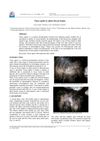
An adult Libyan woman was successfully treated for a rare scalp infection usually seen in children.
18 citations
,
November 1989 in “Clinical and experimental dermatology” Griseofulvin is the best treatment for severe scalp infection caused by Microsporum canis.
A hair growth ointment improved hair length in a family with a genetic hair growth condition.
 November 2024 in “PubMed”
 Terbinafine can cause skin reactions when exposed to sunlight, so sun exposure should be avoided during treatment.
The cream with xyloglucan, pea protein, and cactus extract works as well as the standard treatment for psoriasis and is well-tolerated.
2 citations
,
November 2025 in “Pharmacology Research & Perspectives” Avacopan may cause unexpected side effects, so early monitoring is important.
 3 citations
,
April 2022 in “Cutis”
3 citations
,
April 2022 in “Cutis” CCCA is a common, scarring hair loss in Black women that needs early detection.
2 citations
,
October 2022 in “Dermatologic Therapy” Baricitinib may effectively treat lichen planopilaris.
8 citations
,
July 2003 in “Annals of the Rheumatic Diseases” A 13-year-old girl with various symptoms was successfully treated with an antibiotic called co-trimoxazole.