January 2025 in “Molecules” Caffeine may help with hair loss, but more research is needed to confirm its effectiveness.
 December 2024 in “http://isrctn.com/”
 MpowerTM may improve hair growth and satisfaction more than plain minoxidil, with mild side effects.
 November 2024 in “International Journal of Molecular Sciences”
 Nanoparticles may improve caffeine delivery for hair growth, offering a potential alternative to minoxidil for hair loss treatment.
 August 2024 in “Cosmetics”
 Caffeine is beneficial for skin and hair treatments but needs better delivery methods to penetrate deeper skin layers.
 May 2024 in “Journal of cosmetic dermatology”
 A shampoo with caffeine and adenosine may help prevent hair loss and thicken hair.

TrichoFoam™ is a stable option for personalized hair loss treatment with most ingredients remaining effective for 90-180 days.

Red clover and caffeine both promote hair growth, but combining them doesn't enhance the effect.
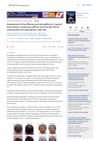 November 2023 in “Journal of Cosmetic Dermatology”
 The topical treatment with caffeine and Procapil 3% improved male pattern hair loss and was well tolerated after 12 weeks.
 September 2023 in “Journal of The American Academy of Dermatology”
 Caffeine may help hair grow better.

Cinchona succirubra extract with caffeine reduces hair loss and strengthens hair.
 April 2023 in “Journal of Investigative Dermatology”
 Cinchona succirubra extract with caffeine improves hair growth and reduces hair loss.
 July 2022 in “http://isrctn.com/”
 Adding a cosmetic gel with caffeine, taurine, and growth factors to standard hair loss treatments could improve results.
 July 2022 in “International Journal of Applied Pharmaceutics”
 The optimized caffeine formula improved hair growth and penetrated all skin layers.
 January 2022 in “DOAJ (DOAJ: Directory of Open Access Journals)”
 Argan oil-based nano carriers could potentially deliver caffeine to hair follicles to treat hair loss.
 November 2021 in “Research Square (Research Square)”
 The new caffeine cream works better for hair growth than existing products.
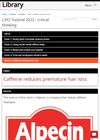
Caffeine in Alpecin shampoo may help prolong hair root activity and reduce hair loss.
 December 2020 in “Journal of Cosmetic Science”
 The caffeine content in anticellulite gels is 0.7-1.7% and in hair-care products is about 1.0%.
 April 2019 in “Journal of Investigative Dermatology”
 Caffeine can protect scalp hair follicles from damage caused by UV radiation.
 September 2014 in “Hair transplant forum international”
 Caffeine, niacinamide, and panthenol may improve hair growth, fullness, and healing when applied to the scalp.

The optimal concentration for caffeine release in gel form is 0.2% caffeine and 2.3% chitosan.
Nanoparticles with caffeine can be used for slow, continuous hair growth stimulation.
December 2022 in “Clinical and experimental dermatology and therapies” Adding the topical gel improved hair growth more than using minoxidil or finasteride alone.
December 2022 in “Scientific Reports” Compound 4 is a promising treatment for hair loss with low toxicity.

Caffeine can potentially treat common hair loss by counteracting hair follicle shrinkage caused by hormones.
The caffeine shampoo for hair loss is stable and suitable for use.
 November 2013 in “Journal of Mazandaran University of Medical Sciences”
 Minoxidil with caffeine works better for hair loss than minoxidil alone.
5 citations
,
October 2020 in “Giornale italiano di dermatologia e venereologia” The phyto-caffeine shampoo reduced hair loss and improved hair strength in women with hair thinning.
55 citations
,
March 2005 in “Neuropharmacology” A neurosteroid can reduce caffeine-induced anxiety in rats.
January 2024 in “SSRN Electronic Journal”