 August 2024 in “IAHS Medical Journal”
 Low vitamin D and ferritin levels are linked to female hair loss.
100 citations
,
October 1986 in “Clinical Endocrinology” Alopecia indicates more severe resistance to 1,25-dihydroxyvitamin D.
81 citations
,
March 1985 in “Journal of Clinical Investigation” Measuring 24-OHase induction helps identify defects in vitamin D processing and predict treatment response.
96 citations
,
August 1995 in “Bone” Vitamin D3 is important for bone health and may help treat various diseases beyond bone-related conditions.
 July 1996 in “Clinical and Experimental Dermatology”
 Putting calcipotriol ointment on the skin once doesn't change calcium levels in the body right away.
76 citations
,
January 2010 in “Journal of bone and mineral metabolism” 3 citations
,
January 1996 in “Journal of Dermatological Treatment” The ointment is a safe, effective, and well-tolerated treatment for certain types of psoriasis.
October 1990 in “Pediatric Research” Nocturnal calcium infusions improved a boy's severe rickets without causing hair loss.
 8 citations
,
December 1981 in “Journal of The American Academy of Dermatology”
8 citations
,
December 1981 in “Journal of The American Academy of Dermatology” The document concludes that parathyroid diseases have a range of clinical features and outcomes, with some conditions being treatable and others having a high risk of mortality.
 October 2023 in “International Journal of Ayurvedic Medicine”
 White Oyster Mushrooms can help improve Vitamin D levels.
March 2019 in “Reactions Weekly” 18 citations
,
March 2016 in “Journal of Investigative Dermatology” Vitamin D and calcium are essential for normal hair growth.
55 citations
,
May 1985 in “Archives of Dermatology” Calcitriol-resistant rickets is an inherited disorder that affects hair growth and causes hair loss.
11 citations
,
May 1985 in “Archives of Dermatology” Calcitriol-resistant rickets is an inherited disorder that affects hair growth and causes hair loss.
3 citations
,
December 2010 in “Annals of tropical paediatrics” A boy's hair loss and bone issues improved with specific vitamin D treatment and calcium.
40 citations
,
March 1991 in “Journal of Investigative Dermatology” 
The vitamin D receptor has many roles in the body beyond managing calcium, affecting the immune system, hair growth, muscles, fat, bone marrow, and cancer cells.
7 citations
,
April 1996 in “Archives of dermatological research” Topical tacalcitol can treat psoriasis by acting directly on skin cells.
May 2003 in “Journal of clinical oncology”  December 2019 in “bioRxiv (Cold Spring Harbor Laboratory)”
 Redheaded people have higher levels of a vitamin D precursor, suggesting red hair may be an adaptation for better vitamin D synthesis in areas with less sunlight.
9 citations
,
July 1961 in “Journal of Investigative Dermatology” Cutaneous calcinosis can be induced in young animals using certain compounds, but only in specific areas and with high mortality.
3 citations
,
July 1992 in “Clinics in Dermatology” Vitamin D helps regulate calcium levels in the body.
 6 citations
,
August 1989 in “European journal of pediatrics”
6 citations
,
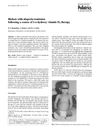
August 1989 in “European journal of pediatrics” Child with rickets improved with a specific vitamin D therapy, but alopecia did not change.
 510 citations
,
August 2006 in “Endocrinology”
510 citations
,
August 2006 in “Endocrinology” The vitamin D receptor is involved in multiple body functions beyond calcium regulation, including immune response and rapid reactions not related to gene activity.
 October 2004 in “Radiotherapy and oncology”
 Active vitamin D3 might protect hair follicles from radiation damage.
110 citations
,
November 1984 in “The American Journal of Medicine” A genetic defect in vitamin D receptors causes severe rickets and hair loss in children, but some heal as they age.
July 2023 in “Media Dermato Venereologica Indonesiana” Vitamin D supplements should be used cautiously in sarcoidosis patients, with regular monitoring to avoid high calcium levels.
 January 2025 in “Clinical Pediatric Endocrinology”
 Calcium supplements improved bone deformities but not skin papules or hair loss.
 10 citations
,
September 2015 in “PLoS ONE”
10 citations
,
September 2015 in “PLoS ONE” New mutations in the VDR gene cause vitamin D-resistant rickets without hair loss.
 7 citations
,
August 2013 in “Experimental and Therapeutic Medicine”
7 citations
,
August 2013 in “Experimental and Therapeutic Medicine” 1,25-dihydroxyvitamin D3 helps melanocyte precursors from hair follicles grow and produce melanin, aiding vitiligo treatment understanding.