 June 2023 in “JAAD case reports”
 The document concludes that "hot comb alopecia" is now called "central cicatricial centrifugal alopecia" and its causes are complex.
 11 citations
,
January 2014 in “Indian journal of dermatology, venereology, and leprology”
11 citations
,
January 2014 in “Indian journal of dermatology, venereology, and leprology” Trichosporon inkin and Trichosporon mucoides can cause white piedra on scalp hair.
 18 citations
,
March 2011 in “Archives of ophthalmology”
18 citations
,
March 2011 in “Archives of ophthalmology” Ringworm around the eyes often gets misdiagnosed, leading to eyelash loss, but antifungal treatment can improve the condition.
July 2024 in “LA CIENCIA AL SERVICIO DE LA SALUD Y NUTRICIÓN” The condition is harmless, doesn't worsen, and needs no invasive treatment.
5 citations
,
March 1943 in “Archives of Dermatology and Syphilology” A rare case of severe scalp hair loss and nail issues in keratosis follicularis was observed.
13 citations
,
September 1997 in “Archives of Dermatology” The boy likely has a fungal infection causing hair loss.
4 citations
,
November 2018 in “Postgraduate Medical Journal” Trichoscopy is a useful, quick, and non-invasive way to diagnose tinea capitis.
 22 citations
,
December 2003 in “Veterinary clinical pathology”
22 citations
,
December 2003 in “Veterinary clinical pathology” The Persian cat has a skin infection caused by a fungus, treatable with antifungal medication.
October 2021 in “European Journal of Dermatology” CAL-PDT is safer and more effective for treating actinic keratosis on the scalp.
January 2026 in “Surgical & Cosmetic Dermatology” March 2021 in “Revista da Associação Médica Brasileira”  11 citations
,
January 1998 in “Dermatology”
11 citations
,
January 1998 in “Dermatology” Isotretinoin effectively treated severe acne in HIV-positive women, with improved skin and CD4 counts, but some experienced side effects like skin dryness and hair loss.
April 2026 in “Reviews in Medical Virology” Trichodysplasia spinulosa is a rare skin condition linked to weakened immune systems, mostly in organ transplant patients.
 2 citations
,
August 2021 in “Skin appendage disorders”
2 citations
,
August 2021 in “Skin appendage disorders” White piedra is a rare hair infection treated with oral and topical antifungals.
 40 citations
,
August 2010 in “Archives of dermatology”
40 citations
,
August 2010 in “Archives of dermatology” A 5-year-old boy's skin condition improved with systemic valganciclovir after a cardiac transplant and immunosuppressive therapy.
 March 2026 in “Nature Communications”
 Genetic factors, skin barrier, immune function, and obesity influence risk of fungal skin infections.
 January 2020 in “Przegla̧d dermatologiczny”
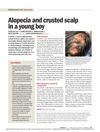
 A 5-year-old boy was diagnosed with congenital triangular alopecia, a type of hair loss without skin changes, usually starting between ages 2-5, with no specific treatment.
 March 2026 in “Open MIND”
 Early treatment of scalp infections can prevent permanent hair loss.
2 citations
,
March 2019 in “PubMed” Fusidic acid successfully treated a rare scalp infection with hair regrowth and no recurrence after 6 months.
January 2023 in “Indian Dermatology Online Journal” A 23-year-old man has a benign, non-progressive hair loss patch that doesn't respond to treatment but can be cosmetically treated.
 September 2024 in “Seven Editora eBooks”
 Dermatophylosis sporadically affects adult sheep in Sertão da Paraíba, causing alopecic and crusty skin lesions.
6 citations
,
September 2011 in “Journal of the American Academy of Dermatology” A man with HIV had an unusual syphilis rash that looked like folliculitis but was cured with penicillin.
January 2025 in “Surgical & Cosmetic Dermatology” Temporal triangular alopecia causes permanent hair loss and can be managed with treatments like minoxidil or hair transplantation.

Posaconazole successfully treated a resistant skin infection in a Spitz dog when other antifungals failed.
 October 2023 in “Jurnal Ilmu Kesehatan Hewan”
 The kitten's skin condition improved significantly after 4 weeks of treatment.
 1 citations
,
January 2014 in “The Journal of Dermatology”
1 citations
,
January 2014 in “The Journal of Dermatology” A patient with Ivemark syndrome developed mixed type vitiligo after a hepatitis C infection, showing different treatment responses and immune cell involvement in the skin.

A teenager had both alopecia areata and vitiligo, which are rare to occur together.
6 citations
,
March 2005 in “Journal of the American Academy of Dermatology” Follicular dystrophy in immunocompromised patients may be linked to medication or viral factors and can improve with treatment changes.
 18 citations
,
July 2001 in “Australian veterinary journal”
18 citations
,
July 2001 in “Australian veterinary journal” A cat with skin bumps and itching had high blood fats and skin infections, which improved with diet and medication changes.
22 citations
,
January 2020 in “Veterinary dermatology” The conclusion is that certain dog and cat breeds are prone to Malassezia dermatitis, which can be diagnosed with skin tests and treated with antifungal shampoos or medications, and preventing relapses involves managing underlying issues and maintaining good hygiene.