1 citations
,
May 2025 in “BMC Veterinary Research” Early diagnosis and treatment of hypothyroidism in dogs is crucial to prevent serious complications.
 5 citations
,
January 2010 in “The anatomical record”
5 citations
,
January 2010 in “The anatomical record” Most dogs have hair whorls on their chest and limbs, with shelter dogs and short-haired dogs having more chest whorls.
 3 citations
,
September 2022 in “Veterinary Dermatology”
3 citations
,
September 2022 in “Veterinary Dermatology” Melatonin implants did not effectively prevent hair loss in dogs.
1 citations
,
October 2024 in “Canine Medicine and Genetics” The MLPH gene is not linked to seasonal hair loss in Rhodesian Ridgeback dogs.
 January 2025 in “Pakistan Veterinary Journal”
 Microneedling may help regrow hair in dogs with certain types of alopecia.
 December 2019 in “Mehmet Akif Ersoy Üniversitesi Sağlık Bilimleri Enstitüsü dergisi”
 One cat with low thyroid hormone had growth issues, and another with high thyroid hormone had skin problems; both got better with treatment.
 August 2017 in “Companion animal”
 Focal alopecia in dogs has many causes and requires various tests for accurate diagnosis and treatment.
 1 citations
,
January 2006 in “Elsevier eBooks”
1 citations
,
January 2006 in “Elsevier eBooks” Cats lose fur due to various reasons, including allergies, infections, genetics, hormones, diet, cancer, stress, and some conditions are treatable while others are not.
May 2025 in “American Journal of Veterinary Research” Photobiomodulation did not significantly improve hair density in dogs with alopecia X.
5 citations
,
October 2020 in “Veterinary record case reports” Fluorescent light energy may help treat skin infections in dogs with calcinosis cutis.
April 2018 in “Blackwell's Five‐Minute Veterinary Consult Clinical Companion” The document concludes that skin and hair changes in small animals are often due to hormonal imbalances and recommends regular baths and antibiotics for associated infections.

Alopecia in dogs requires identifying the cause for effective treatment.
October 2021 in “Case Reports in Veterinary Medicine” The dog died from myxedema coma linked to severe atherosclerosis and thyroid issues.
 28 citations
,
March 2016 in “Toxicologic pathology”
28 citations
,
March 2016 in “Toxicologic pathology” Dogs could be good models for studying human hair growth and hair loss.
 August 2015 in “Advances in Small Animal Medicine and Surgery”
 Low-level laser therapy may help regrow hair in dogs with non-inflammatory hair loss.
 23 citations
,
February 1979 in “Veterinary Clinics of North America: Small Animal Practice”
23 citations
,
February 1979 in “Veterinary Clinics of North America: Small Animal Practice” Treatment can improve survival and symptoms in dogs with Cushing's disease, but outcomes are unpredictable.
 22 citations
,
September 2014 in “Veterinary Dermatology”
22 citations
,
September 2014 in “Veterinary Dermatology” Low-level laser therapy seems to help dogs with noninflammatory alopecia grow hair back.
 20 citations
,
July 2006 in “Veterinary dermatology”
20 citations
,
July 2006 in “Veterinary dermatology” Melatonin helped some Pomeranian dogs regrow hair, but it wasn't linked to estrogen receptors.
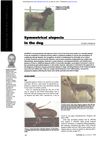 7 citations
,
July 1999 in “In Practice”
7 citations
,
July 1999 in “In Practice” The conclusion is that a systematic approach is key for treating symmetrical alopecia in dogs, but treatment may not always be necessary.

The document concludes that non-endocrine alopecia in pets varies in treatment effectiveness and often has a poor prognosis, especially in cats.
 34 citations
,
March 2003 in “Veterinary Dermatology”
34 citations
,
March 2003 in “Veterinary Dermatology” Most dogs with alopecia had higher than normal levels of certain hormones, but hair loss might not always be linked to these hormone changes.
 21 citations
,
May 2005 in “Journal of the American Veterinary Medical Association”
21 citations
,
May 2005 in “Journal of the American Veterinary Medical Association” The exact cause of growth hormone-responsive alopecia in dogs is unclear.
 9 citations
,
November 2007 in “Veterinary dermatology”
9 citations
,
November 2007 in “Veterinary dermatology” Boxer and Labrador dogs' hair growth is affected by the tropical climate, but Schnauzers' is not.
 3 citations
,
May 2018 in “The Journal of the American Animal Hospital Association/Journal of the American Animal Hospital Association”
3 citations
,
May 2018 in “The Journal of the American Animal Hospital Association/Journal of the American Animal Hospital Association” Deslorelin implants successfully treated hair loss in two male Keeshonden dogs.

Accurate diagnosis and tailored treatments are crucial for managing hair loss in humans and animals.
 17 citations
,
January 2006 in “Veterinary Dermatology”
17 citations
,
January 2006 in “Veterinary Dermatology” Topical melatonin and brushing did not affect hair regrowth in Siberian Huskies.
 55 citations
,
March 1990 in “The Journal of Clinical Endocrinology and Metabolism”
55 citations
,
March 1990 in “The Journal of Clinical Endocrinology and Metabolism” Finasteride may treat baldness but less effective for those with 5α-reductase deficiency.
 52 citations
,
October 2004 in “Veterinary dermatology”
52 citations
,
October 2004 in “Veterinary dermatology” Melatonin and mitotane treatment led to hair re-growth in 62% of dogs with Alopecia X, but this was not always linked to normal hormone levels.
 15 citations
,
September 2005 in “The Journal of the American Animal Hospital Association/Journal of the American Animal Hospital Association”
15 citations
,
September 2005 in “The Journal of the American Animal Hospital Association/Journal of the American Animal Hospital Association” Trilostane effectively treated hair loss in Alaskan Malamutes with no adverse effects.