 8 citations
,
January 2023 in “RSC Advances”
8 citations
,
January 2023 in “RSC Advances” Carbon dots show promise for tissue repair and growth but need more research to solve current challenges.
June 2026 in “ACS Applied Materials & Interfaces” Dandelion-derived carbon dots effectively kill bacteria and speed up wound healing.
February 2026 in “ACS Applied Materials & Interfaces” Carbon dots from Cinnamomum burmannii leaves can promote hair growth and regeneration.
August 2025 in “Rare Metals” Metformin/dopamine-derived carbon dots help heal bacteria-infected wounds faster.
 December 2023 in “Materials Today Sustainability”
 Scientists made glow-in-the-dark dots from human hair that can detect iron, prevent counterfeiting, and reveal fingerprints.
 January 2024 in “LA Referencia (Red Federada de Repositorios Institucionales de Publicaciones Científicas)”
 Carbon Quantum Dots can effectively detect cobalt ions and methylcobalamin in water.
A new sprayable hydrogel helps heal wounds faster and reduces inflammation.
 April 2024 in “JMR. Journal of molecular recognition/Journal of molecular recognition”
 Hydrophilic carbon dots cause one protein to clump more and prevent another from clumping.
61 citations
,
July 2022 in “Journal of Nanobiotechnology” Fucoidan-derived carbon dots can effectively treat root canal infections by killing bacteria and are safer than traditional disinfectants.

Dandelion-derived carbon dots effectively kill bacteria and speed up wound healing.
The hydrogel speeds up wound healing and improves tissue repair.
January 2025 in “Journal of the Egyptian Womenʼs Dermatologic Society” Both cryotherapy and FCO2 laser are effective and safe for treating patchy alopecia areata.
43 citations
,
November 2012 in “Pharmaceutical research” Fractional CO2 laser treatment significantly boosts drug and nanoparticle skin absorption, especially through hair follicles.
 28 citations
,
January 2017 in “Critical Reviews in Therapeutic Drug Carrier Systems”
28 citations
,
January 2017 in “Critical Reviews in Therapeutic Drug Carrier Systems” Nanomaterials in biomedicine can improve treatments but may have risks like toxicity, needing more safety research.
87 citations
,
December 2020 in “Journal of Materials Chemistry B” The nanofiber dressing speeds up wound healing and hair growth while preventing bacterial growth.
 3 citations
,
September 2022 in “Archives of dermatological research”
3 citations
,
September 2022 in “Archives of dermatological research” The fractional carbon dioxide laser is a safe and effective treatment for alopecia areata and works better than betamethasone valerate cream alone.
 1 citations
,
March 2024 in “International Journal of Dermatology”
1 citations
,
March 2024 in “International Journal of Dermatology” CO2 laser-associated PDT effectively treated therapy-resistant folliculitis decalvans.
 16 citations
,
February 2018 in “Journal of Cosmetic Dermatology”
16 citations
,
February 2018 in “Journal of Cosmetic Dermatology” Carboxytherapy may help increase hair growth in alopecia patients but requires ongoing treatment.
 62 citations
,
October 2010 in “Journal of biomedical nanotechnology”
62 citations
,
October 2010 in “Journal of biomedical nanotechnology” Nanoparticles can enter the skin, potentially causing toxicity, especially in damaged skin.
 February 2023 in “Archives of Dermatological Research”
 Laser treatment, especially when combined with other therapies, is effective for hair regrowth in alopecia areata.
 21 citations
,
September 2015 in “Journal of the European Academy of Dermatology and Venereology”
21 citations
,
September 2015 in “Journal of the European Academy of Dermatology and Venereology” Yellow and orange colors are important for diagnosing certain skin conditions.
 16 citations
,
May 2017 in “American Journal of Clinical Dermatology”
16 citations
,
May 2017 in “American Journal of Clinical Dermatology” The document concludes that more research is needed to understand and treat Beard Alopecia Areata due to limited current knowledge and evidence.
 June 2019 in “Journal of evolution of medical and dental sciences”
 Dermoscopy is useful for tracking alopecia areata treatment, with yellow dots and new vellus hairs being good indicators of hair regrowth.
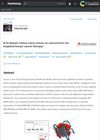 January 2025 in “Nanoscale”
 Boron/nitrogen-doped carbon nano-onions improve targeted breast cancer treatment by enhancing drug delivery and reducing side effects.
6 citations
,
January 2019 in “Journal of lasers in medical sciences” Using a fractional CO2 laser helps Minoxidil work better for hair regrowth.
January 2026 in “Microchemical Journal” A new method accurately detects minoxidil in hair lotions, revealing discrepancies in labeled content.
 September 2024 in “Egyptian Journal of Dermatology and Venerology”
 Low-energy fractional CO2 laser therapy significantly improves hair regrowth in women with female-pattern hair loss.
5 citations
,
December 2023 in “Materials” Organic and biogenic nanocarriers can improve drug delivery but face challenges like consistency and safety.
November 2022 in “IntechOpen eBooks” Nanotechnology can improve wound healing by enhancing treatments and dressings.
1 citations
,
February 2025 in “Archives of Dermatological Research” Using Excimer light with topical steroids is the most effective treatment for alopecia areata.