49 citations
,
November 2021 in “Annual review of pathology” Lysophospholipids like LPA and S1P are important for hair growth, immune responses, and vascular development, and could be targeted for treating diseases.
 5 citations
,
January 2023 in “Journal of the European Academy of Dermatology and Venereology”
5 citations
,
January 2023 in “Journal of the European Academy of Dermatology and Venereology” Experts advise using sunscreen and proper skin care before, during, and after procedures to speed healing, prevent complications, and reduce scarring.
7 citations
,
August 2023 in “Life” Extracellular vesicles could help tailor drug treatments, but more research is needed.
 56 citations
,
June 1970 in “The BMJ”
56 citations
,
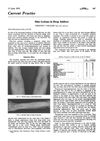
June 1970 in “The BMJ” Drug addicts often have scars, skin color changes, blocked veins, and bruising, with severe ulcers from barbiturate injections.
 January 2014 in “대한미용학회지”
 Using supercritical carbon dioxide can change the size of Hinokitiol particles.
 18 citations
,
January 2015 in “Data series”
18 citations
,
January 2015 in “Data series” Hurricane Sandy increased contamination in estuarine sediments in New Jersey and New York.
 5 citations
,
April 2016 in “Proceedings of the Latvian Academy of Sciences. Section B, Natural, Exact and Applied Sciences”
5 citations
,
April 2016 in “Proceedings of the Latvian Academy of Sciences. Section B, Natural, Exact and Applied Sciences” Researchers created small amber particles for use in bioactive and biocompatible fibers that could help with skin and hair restoration and are safe for infant clothing.
 24 citations
,
June 2020 in “Industrial Crops and Products”
24 citations
,
June 2020 in “Industrial Crops and Products” Activated carbon fibers from Metaplexis japonica seed hair are highly effective for removing the dye methylene blue from water.
 March 2012 in “Korean Journal of Microscopy”
 Quantum dot nanoparticles can penetrate skin and reach sebocytes through hair follicles.
 18 citations
,
January 2016 in “Elsevier eBooks”
18 citations
,
January 2016 in “Elsevier eBooks” Nanotechnology improves cosmetics' effectiveness and safety.
 December 2023 in “Materials Today Sustainability”
 Scientists made glow-in-the-dark dots from human hair that can detect iron, prevent counterfeiting, and reveal fingerprints.
 28 citations
,
January 2017 in “Critical Reviews in Therapeutic Drug Carrier Systems”
28 citations
,
January 2017 in “Critical Reviews in Therapeutic Drug Carrier Systems” Nanomaterials in biomedicine can improve treatments but may have risks like toxicity, needing more safety research.
26 citations
,
April 2024 in “Particle and Fibre Toxicology” Nanoplastics can penetrate skin cells, triggering inflammation and immune responses.

The new sensor can detect a toxic chemical in water with high sensitivity and accuracy.
13 citations
,
July 2019 in “Chemical papers/Chemické zvesti” A new sensor can detect minoxidil accurately and effectively.
2 citations
,
October 2024 in “Pharmaceutics” Smaller particle sizes of Tetrastigma hemsleyanum powders improve their effectiveness and liver health benefits.
 2 citations
,
January 2022 in “Lasers in Medical Science”
2 citations
,
January 2022 in “Lasers in Medical Science” Using a carbon dioxide laser and platelet-rich plasma together can effectively restore hair and patients are generally satisfied with the results.
 May 2024 in “Plant and Soil”
 Root hairs in maize grow mainly in air-filled pores, limiting their role in nutrient uptake and plant anchorage.
 28 citations
,
November 2020 in “Fluid Phase Equilibria”
28 citations
,
November 2020 in “Fluid Phase Equilibria” Minoxidil dissolves better in propylene glycol + water than in supercritical CO2.
 23 citations
,
January 2017 in “Journal of Oleo Science”
23 citations
,
January 2017 in “Journal of Oleo Science” Supercritical CO2 extraction makes rice bran oil healthier and safer than traditional methods.
 19 citations
,
November 2023 in “npj Regenerative Medicine”
19 citations
,
November 2023 in “npj Regenerative Medicine” Synthetic melanin applied to skin speeds up wound healing.
61 citations
,
July 2022 in “Journal of Nanobiotechnology” Fucoidan-derived carbon dots can effectively treat root canal infections by killing bacteria and are safer than traditional disinfectants.
 January 2025 in “Nanoscale”
 Boron/nitrogen-doped carbon nano-onions improve targeted breast cancer treatment by enhancing drug delivery and reducing side effects.
5 citations
,
December 2023 in “Materials” Organic and biogenic nanocarriers can improve drug delivery but face challenges like consistency and safety.
 113 citations
,
November 2017 in “Scientific Reports”
113 citations
,
November 2017 in “Scientific Reports” Tiny particles from stem cells help activate hair growth cells and encourage hair growth in mice without being toxic.
 9 citations
,
November 2017 in “International Journal of Nanomedicine”
9 citations
,
November 2017 in “International Journal of Nanomedicine” Tiny particles called anionic squarticles can effectively remove a common antidepressant from the body after an overdose.
 2 citations
,
November 2021 in “International Journal of Applied Pharmaceutics”
2 citations
,
November 2021 in “International Journal of Applied Pharmaceutics” The phytosome lotion made from Mangkokan leaf extract was more effective for hair growth than 2% minoxidil, especially at 30% concentration.
January 2026 in “Materialia” Porcine ADM scaffold helps hair growth in mice.
 April 2025 in “Clinical and Translational Discovery”
 The ketoconazole gel improved hair growth and is a promising treatment for hair loss.
 215 citations
,
March 2018 in “Archives of Toxicology”
215 citations
,
March 2018 in “Archives of Toxicology” Tiny pollution particles called PM2.5 can harm skin cells by causing stress, damage to cell parts, and cell death.