8 citations
,
July 2016 in “Oncotarget” Lgr5+ stem cells do not cause skin tumors.
 7 citations
,
March 2018 in “Asian-Australasian journal of animal sciences”
7 citations
,
March 2018 in “Asian-Australasian journal of animal sciences” OCIAD2 and DCN genes affect hair growth in goats by having opposite effects on a growth signaling pathway and inhibiting each other.
7 citations
,
November 2016 in “Oncotarget” UV exposure reduces Lgr6+ stem cells in mouse skin and they don't significantly contribute to skin cancer development.
 6 citations
,
July 2011 in “British Journal of Dermatology”
6 citations
,
July 2011 in “British Journal of Dermatology” A man with KID syndrome developed a rare cancer in a long-term skin infection.
4 citations
,
December 2024 in “International Journal of Dermatology” Mohs micrographic surgery is more effective than surgical excision for treating pilomatrix carcinoma, with no recurrences.
 4 citations
,
September 2024 in “Frontiers in Endocrinology”
4 citations
,
September 2024 in “Frontiers in Endocrinology” Serum steroid profiling, especially 11-deoxycortisol, helps distinguish between adrenocortical carcinoma and adenoma, considering sex and functional status.
 4 citations
,
July 2015 in “Journal of Feline Medicine and Surgery Open Reports”
4 citations
,
July 2015 in “Journal of Feline Medicine and Surgery Open Reports” A cat with hair loss and illness was found to have cancer spread from its colon.
2 citations
,
December 2016 in “PubMed” Adrenocortical carcinoma is a rare, aggressive adrenal gland cancer with a poor outlook.
2 citations
,
July 2001 in “Dermatologic Surgery” Trichoblastic carcinoma may be a distinct type of skin cancer different from basal cell carcinoma.
1 citations
,
June 2024 in “Anais Brasileiros de Dermatologia” Recognizing specific scalp patterns can help diagnose hair loss linked to breast cancer spread.
 1 citations
,
November 2023 in “American journal of clinical pathology”
1 citations
,
November 2023 in “American journal of clinical pathology” Transgender men on testosterone therapy need ongoing gynecologic care due to potential cancer risks.
 1 citations
,
May 2001 in “Pharmacology & Toxicology”
1 citations
,
May 2001 in “Pharmacology & Toxicology” Cyproterone acetate may cause liver cancer at high doses, but is considered safe at recommended doses for approved uses.
January 2026 in “Annals of Pathology and Laboratory Medicine” Accurate diagnosis of rare pilomatrix carcinoma is crucial for effective treatment.
 September 2025 in “Archives of Dermatological Research”
 Basal cell carcinoma is more common than squamous cell carcinoma on the scalp, especially along the part line.
 April 2025 in “BMC Urology”
 Thorough evaluations and conservative management can lead to positive outcomes in pediatric adrenocortical carcinoma.
April 2025 in “Asian Journal of Case Reports in Surgery” Trichilemmal carcinoma is a rare skin cancer that requires careful diagnosis and follow-up.
 January 2025 in “Dermatology Review”
 Trichilemmal carcinoma is rare, usually benign after removal, but needs close follow-up due to recurrence risks.
November 2024 in “International Journal of Molecular Sciences” Hair helps prevent scalp skin cancer by supporting immune protection.
September 2024 in “Journal of the American Academy of Dermatology” Most U.S. keratinocyte carcinoma patients are older white males living in urban areas.
 January 2024 in “Diagnostic cytopathology”
 Trichilemmal carcinoma can spread to the parotid gland and be diagnosed using fine-needle aspiration cytology.
 January 2024 in “JCEM case reports”
 This is the first known case of parathyroid cancer in a patient with Birt Hogg Dube Syndrome.
 December 2023 in “The journal of investigative dermatology/Journal of investigative dermatology”
 MCPIP1 in myeloid cells is important for skin cancer development and healthy hair growth.

A neck lesion misdiagnosed as benign was later treated successfully with Mohs Micrographic Surgery.
 January 2023 in “International Journal of Clinical and Medical Education Research”
 Correct testosterone levels for age to treat prostate cancer, using low dose treatments as necessary.
 November 2022 in “Journal of the Endocrine Society”
 A man's rare adrenal tumor caused feminization and white hair, was removed surgically, and improved after treatment.
 October 2021 in “Acta Scientific Medical Sciences”
 A woman was diagnosed with a rare adrenal gland cancer that did not show usual hormone-related symptoms.
 May 2020 in “Research Square (Research Square)”
 Trichilemmal carcinoma shares genetic traits with other skin cancers, suggesting similar treatment options.
 April 2020 in “Research Square (Research Square)”
 Trichilemmal carcinoma shares genetic traits with other skin cancers, suggesting similar treatment options.
 March 2020 in “The journal of investigative dermatology/Journal of investigative dermatology”
 Suppressing very long chain fatty acids is linked to skin cancer.
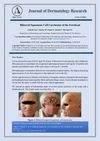
A 70-year-old man with skin cancer on both sides of his forehead was treated with surgery and cryotherapy, highlighting the need for early detection and prevention.