 1 citations
,
August 2023 in “Journal of Dentomaxillofacial Science”
1 citations
,
August 2023 in “Journal of Dentomaxillofacial Science” Freeze-dried platelet-rich plasma boosts bone growth in gum treatment.
 January 2025 in “Open Life Sciences”
 Overexpression of the HE4 gene in mice causes eye inflammation and cloudiness.
Granzyme B accelerates skin aging and impairs healing by breaking down important skin components.
39 citations
,
November 2007 in “Journal of Histochemistry & Cytochemistry” NG2 is crucial for normal skin and hair development in mice.
 February 2024 in “World journal of stem cells”
 Adipose-derived stem cells can help repair and improve eye tissues and appearance.
52 citations
,
May 2006 in “Journal of Structural Biology” Keratin-associated proteins help link filaments and affect keratin's strength.
January 2025 in “Fìzìologìčnij žurnal” PDRN may reduce inflammation and complications in revision rhinoplasty for patients with high fibrinogen levels.
1 citations
,
August 2014 in “OhioLink ETD Center (Ohio Library and Information Network)” Alkylated keratin from human hair can help deliver growth factors for bone healing.
Trichohyalin, a protein from pig tongue, was purified and found to have a filamentous structure.
221 citations
,
July 2012 in “Proceedings of the National Academy of Sciences of the United States of America” BMAL1 controls skin cell growth and UV damage risk, peaking at night.
 September 2019 in “The journal of investigative dermatology/Journal of investigative dermatology”
 Not having enough cystatin M/E protein causes less hair growth and dry skin.
 22 citations
,
February 2013 in “Wound Repair and Regeneration”
22 citations
,
February 2013 in “Wound Repair and Regeneration” Mice genetically modified to produce more CD109 in their skin had less inflammation and better healing with less scarring.
 22 citations
,
December 2016 in “PloS one”
22 citations
,
December 2016 in “PloS one” A specific protein in chicken embryos links early skin layers to feather development.
 33 citations
,
January 2009 in “Contraception”
33 citations
,
January 2009 in “Contraception” Chlormadinone acetate is a strong, well-tolerated hormone used in birth control and hormone therapy with benefits for menstrual pain and skin conditions.
 6 citations
,
September 2019 in “Skin pharmacology and physiology”
6 citations
,
September 2019 in “Skin pharmacology and physiology” RCS-01 therapy is safe and may improve skin structure by affecting gene expression.
 November 2023 in “The journal of investigative dermatology/Journal of investigative dermatology”
 Removing MCPIP1 from myeloid cells in mice leads to hair loss and prevents skin tumors but causes pigmented spots.
201 citations
,
May 2001 in “Proceedings of the National Academy of Sciences” Overexpression of COX-2 in mice skin causes abnormal skin and hair development.
4 citations
,
May 1981 in “Australian Journal of Biological Sciences” Rat hair follicle cells can produce and release various glycosaminoglycans over time.
 7 citations
,
February 2010 in “British Journal of Dermatology”
7 citations
,
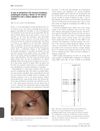
February 2010 in “British Journal of Dermatology” A woman with a rare autoimmune disorder had a blister on her eye and unique immune reaction, which was effectively treated with medication.
11 citations
,
January 2024 in “Regenerative Biomaterials” A new 3D-printed hydrogel scaffold helps regenerate corneas and prevent scarring.
35 citations
,
June 2012 in “PloS one” Keratin 15 expression in skin cells is regulated by two mechanisms involving PKC/AP-1 and FOXM1.
 August 2023 in “International Journal of Molecular Sciences”
 The new hydrogel with zinc and polysaccharides improves wound healing and has antibacterial properties.
7 citations
,
January 2025 in “ACS Applied Materials & Interfaces” The hydrogel made from egg white and zinc speeds up wound healing.
2 citations
,
May 2011 in “Pigment Cell & Melanoma Research” Collagen XVII is crucial for preventing hair and pigmentation loss by maintaining melanocyte stem cells.
 January 2023 in “International journal of biological sciences”
 COX2 and ATP synthase control the size of hedgehog spines.
Par3–mInsc and Gαi3 work together to ensure proper cell division orientation in skin development.
11 citations
,
May 2013 in “Journal of Investigative Dermatology” KRTAP10 proteins help form the hair shaft's tough outer layer by interacting with specific hair keratins.

The hydrogel treatment speeds up healing of diabetic wounds.
48 citations
,
August 1998 in “Developmental Biology” Deleting part of a gene in mice causes wavy hair and high pup loss.
 4 citations
,
September 2019 in “Biomedical Papers/Biomedical Papers of the Faculty of Medicine of Palacký University, Olomouc Czech Republic”
4 citations
,
September 2019 in “Biomedical Papers/Biomedical Papers of the Faculty of Medicine of Palacký University, Olomouc Czech Republic” CD2 might be a new treatment target for patchy alopecia areata.