 418 citations
,
September 2012 in “Nature”
418 citations
,
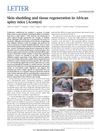
September 2012 in “Nature” African spiny mice can regenerate skin, hair, and cartilage, but not muscle, and their unique abilities could be useful for regenerative medicine.
 19 citations
,
June 2008 in “Journal of Investigative Dermatology”
19 citations
,
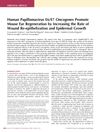
June 2008 in “Journal of Investigative Dermatology” HPV genes in mice improve ear tissue healing by speeding up skin growth and repair.
3 citations
,
February 2025 in “Journal of Investigative Dermatology” Lipocartilage is a new type of tissue that affects hair growth and cartilage regeneration.
4 citations
,
September 2024 in “Cell Reports” Granulocyte colony stimulating factor helps heal wounds without scars.
 11 citations
,
November 2009 in “Brazilian Journal of Medical and Biological Research”
11 citations
,
November 2009 in “Brazilian Journal of Medical and Biological Research” Young C57BL/6 mice heal better than BALB/c mice, and older mice heal faster but regenerate worse.
 1 citations
,
August 2023 in “Genome research”
1 citations
,
August 2023 in “Genome research” The spiny mouse regenerates ear tissue asymmetrically, with gene expression differences possibly explaining its unique healing abilities.
 480 citations
,
August 2014 in “Nature Biotechnology”
480 citations
,
August 2014 in “Nature Biotechnology” Changing the environment around stem cells could help tissue repair, but it's hard to be precise and avoid side effects.
July 2026 in “Macromolecular Bioscience” Sulfated glycosaminoglycans from Acipenser baerii cartilage improve wound healing and fibroblast function.
August 2025 in “Biomaterials” A new therapy using secretions from fetal cartilage cells shows promise for safe and effective hair regrowth.
 31 citations
,
August 2015 in “Stem Cells Translational Medicine”
31 citations
,
August 2015 in “Stem Cells Translational Medicine” Human skin can provide stem cells for tissue repair and regeneration, but there are challenges in obtaining and growing these cells safely.
 13 citations
,
January 2015 in “Stem cells international”
13 citations
,
January 2015 in “Stem cells international” Mesenchymal Stem Cells (MSCs) are promising for multiple therapies, but more research is needed to fully understand and optimize their use.
 12 citations
,
May 2019 in “Stem cell reviews”
12 citations
,
May 2019 in “Stem cell reviews” Fetal-maternal stem cells in a mother's hair can help with tissue repair and regeneration long after childbirth.
5 citations
,
November 2024 in “Biomedicine & Pharmacotherapy” The chitosan-peptide system helps cartilage regeneration using fat-derived cells.
 41 citations
,
August 2015 in “The FASEB Journal”
41 citations
,
August 2015 in “The FASEB Journal” Blocking the Wnt/β‐catenin pathway can speed up wound healing, reduce scarring, and improve cartilage repair.
December 2024 in “American Journal of Biomedical Science & Research” Stem cell therapy shows promise for regenerating tissues and treating diseases, especially in older people.
 79 citations
,
January 2015 in “Journal of Materials Chemistry B”
79 citations
,
January 2015 in “Journal of Materials Chemistry B” Smart biomaterials that guide tissue repair are key for future medical treatments.
24 citations
,
August 2023 in “International Journal of Molecular Sciences” Platelet-rich fibrin shows promise in healing cartilage and joint injuries but needs more testing.
August 2013 in “Annals of Translational Medicine” HPE may help treat osteoarthritis by promoting cartilage regeneration.
 51 citations
,
January 2006 in “Wound Repair and Regeneration”
51 citations
,
January 2006 in “Wound Repair and Regeneration” MRL/MpJ mice's skin wounds heal with scars, unlike their ear wounds which can regenerate.
August 2025 in “Journal of Polymer Science” AcD scaffolds improve tissue repair and regeneration by combining stem cells with a supportive matrix.
 89 citations
,
November 2017 in “Journal of Cellular Physiology”
89 citations
,
November 2017 in “Journal of Cellular Physiology” The Wnt/β-catenin pathway is important for tissue development and has potential in regenerative medicine, but requires more research for therapeutic use.
 25 citations
,
April 2021 in “npj Regenerative Medicine”
25 citations
,
April 2021 in “npj Regenerative Medicine” Mathematical modeling can improve regenerative medicine by predicting biological processes and optimizing therapy development.
 271 citations
,
May 2019 in “Cells”
271 citations
,
May 2019 in “Cells” The secretome from mesenchymal stem cells is a promising treatment that may repair tissue and avoid side effects of stem cell transplantation.
 15 citations
,
January 2023 in “Biomaterials Research”
15 citations
,
January 2023 in “Biomaterials Research” 3D bioprinting in plastic surgery could lead to personalized grafts and fewer complications.
April 2024 in “Journal of composites science” Hydrogel composites have great potential in regenerative medicine, tissue engineering, and drug delivery.
 August 2023 in “Bioengineering”
 Bioprinting could greatly improve health outcomes but faces challenges like material choice and ensuring long-term survival of printed tissues.
 16 citations
,
July 2019 in “Journal of Cellular Biochemistry”
16 citations
,
July 2019 in “Journal of Cellular Biochemistry” Wnt7a protein is crucial for development and tissue maintenance and plays varying roles in diseases and potential treatments.
46 citations
,
May 2021 in “Stem Cell Research & Therapy” Strontium ranelate helps cartilage growth by blocking a specific cell pathway.
 March 2021 in “Research Square (Research Square)”
 Strontium ranelate helps cartilage growth by blocking a specific cell pathway.
June 2025 in “Preprints.org” EDA is vital for bone and cartilage formation and could help treat skeletal disorders.