76 citations
,
February 1993 in “Journal of Biological Chemistry” KAP6 genes are conserved across species and active in hair follicles.
 January 2022 in “bioRxiv (Cold Spring Harbor Laboratory)”
 Skin lesions in Carney complex are likely caused by a specific group of skin cells that promote pigment production due to a genetic mutation.
2 citations
,
October 2025 in “Cells” PKM2 is a promising target for heart repair and regeneration.
14 citations
,
July 2019 in “Journal of Investigative Dermatology” Integrin-linked kinase is crucial for melanoblasts to properly colonize the skin.
24 citations
,
July 2014 in “Journal of Investigative Dermatology” Nagashima-type palmoplantar keratosis in Asians is caused by a SERPINB7 gene mutation.
 November 2023 in “Cell Proliferation”
 A protein from fat-derived stem cells, DKK1, is linked to hair loss and blocking it may help treat alopecia areata.
11 citations
,
January 2021 in “British Journal of Dermatology” Mutations in the AP1B1 gene cause a new syndrome with skin, hearing, and developmental issues.
 87 citations
,
July 2018 in “Biochimica et Biophysica Acta (BBA) - Molecular Cell Research”
87 citations
,
July 2018 in “Biochimica et Biophysica Acta (BBA) - Molecular Cell Research” Mice studies show that Protein Phosphatase 2A is crucial for cell growth, development, and disease prevention.
46 citations
,
May 1995 in “Proceedings of the National Academy of Sciences” A specific gene region can control targeted and responsive gene expression in mice, useful for skin disorder treatments.
53 citations
,
August 2005 in “The Journal of Cell Biology” Sgk3 is essential for normal hair follicle growth and maintenance.
 November 2022 in “The journal of investigative dermatology/Journal of investigative dermatology”
 The STRIPAK complex is crucial for skin cell organization and creating a functional skin barrier.
 4 citations
,
January 2023 in “Skin health and disease”
4 citations
,
January 2023 in “Skin health and disease” Blocking Janus kinase 1 helps stop inflammation and regrow hair, making it a good treatment for hair loss from alopecia areata.
January 2011 in “Anhui nongye kexue” The vector successfully directed specific gene expression in hair follicles.
 60 citations
,
January 2004 in “The journal of investigative dermatology/Journal of investigative dermatology”
60 citations
,
January 2004 in “The journal of investigative dermatology/Journal of investigative dermatology” Applying a specific inhibitor lightens skin and hair color.
 1 citations
,
May 2023 in “Biochemical and Biophysical Research Communications”
1 citations
,
May 2023 in “Biochemical and Biophysical Research Communications” Blocking DKK1 with siRNA can improve hair growth.
26 citations
,
March 1995 in “Differentiation” A rabbit gene important for hair development was identified and detailed.
8 citations
,
September 2013 in “Molecular carcinogenesis” Rapamycin reduces skin cell growth and tumor development by affecting cell signaling in mice.
13 citations
,
August 1999 in “Journal of Investigative Dermatology” Bikunin is found on the cell boundaries of certain skin layers and may help regulate skin and hair functions.
July 2024 in “Journal of Investigative Dermatology” A peptide in shampoo can promote hair growth and improve hair condition.
18 citations
,
June 2001 in “Journal of Investigative Dermatology” Adding a specific gene to skin cells can help treat skin disorders like psoriasis.
 December 2023 in “Sains Malaysiana”
 The enzyme Rand protease works well for leather dehairing and its stability is important, with Leu75 playing a key role.
28 citations
,
September 1998 in “Journal of Investigative Dermatology” Two distinct caspases in human skin help with cell death and skin formation.
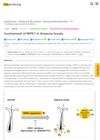
RIPK1 inhibitors might help prevent alopecia areata.
38 citations
,
January 2014 in “Journal of Dermatological Science” Krtap11-1 is important for hair strength and structure.
1 citations
,
September 1986 in “Journal of the Forensic Science Society” Hair root sheaths can be used to accurately analyze genetic markers.
 April 2023 in “The journal of investigative dermatology/Journal of investigative dermatology”
 JAK inhibitors help hair growth by boosting beta-catenin activity in hair root cells.
 February 2025 in “International Journal of Molecular Sciences”
 RIPK1 inhibitors may help prevent alopecia areata by reducing immune cell activity.
 2 citations
,
December 2022 in “Pharmaceutics”
2 citations
,
December 2022 in “Pharmaceutics” The enzyme pyruvate kinase M2 helps hair regrowth and could be a potential treatment for hair loss.
98 citations
,
December 2015 in “The Journal of Cell Biology” Keratin is crucial for skin barrier formation and affects mitochondrial function.
101 citations
,
June 2003 in “The EMBO Journal” Phospholipase Cδ1 is crucial for normal skin and hair development.