January 1999 in “Proceedings of the British Society of Animal Science” Biotin deficiency may harm hair follicle health and growth in Angora goats.
3 citations
,
August 2004 in “Veterinary Dermatology” Supplementing vitamins and minerals prevented hair loss in Icelandic horses.
76 citations
,
February 1993 in “Journal of Biological Chemistry” KAP6 genes are conserved across species and active in hair follicles.
 January 2026 in “International Journal of Advanced Biochemistry Research”
 Dermatophytosis in calves is most common in winter, especially in 4-6 month-old female HF crossbreds.

A mange outbreak nearly wiped out vicuña and guanaco populations in San Guillermo National Park.
11 citations
,
October 1997 in “British Journal of Dermatology” Wool follicles grew fibres for 8-10 days in a serum-free culture, influenced by calcium, glucose, amino acids, and insulin.
 December 2025 in “Yemeni Journal of Agriculture & Veterinary Sciences”
 Many sheep and goats in Sana’a, Yemen, lack essential minerals and need supplements for better health.
 January 2012 in “International Journal of Trichology”
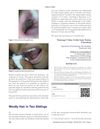
 Two siblings have a rare genetic condition causing curly, coarse hair.
1 citations
,
January 1995 in “Lincoln University Research Archive (Lincoln University)” Wool growth is mainly controlled by external factors and specific proteins, not the follicles themselves.
January 2026 in “Veterinary Sciences” Skin maturation in Dezhou donkey foals involves better barrier function, hair growth, and less collagen production.
 1 citations
,
March 2022 in “bioRxiv (Cold Spring Harbor Laboratory)”
1 citations
,
March 2022 in “bioRxiv (Cold Spring Harbor Laboratory)” Low-coverage sequencing is a cost-effective way to identify genes related to wool traits in rabbits.
4 citations
,
April 2024 in “Animals” Copaiba oil and multivitamin emulsion can effectively treat allergic dermatitis in donkeys caused by Culicoides bites.
 January 1957 in “Nihon Chikusan Gakkaiho”
 Rabbit hair color is influenced by the shape and distribution of pigment granules.
41 citations
,
April 1989 in “Experimental and Applied Acarology” January 2005 in “Jukuri (Natural Resources Institute Finland (Luke))” A low-protein diet with methionine is cost-effective and supports normal growth and high-quality pelts in blue foxes.
1 citations
,
December 2023 in “Animals” Winter provides the best fur quality for Rex rabbits due to seasonal changes in specific signaling pathways.
March 2018 in “Journal of Experimental Biology” Hair curliness is caused by the arrangement and length of two different cell types.
1 citations
,
November 1981 in “PubMed” No clear conclusion available.
March 1956 in “Institutional Repositories DataBase (IRDB)” 210 citations
,
February 2008 in “Nature genetics” Mutations in the P2RY5 gene cause autosomal recessive woolly hair.
11 citations
,
August 2014 in “Journal of Animal Science” Nasal swabs are the best method for collecting DNA from cattle and yaks.
2 citations
,
January 2012 in “Charles Sturt University Research Output (CRO)” Pregnancy increases hair growth in dairy cattle.
3 citations
,
March 2019 in “Acta histochemica” Angiotensin II is found at higher levels in black sheep skin and may influence coat color.
July 2005 in “HortScience” Adding wool or hair waste to soil boosts crop yields and nutrient levels.
12 citations
,
January 2013 in “Indian dermatology online journal” The document reports a unique case of woolly hair with a combination of conditions not previously seen together.
 2 citations
,
August 2018 in “Advances in Animal and Veterinary Sciences”
2 citations
,
August 2018 in “Advances in Animal and Veterinary Sciences” Camels in South Iraq were cured of skin infections with antibiotics and supplements.
June 2024 in “Indian Journal of Veterinary Medicine” The young goat had anaplasmosis and copper deficiency.
 2 citations
,
January 1994 in “Nihon Chikusan Gakkaiho”
2 citations
,
January 1994 in “Nihon Chikusan Gakkaiho” Cow colostrum and milk can effectively produce anti-hair keratin antibodies.
 October 2021 in “VITEK Bidang Kedokteran Hewan”
 The goat had enteritis and was treated with fluids, vitamins, antibiotics, and deworming medication.
October 2020 in “Tierärztliche Praxis. Ausgabe Grosstiere, Nutztiere” Cows moving from tie-stalls to free-stalls had fewer leg injuries but more stress and heel horn erosions.