3 citations
,
January 2025 in “Animal Genetics” Variants on chromosome 10 affect hair thickness in Dazu black goats.
36 citations
,
June 1988 in “Australian Journal of Biological Sciences” Mouse epidermal growth factor injections in sheep affected wool growth and skin, but saline did not.
1 citations
,
September 2025 in “Frontiers in Veterinary Science” Ganxi goats' skin and hair adapt to heat and humidity, possibly aided by GSDMA protein.
2 citations
,
July 2013 in “Journal of Animal Physiology and Animal Nutrition” Shorthaired and hairless cat breeds excrete more felinine than longhaired breeds.
26 citations
,
June 2010 in “Electrophoresis” New techniques helped identify rare wool proteins by reducing dominant ones.
1 citations
,
September 2020 in “Sahel Journal of Veterinary Sciences” Switching to coarser feed and providing hay improved the sheep's health.
25 citations
,
January 1958 in “Elsevier eBooks”  9 citations
,
February 1981 in “Australian journal of biological sciences”
9 citations
,
February 1981 in “Australian journal of biological sciences” Lambs fed a liquid diet showed abnormal wool and skin, which improved with more B-vitamins, suggesting a link to B-vitamin deficiency.

Ancient herders in the Keriya Valley fed their animals mainly C3 plants, with some C4 plant feeding possibly due to herd movement or seasonal changes.
34 citations
,
September 2007 in “Experimental Dermatology” The outer layer of Merino wool is rich in sulfur proteins, making it resistant to damage.
January 2009 in “China Animal Husbandry & Veterinary Medicine” The B2C promoter works in sheep cells but not in mouse embryos.
January 2006 in “东华大学学报:英文版” Microwave plasma treatment improves yak hair dyeing.
23 citations
,
March 2019 in “Gene” Editing the FGF5 gene in sheep increases wool length, confirming its role in hair growth.
9 citations
,
December 2022 in “Genes” CNVs influence hair length in Tianzhu white yaks.
11 citations
,
October 2014 in “Gene” Researchers identified a new variant of the FGF5 gene in sheep that affects hair length.
67 citations
,
January 1992 in “Journal of Investigative Dermatology” 1 citations
,
October 2023 in “BMC Genomics” miRNAs in the Dlk1-Gtl2 region may improve lamb fur quality.
 5 citations
,
May 1983 in “Australian journal of biological sciences”
5 citations
,
May 1983 in “Australian journal of biological sciences” Certain amino acid analogues can inhibit wool and hair growth and affect fiber strength.
March 2018 in “Journal of Experimental Biology” Hair curliness is caused by the arrangement and length of two different cell types.
 January 2012 in “International Journal of Trichology”
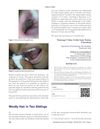
 Two siblings have a rare genetic condition causing curly, coarse hair.
13 citations
,
February 2019 in “Zoology” Lustre mutant sheep have normal hair structure and proteins but differ in felting properties.
 July 2024 in “Journal Archives of Health”
 Woolly hair is a rare genetic condition with no effective treatments.
 2 citations
,
December 2019 in “Textile Research Journal”
2 citations
,
December 2019 in “Textile Research Journal” L-cysteine and ultrasound successfully improved rabbit hair fibers for industrial use.
3 citations
,
January 2025 in “动物学研究” The gene GJA1 is important for regulating coarse hair density in goats.
Stretching-setting treatment works for wool and human hair using specific equipment and methods.
4 citations
,
July 2024 in “BMC Zoology” Dromedary camel hair structure and mineral content change with age.
10 citations
,
July 2022 in “Electronic Journal of Biotechnology” Lower IGFBP4 promoter methylation is linked to finer wool in sheep.
2 citations
,
January 2023 in “Frontiers in Genetics” Overexpressing ovine β-catenin in mice skin increases hair follicle density and growth.
 13 citations
,
January 1995 in “Journal of the American Institute for Conservation”
13 citations
,
January 1995 in “Journal of the American Institute for Conservation” Researchers developed a less damaging way to extract red dyes from wool using EDTA and DMF, preserving the fiber's strength for further analysis.
 5 citations
,
November 2022 in “Genetics selection evolution”
5 citations
,
November 2022 in “Genetics selection evolution” Low-coverage sequencing is a cost-effective way to find genetic factors affecting rabbit wool traits.