Different treatments change the strength and flexibility of human hair.
12 citations
,
January 1934 in “Proceedings of the Royal Society of London Series B Containing Papers of a Biological Character” Stretched hair has a similar structure to natural silk, showing hair's elasticity involves reversible changes within its molecules.
 May 2023 in “Journal of animal science/Journal of animal science ... and ASAS reference compendium”
 Cows that shed more hair in winter have better reproductive success and their calves weigh more at weaning.
June 2018 in “Journal of the American Veterinary Medical Association” Three related Persian cats have a rare, likely hereditary skin condition causing hair loss and poor coat quality, with limited treatment options.
 37 citations
,
October 2013 in “PLoS ONE”
37 citations
,
October 2013 in “PLoS ONE” MicroRNAs play a key role in wool growth in Tibetan sheep.
 7 citations
,
August 2009 in “Applied Mathematics and Mechanics-English Edition”
7 citations
,
August 2009 in “Applied Mathematics and Mechanics-English Edition” Hair fibers have fractal patterns with properties related to the golden mean, which may affect their functionality.
1 citations
,
February 2015 in “Zenodo (CERN European Organization for Nuclear Research)” Different hair fiber brands have unique electrostatic and dielectric properties.
 9 citations
,
February 1981 in “Australian journal of biological sciences”
9 citations
,
February 1981 in “Australian journal of biological sciences” Lambs fed a liquid diet showed abnormal wool and skin, which improved with more B-vitamins, suggesting a link to B-vitamin deficiency.
April 2021 in “Indian Journal of Animal Research” Goat skin has collagen, elastic, and reticular fibers, with hair follicles increasing in depth as goats age.
7 citations
,
April 2013 in “Animal Production Science” Altering maternal cortisol during pregnancy can improve wool growth in Merino sheep.

research Skin
August 2022 Goat hair growth is influenced by light cycles and diet, and skin diseases in goats are diagnosed through a step-by-step process and often involve viral or bacterial infections.
Stretching-setting treatment works for wool and human hair using specific equipment and methods.
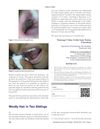 January 2012 in “International Journal of Trichology”
 Two siblings have a rare genetic condition causing curly, coarse hair.
November 2025 in “Archaeometry” Animal hair from 18th-century Mazamet burial sites shows locals used goat, badger, cow, or horse fur for clothing, indicating modest economic status.
January 2013 in “Wageningen Academic Publishers eBooks” Proteomics helps understand protein changes in wool fiber development.
 32 citations
,
November 2005 in “Journal of Investigative Dermatology Symposium Proceedings”
32 citations
,
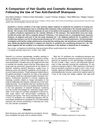
November 2005 in “Journal of Investigative Dermatology Symposium Proceedings” Most women preferred the 1% pyrithione zinc shampoo for better hair smoothness and less frizz while controlling dandruff.
July 2005 in “HortScience” Adding wool or hair waste to soil boosts crop yields and nutrient levels.
4 citations
,
January 2019 in “Tropical animal health and production” 63 citations
,
December 1998 in “Biochimica et Biophysica Acta (BBA) - Protein Structure and Molecular Enzymology” The study improved understanding of keratin fiber structure by showing consistent microfibril diameter but varying distances and electron density profiles.
1 citations
,
August 1992 in “Proceedings annual meeting Electron Microscopy Society of America” Mammoth hair from different ages shows distinct surface textures and elemental compositions.
 January 2020 in “Journal of Current Medical Research and Practice”
 Hair loss in Egyptian patients without scarring was studied, and it was found to significantly affect their quality of life.
2 citations
,
January 1987 in “PubMed” Woolly hair syndrome is a genetic condition causing frizzy, fragile hair.
14 citations
,
December 1991 in “Annals of the New York Academy of Sciences” MYC protooncogenes may be important for hair growth, but more research is needed.
12 citations
,
January 2013 in “Indian dermatology online journal” The document reports a unique case of woolly hair with a combination of conditions not previously seen together.
2 citations
,
February 2021 in “Journal of comparative pathology” Sheep with chronic Sarcoptes scabiei dermatitis have altered keratin expression in their skin.
March 2021 in “World rabbit science” Adding 0.2% taurine to Angora rabbits' diet improves wool production and overall health.
 July 2024 in “Journal Archives of Health”
 Woolly hair is a rare genetic condition with no effective treatments.
 7 citations
,
July 2004 in “International Journal of Cosmetic Science”
7 citations
,
July 2004 in “International Journal of Cosmetic Science” Different hair types from various ethnic groups affect hair shine due to characteristics like thickness and shape.
 3 citations
,
February 2023 in “ACS omega”
3 citations
,
February 2023 in “ACS omega” Grape seed oil improved hair quality the most, followed by rosehip and safflower seed oils, and reduced damage from shampoo.
Sheep can lose wool quickly due to stress, but it doesn't cause itching or pain.