 July 2023 in “Frontiers in veterinary science”
 Certain long non-coding RNAs are important for controlling hair growth cycles in sheep.
The document discusses how traditional Chinese medicine extracts may affect hair growth in animals but lacks detailed results.
41 citations
,
April 1989 in “Experimental and Applied Acarology”  October 2021 in “VITEK Bidang Kedokteran Hewan”
 The goat had enteritis and was treated with fluids, vitamins, antibiotics, and deworming medication.
 January 2021 in “Middle East journal of applied sciences”
 Over 30% of livestock in New Valley Governorate, Egypt, had skin diseases, affecting their productivity and income.
 8 citations
,
December 2020 in “Scientific reports”
8 citations
,
December 2020 in “Scientific reports” Selective breeding caused the unique curly hair in Mangalitza pigs.
 11 citations
,
June 2021 in “Frontiers in Cell and Developmental Biology”
11 citations
,
June 2021 in “Frontiers in Cell and Developmental Biology” Melatonin helps goat hair stem cells grow and maintain their ability to become different cell types.
2 citations
,
January 2012 in “Charles Sturt University Research Output (CRO)” Pregnancy increases hair growth in dairy cattle.
 April 2008 in “Expert review of dermatology”
 Mutations in the P2RY5 gene cause hereditary woolly hair.
11 citations
,
October 1997 in “British Journal of Dermatology” Wool follicles grew fibres for 8-10 days in a serum-free culture, influenced by calcium, glucose, amino acids, and insulin.
1 citations
,
January 1990 Melatonin makes cattle hair grow faster. Better farming methods improved Pakistan's cotton industry.
 23 citations
,
March 1989 in “The Veterinary clinics of North America. Food animal practice”
23 citations
,
March 1989 in “The Veterinary clinics of North America. Food animal practice” Llamas often have skin issues like mange, bacterial infections, and allergies, with some treatable by zinc.
 7 citations
,
March 2022 in “Frontiers in Genetics”
7 citations
,
March 2022 in “Frontiers in Genetics” The research found specific genes that may cause longer hair in Tianzhu White Yak.
210 citations
,
February 2008 in “Nature genetics” Mutations in the P2RY5 gene cause autosomal recessive woolly hair.
7 citations
,
May 2021 in “General and comparative endocrinology” Muskoxen's qiviut cortisol levels indicate their stress hormone activity over the hair growth period.
November 2025 in “OPAL (Open@LaTrobe) (La Trobe University)” Zinc supplements improve hair growth in camels and support growth and hair development in calves.
 December 2023 in “Veterinary medicine. Open journal”
 Carrying heavy loads harms donkeys' health, causing pain and injuries.
 7 citations
,
September 2024 in “BMC Genomics”
7 citations
,
September 2024 in “BMC Genomics” Two genes, ERBB4 and ROR1, may cause the unique pigmentation in Lanping black-boned sheep.
July 2021 in “Veterinary record/The veterinary record” A calf in Scotland likely had Schmallenberg virus from its mother.
 January 2012 in “International Journal of Trichology”
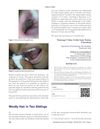
 Two siblings have a rare genetic condition causing curly, coarse hair.
 24 citations
,
July 1998 in “Journal of the South African Veterinary Association”
24 citations
,
July 1998 in “Journal of the South African Veterinary Association” Ringworm in dairy calves can spread to humans.
 3 citations
,
December 2020
3 citations
,
December 2020 The interdigital gland in crossbred sheep is similar to skin and has specialized structures for secretion.
July 2005 in “HortScience” Adding wool or hair waste to soil boosts crop yields and nutrient levels.
 11 citations
,
February 1989 in “Journal of veterinary medicine. Series A”
11 citations
,
February 1989 in “Journal of veterinary medicine. Series A” Crossbreeding certain European cattle breeds may cause hair and physical issues in cattle.
January 2011 in “Maofang ke-ji” Rabbit hair research improved its use in textiles and new applications.
 506 citations
,
January 2012 in “Molecular and Cellular Endocrinology”
506 citations
,
January 2012 in “Molecular and Cellular Endocrinology” Melatonin affects many body functions beyond sleep by interacting with specific receptors in various tissues.
 127 citations
,
December 2007 in “Journal of Investigative Dermatology”
127 citations
,
December 2007 in “Journal of Investigative Dermatology” Mice hair growth patterns get more complex with age and can change with events like pregnancy or injury.
 122 citations
,
July 2005 in “The FASEB journal”
122 citations
,
July 2005 in “The FASEB journal” Hair follicles produce and respond to melatonin, affecting hair growth and sensitivity to estrogen.
 98 citations
,
December 2008 in “Journal of Investigative Dermatology”
98 citations
,
December 2008 in “Journal of Investigative Dermatology” Prolactin affects hair growth and skin conditions, and could be a target for new skin disease treatments.
 92 citations
,
January 2012 in “International Journal of Biological Sciences”
92 citations
,
January 2012 in “International Journal of Biological Sciences” The document introduced a new naming system for keratin-associated proteins to improve clarity and communication across species.