 October 2023 in “Recent Trends in Pharmaceutical Sciences and Research”
 The paper concludes that animal models help in understanding hair loss causes and developing new treatments.
 March 2021 in “Research Square (Research Square)”
 Stress likely causes hair loss in Formosan macaques.
Hair follicles influence blood vessels during hair growth, suggesting potential treatments for hair growth issues.
 April 2026 in “Tissue Engineering and Regenerative Medicine”
 The GPRC6A-Duox1 axis helps control hair growth and loss by affecting hydrogen peroxide production.
 March 2013 in “Journal für Kardiologie (Krause & Pachernegg GmbH)”
 Hormones significantly affect hair growth and loss, with potential for new treatments.
January 2000 in “Cambio 16” Bcl-2 affects hair growth and pigmentation by controlling cell death.
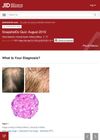 July 2019 in “Journal of Investigative Dermatology”
 The research found that male pattern hair loss is mostly genetic and involves hair thinning due to hormonal effects and changes in gene expression.
52 citations
,
January 2003 in “Journal of Investigative Dermatology” Thrombospondin-1 is crucial for hair follicle regression and reduced blood vessel growth during the catagen phase.
 September 1997 in “JEADV. Journal of the European Academy of Dermatology and Venereology/Journal of the European Academy of Dermatology and Venereology”
 Blocking IL-1 could help treat some hair loss conditions; alopecia affects liver detox systems; spironolactone is better than finasteride for female hair growth; focusing on the catagen hair phase could lead to new alopecia treatments.
130 citations
,
December 1998 in “The journal of investigative dermatology/Journal of investigative dermatology” Hair follicle melanocytes die during hair regression.
January 2015 in “프로그램북(구 초록집)” Korean Red Ginseng may help prevent hair loss from chemotherapy.
 42 citations
,
July 2012 in “PLOS ONE”
42 citations
,
July 2012 in “PLOS ONE” Estrogen can temporarily slow down hair growth but this can be reversed.
10 citations
,
December 2015 in “Experimental dermatology” EGFR helps mouse hair follicles stop growing by reducing certain growth regulators.
October 2019 in “Innovative Journal of Medical and Health Science” Certain herbs may help treat hair loss by extending hair growth phases.
92 citations
,
February 2005 in “Endocrinology” Estrogen receptors affect hair growth, with ER beta slowing down the hair cycle changes caused by ER alpha.
4 citations
,
August 2023 in “Journal of Cosmetic Dermatology” Gynostemma pentaphyllum extract may help grow hair and prevent graying.
 September 2024 in “Journal of Anatomy and Histopathology”
 Miliacin helps damaged hair follicles grow new hair faster.
20 citations
,
January 1995 in “Cells tissues organs” Changing light periods synchronized wool growth cycles in sheep.
64 citations
,
March 2004 in “The journal of investigative dermatology/Journal of investigative dermatology” GPRC5D is linked to the formation of hair, nails, and certain tongue areas.
 3 citations
,
February 2005 in “Aktuelle Dermatologie”
3 citations
,
February 2005 in “Aktuelle Dermatologie” Prolactin and TGF-β receptor blockers might help treat hair loss.
 134 citations
,
September 2008 in “Lasers in surgery and medicine”
134 citations
,
September 2008 in “Lasers in surgery and medicine” Low fluence photoepilation temporarily removes hair by targeting the hair follicle's pigmented area without severe damage.
 33 citations
,
September 1961 in “Archives of Dermatology”
33 citations
,
September 1961 in “Archives of Dermatology” Colchicine causes rapid hair loss by damaging hair follicles.
8 citations
,
January 2019 in “The journal of investigative dermatology/Journal of investigative dermatology” Growth hormone is important for regulating human hair growth.
 September 1961 in “Archives of Dermatology”
 Colchicine causes hair loss by damaging hair follicles.
 April 2018 in “Journal of Investigative Dermatology”
 A new peptide, FOL-005, may help treat excessive hair growth by reducing a hair growth promoter, FGF7.
 94 citations
,
February 1994 in “The journal of investigative dermatology/Journal of investigative dermatology”
94 citations
,
February 1994 in “The journal of investigative dermatology/Journal of investigative dermatology” EGF makes hair follicles grow longer but stops hair production.
18 citations
,
February 2023 in “eLife” ILC1-like cells can independently cause alopecia areata.
 2 citations
,
February 2014 in “Journal of the European Academy of Dermatology and Venereology”
2 citations
,
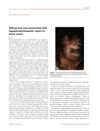
February 2014 in “Journal of the European Academy of Dermatology and Venereology” High levels of prolactin in the blood can be linked to widespread hair loss.
 May 2020 in “Research Square (Research Square)”
 Stress hormone CRF causes hair loss and inhibits hair growth in human cells.
 January 2020 in “Research Square (Research Square)”
 Stress hormone CRF causes hair loss and stops hair cell growth.