1 citations
,
August 2021 Biomimetic dermal papilla spheres can help regenerate hair to some extent.
62 citations
,
June 1993 in “Archives of Dermatological Research”  October 2023 in “Ho Chi Minh City Open University Journal of Science - Engineering and Technology”
 Human hair follicle cells have specific features.
268 citations
,
December 2003 in “Experimental Dermatology” Hair follicle cells can become fat and bone cells.
24 citations
,
January 1989 Human papilla cells from hair follicles show unique growth behaviors but don't induce hair growth in vitro.
October 2025 in “Journal of Investigative Dermatology” Hair follicle dermal stem cells help control hair growth timing by regulating signals at the hair germ–dermal papilla interface.
 6 citations
,
January 2020 in “Methods in molecular biology”
6 citations
,
January 2020 in “Methods in molecular biology” The method successfully isolates cells that are important for hair growth and could help study hair loss.
 13 citations
,
June 2007 in “Journal of Dermatological Science”
13 citations
,
June 2007 in “Journal of Dermatological Science” Researchers created a cell line to study hair growth and found specific genes affected by dihydrotestosterone.
 10 citations
,
December 2015 in “International Journal of Molecular Sciences”
10 citations
,
December 2015 in “International Journal of Molecular Sciences” PDCD4 is important for controlling skin cell growth and healing.
 58 citations
,
March 2019 in “Experimental Dermatology”
58 citations
,
March 2019 in “Experimental Dermatology” Exosomes from human skin cells can stimulate hair growth and could potentially be used for treating hair loss.
 November 2023 in “Journal of Dermatological Science”
 Cells that move well may improve hair loss treatments by entering hair follicles.
561 citations
,
April 2003 in “Journal of Investigative Dermatology” CD34 is a marker for isolating stem-like cells in mouse hair follicles.
 211 citations
,
April 2013 in “Development”
211 citations
,
April 2013 in “Development” More dermal papilla cells in hair follicles lead to larger, healthier hair, while fewer cells cause hair thinning and loss.
45 citations
,
May 1992 in “Journal of Investigative Dermatology”  37 citations
,
May 2016 in “Scientific Reports”
37 citations
,
May 2016 in “Scientific Reports” Combining skin cells with fat-derived stem cells can improve hair growth.
30 citations
,
March 1996 in “British Journal of Dermatology”  25 citations
,
April 2008 in “Archives of Dermatological Research”
25 citations
,
April 2008 in “Archives of Dermatological Research” Encapsulated human hair cells can substitute for natural hair cells to grow hair.
3 citations
,
August 2018 in “Stem cells international” Hair follicle cells help maintain and support stem cells and blood cell formation.
September 2016 in “Journal of dermatological science” Human induced pluripotent stem cells can be used to create cells that help grow hair.
November 2024 in “Journal of Investigative Dermatology” ATP-sensitive potassium channels are important for hair growth.
 August 2016 in “Journal of Investigative Dermatology”
 DHT reduces a cell's ability to promote hair growth, while 3D culture without DHT improves it.
 1 citations
,
January 2019 in “Annals of dermatology/Annals of Dermatology”
1 citations
,
January 2019 in “Annals of dermatology/Annals of Dermatology” STAT5 is crucial for hair growth in 3D cultured human dermal papilla cells.
 March 2023 in “Scientific reports”
 Hair growth-related cells need the enzyme SCD1 to help maintain the area that supports hair growth.
 3 citations
,
February 2021 in “Experimental dermatology”
3 citations
,
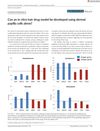
February 2021 in “Experimental dermatology” Dermal papilla microtissues could be useful for initial hair growth drug testing.
January 2006 in “Chinese Journal of Medical Aesthetics and Cosmetology” Microencapsulated human hair cells can successfully grow new hair follicles in mice.
 April 2018 in “Journal of Investigative Dermatology”
 Researchers found that the Leptin receptor is a consistent marker for hair follicle dermal cells, which may help future hair research.
 16 citations
,
August 2019 in “Cell Proliferation”
16 citations
,
August 2019 in “Cell Proliferation” Keratinocytes help keep hair follicle cells and skin cells separate in 3D cultures, which is important for hair growth research.
June 2014 in “Biotechnology and Bioprocess Engineering” Injecting lab-grown hair cells into the scalp can regrow hair.
 November 2022 in “Journal of Investigative Dermatology”
 Scientists found a new type of skin cell that could help with skin repair and these cells work better with a certain protein.
Trichoepithelioma and desmoplastic trichoepithelioma have distinct features that can be identified using reflectance confocal microscopy.