Search
for
Sort by
Research
510-540 / 1000+ resultsresearch Pinkie, the First Viable Germline Hypomorph Allele of Retinoid X Receptor Alpha, Reveals an Important Role for RXRa in Th2 Development.
RXRa is crucial for Th2 immune cell development and may link nutrition to immune health.

research Increased expression of Ectodysplasin A2 Receptor EDA2R is the most remarkable and ubiquitous aging-related transcriptional hallmark
The most common sign of aging at the gene level is more Ectodysplasin A2 Receptor (EDA2R) being made.
research Fine Mapping and Identifying the Mutation Gene of snthr -1Bao ScantHair Mouse
The scant hair in snthr-1Bao mice is likely caused by a deletion affecting the Plcd1 gene.

research Tissue resident and follicular Treg cell differentiation is regulated by CRAC channels
CRAC channels are crucial for the development and function of specialized immune cells, preventing severe inflammation and autoimmune diseases.
research Lineage commitment of dermal fibroblast progenitors is controlled by Kdm6b‐mediated chromatin demethylation
Kdm6b is crucial for skin cell differentiation.
research 0009 Regulatory γδ T cells protect human scalp hair follicles from alopecia areata in vivo and represent potential therapeutic target
γδ T cells can prevent and treat alopecia areata, offering a new therapy option.
research Synthesis and biological activity of raltitrexed-carrier conjugates.
Raltitrexed conjugates are less potent than the free drug but more effective at high concentrations.
research Analysis of differentially expressed genes of dermal papillae cells with aggregative behavior in uitro
Certain genes help dermal papillae cells in hair follicles grow and group together.
research 519 Phase I/IIa clinical trial for recessive dystrophic epidermolysis bullosa using genetically corrected autologous keratinocytes
The gene therapy showed significant wound healing and was safe for treating severe RDEB.

research Posters Presented at the 19th Joint Meeting of the International Society of Dermatopathology, March 2–3, 2016, Hilton Crystal City at Washington Reagan National Airport, Arlington, Virginia, USA
The meeting showcased rare skin disease cases, highlighting the need for accurate diagnosis and treatment.
research Signal Peptide-CUB-EGF-like Domain-Containing Protein 3 (SCUBE3): From Molecule to Therapy
SCUBE3 is a potential target for cancer and alopecia treatment but is challenging to target due to its varied roles.
research Synthesis of porcine pCLCA2 protein during late differentiation of keratinocytes of epidermis and hair follicle inner root sheath
pCLCA2 protein may help maintain skin structure and function.
research Basonuclin is associated with the ribosomal RNA genes on human keratinocyte mitotic chromosomes
Basonuclin may help control ribosomal RNA gene activity in skin cells.

research TCL1 transgenic mouse model as a tool for the study of therapeutic targets and microenvironment in human B-cell chronic lymphocytic leukemia
The TCL1 transgenic mouse model is useful for understanding human B-cell leukemia and testing new treatments.

research Leucine-Rich Repeat-Containing G-Protein-Coupled Receptors as Markers of Adult Stem Cells
Certain proteins, Lgr5 and Lgr6, are important markers of adult stem cells and are involved in tissue repair and cancer development.
research 022 Exploring the potential of the novel IFNγ aptamer TAGX-0003 as a treatment for alopeciaareata in pre-clinical models
The new aptamer TAGX-0003 shows promise as an effective treatment for hair loss disorder alopecia areata.

research 702 dsRNA induces ectopic KRT9 expression via WNT/β-catenin-mediated signaling
Double-stranded RNA activates a pathway that causes a skin protein to be expressed in the wrong place.

research Genome-wide association study identifies a new locus JMJD1C at 10q21 that may influence serum androgen levels in men
A new gene, JMJD1C, may affect testosterone levels in men.
research MHC Class I-Like MILL Molecules Are β2-Microglobulin-Associated, GPI-Anchored Glycoproteins That Do Not Require TAP for Cell Surface Expression
MILL molecules are unique immune proteins in mice that don't need TAP to appear on cell surfaces.
research Keratinocyte integrin α3β1 induces expression of the macrophage stimulating factor, CSF-1, through a YAP/TEAD-dependent mechanism.
research Cancer vaccine strategies and studies of human thioredoxin reductase splice variants
Vaccines and targeting TrxR variants can help prevent cancer and reduce metastasis.

research Establishment of SV40T-transformed human dermal papilla cells and identification of dihydrotestosterone-regulated genes by cDNA microarray
Researchers created a cell line to study hair growth and found specific genes affected by dihydrotestosterone.

research 013 IL-15/IL-15Rα signaling is a guardian of human hair follicle immune privilege and promotes hair growth
IL-15 promotes hair growth and protects hair follicles.

research Skin CD4+ memory T cells exhibit combined cluster-mediated retention and equilibration with the circulation
Memory T cells in the skin balance staying put and moving into the blood, clustering around hair follicles, and increasing in number after infection.
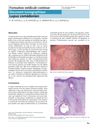
research Lupus comédonien
A man was diagnosed with a rare form of lupus after showing unique skin symptoms that responded well to treatment.
research Cell‐free transcriptomic profiles and mechanism insights in female androgenetic alopecia
DNAJB9 cfRNA could help diagnose and treat female hair loss.
research 09-P003 Leucine rich repeat transmembrane proteins Nlrr1 and Flrt3 and early embryonic myogenesis
research Clinical Snippets
R-spondin2 may help treat hair loss, gene differences could explain baldness, a peptide's regulation is linked to psoriasis, B-defensin gene copies may affect a skin condition's risk and severity, and potential markers and targets for alopecia areata were identified.
research 1446 RNase L acts as a regeneration suppressor
RNase L suppresses regeneration in mammals.