 3 citations
,
May 2019 in “BMJ case reports”
3 citations
,
May 2019 in “BMJ case reports” A boy with severe immune deficiency and Epstein-Barr virus died from high-grade B-cell lymphoma.
253 citations
,
December 2007 in “Journal of Investigative Dermatology” Hair follicles prevent NK cell attacks to avoid hair loss.
 25 citations
,
February 2013 in “The journal of investigative dermatology/Journal of investigative dermatology”
25 citations
,
February 2013 in “The journal of investigative dermatology/Journal of investigative dermatology” Blocking SCD1 in the skin with XEN103 shrinks sebaceous glands in mice.
91 citations
,
January 2010 in “Journal of Allergy and Clinical Immunology” NK cells play a role in skin diseases like eczema and psoriasis.
 May 2009 in “The American Journal of Dermatopathology”
 Mast cells play a significant role in hair loss conditions like male pattern hair loss and alopecia areata.
 191 citations
,
May 2018 in “British journal of dermatology/British journal of dermatology, Supplement”
191 citations
,
May 2018 in “British journal of dermatology/British journal of dermatology, Supplement” Alopecia areata is likely an autoimmune disease with unclear triggers, involving various immune cells and molecules, and currently has no cure.
 82 citations
,
March 2016 in “Autoimmunity reviews”
82 citations
,
March 2016 in “Autoimmunity reviews” Animal models have helped understand hair loss from alopecia areata and find new treatments.
 70 citations
,
February 2015 in “Expert Opinion on Drug Discovery”
70 citations
,
February 2015 in “Expert Opinion on Drug Discovery” Topical drugs and near-infrared light therapy show potential for treating alopecia.
 60 citations
,
September 2015 in “Expert Review of Clinical Immunology”
60 citations
,
September 2015 in “Expert Review of Clinical Immunology” Lymphocytes, especially CD8+ T cells, play a key role in causing alopecia areata, and targeting them may lead to new treatments.
 56 citations
,
January 2021 in “Clinical and Experimental Medicine”
56 citations
,
January 2021 in “Clinical and Experimental Medicine” The document concludes that while there are various treatments for Alopecia Areata, there is no cure, and individualized treatment plans are essential due to varying effectiveness.
1 citations
,
November 2025 in “Stem Cell Research & Therapy” Immortalized hair follicle cells could be useful for regenerative medicine and treating inflammation and oxidative stress.
 April 2021 in “Sohag Medical Journal”
 Alopecia areata is an autoimmune condition causing hair loss, linked to genetic factors and immune system issues, with no cure yet.
 January 2018 in “Elsevier eBooks”
 The document concludes that alopecia has significant social and psychological effects, leading to a market for hair loss treatments.
 December 2013 in “Research Portal (King's College London)”
 Hair loss in Lichen Planopilaris is caused by immune system issues damaging hair follicles and stem cells.
6 citations
,
January 2023 in “International journal of molecular sciences” Mast cells and CD8 T cells interact closely in skin diseases, affecting each other's behavior and contributing to conditions like psoriasis and eczema.
 2 citations
,
March 2015 in “Expert opinion on orphan drugs”
2 citations
,
March 2015 in “Expert opinion on orphan drugs” New treatments for hair loss show promise but need more research to confirm safety and effectiveness.
 May 2025 in “Journal of Inflammation Research”
 Natural killer and CD8+ T cells play a key role in hair loss in androgenetic alopecia.
 January 2016 in “Human & Experimental Toxicology”
 A specific DNA sequence caused hair loss in male mice by activating immune cells and increasing a certain immune signal.
 17 citations
,
June 2017 in “Gene”
17 citations
,
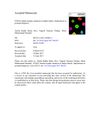
June 2017 in “Gene” A rare genetic mutation found in an Indian family can be detected through prenatal screening.
 14 citations
,
September 2018 in “The journal of allergy and clinical immunology/Journal of allergy and clinical immunology/The journal of allergy and clinical immunology”
14 citations
,
September 2018 in “The journal of allergy and clinical immunology/Journal of allergy and clinical immunology/The journal of allergy and clinical immunology” A boy's growth and immune problems were caused by a new mutation in the STAT5B gene.
3 citations
,
August 2025 in “International Journal of Molecular Sciences” Induced pluripotent stem cells are a major breakthrough in regenerative medicine.
 3 citations
,
September 2023 in “Frontiers in immunology”
3 citations
,
September 2023 in “Frontiers in immunology” Chronic inflammatory skin diseases are caused by disrupted interactions between skin cells and immune cells.
1 citations
,
January 2025 in “Genes & Diseases” Understanding T cells and signaling pathways can lead to better treatments for hair loss.
 421 citations
,
April 2012 in “The New England Journal of Medicine”
421 citations
,
April 2012 in “The New England Journal of Medicine” Alopecia Areata is an autoimmune condition causing hair loss with no cure and treatments that often don't work well.
 316 citations
,
June 2017 in “Stem Cell Research & Therapy”
316 citations
,
June 2017 in “Stem Cell Research & Therapy” Fat tissue-derived cells show promise for repairing body tissues, but more research and regulation are needed for safe use.
127 citations
,
January 2000 in “Journal of Investigative Dermatology” Cytotoxic T cells cause hair loss in chronic alopecia areata.
116 citations
,
April 2020 in “Stem Cell Research & Therapy” Wharton's jelly stem cells show diverse traits and functions.
 88 citations
,
August 2019 in “Nature communications”
88 citations
,
August 2019 in “Nature communications” Researchers found a specific immune receptor in patients that causes severe skin reactions to a drug.
 33 citations
,
December 2005 in “Archives of dermatology”
33 citations
,
December 2005 in “Archives of dermatology” Alefacept showed some effectiveness for alopecia areata but needs more research.
22 citations
,
April 2022 in “Stem cell research & therapy” Hair follicle-derived extracellular vesicles may help heal chronic wounds as effectively as those from adipose tissue.