11 citations
,
September 2019 in “The journal of investigative dermatology/Journal of investigative dermatology” A specific group of skin stem cells was found to help maintain hair follicle cells.
 June 2026 in “Frontiers in Oncology”
 GSDMA deficiency slows skin cancer growth.
 January 2025 in “Cell Communication and Signaling”
 CXXC5 can both suppress and promote cancer, making it a complex target for treatment.
23 citations
,
June 1992 in “PubMed” RAR-gamma 1 is important for normal skin maintenance and differentiation.
 1 citations
,
January 2022 in “Cell Biology International”
1 citations
,
January 2022 in “Cell Biology International” Changing CDK4 levels affects the number of stem cells in mouse hair follicles.
3 citations
,
September 2022 in “European Journal of Dermatology” Gene sequencing is crucial for diagnosing Junctional epidermolysis bullosa.
 6 citations
,
January 2020 in “International Journal of Biological Sciences”
6 citations
,
January 2020 in “International Journal of Biological Sciences” Septin4 helps kill colon cancer cells by working with the protein BAX.
1 citations
,
May 2024 in “Communications Biology” Dab2 protein is crucial for hair follicle stem cell renewal and preventing early aging.
 20 citations
,
May 2016 in “Journal of Cutaneous Pathology”
20 citations
,
May 2016 in “Journal of Cutaneous Pathology” Using CD123 to detect certain immune cells helps diagnose a type of hair loss condition.
 April 2023 in “Journal of Investigative Dermatology”
 An elderly woman's upper lip lump, thought to be a mucocele, was actually a rare type of lymphoma usually found on legs, treated successfully with chemotherapy and radiation.
April 2019 in “Journal of Investigative Dermatology” Y27632 increases cell growth through EGFR signaling, not ROCK1/2.
6 citations
,
September 2013 in “Journal of Evolution of Medical and Dental Sciences” Low CD4 counts in HIV patients are linked to more skin disorders.
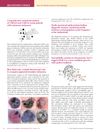 January 2012 in “Journal of Investigative Dermatology”
 Some Greek melanoma patients have gene mutations linked to increased cancer risk, a new color feature helps diagnose melanoma, the incidence of a skin condition in the Netherlands is rare, and a gene possibly affects male-pattern baldness.
November 2022 in “Journal of Investigative Dermatology” NCSTN gene mutation causes abnormal skin cell differentiation and more inflammation, contributing to Hidradenitis Suppurativa.
 15 citations
,
November 2022 in “Cell Death and Disease”
15 citations
,
November 2022 in “Cell Death and Disease” CEP135 may predict cancer outcomes, and targeting PLK1 could help treat certain sarcomas.
12 citations
,
November 2007 in “Journal of Investigative Dermatology” CD200 is not a reliable marker for identifying stem cells in all skin types.
 April 2023 in “Journal of Investigative Dermatology”
 Higher PD-1 levels are linked to fewer immune cells in hair follicles in alopecia areata.
 28 citations
,
January 2013 in “Stem cells”
28 citations
,
January 2013 in “Stem cells” Certain human skin cells marked by CD44 and ALDH are rich in stem cells capable of long-term skin renewal.
71 citations
,
February 1992 in “Journal of Cutaneous Pathology” Antibodies help identify glycoproteins in normal skin and tumor cells.
 April 2021 in “Journal of Investigative Dermatology”
 People with atopic dermatitis have more CD4+ T cells that respond to a certain bacterial lipid, which may play a role in the skin condition's inflammation.
5 citations
,
April 2017 in “The journal of investigative dermatology/Journal of investigative dermatology” The gene therapy showed significant wound healing and was safe for treating severe RDEB.
 155 citations
,
May 2016 in “Nature communications”
155 citations
,
May 2016 in “Nature communications” Memory T cells in the skin balance staying put and moving into the blood, clustering around hair follicles, and increasing in number after infection.
48 citations
,
March 2003 in “International Journal of Cancer” DMBT1 and galectin-3 may help suppress epithelial skin cancer.
Skin cells can naturally limit the growth of cancerous changes by balancing cell renewal and differentiation.
 31 citations
,
October 2018 in “Frontiers in Cell and Developmental Biology”
31 citations
,
October 2018 in “Frontiers in Cell and Developmental Biology” The conclusion is that CD90 is not a specific marker for fibroblast subtypes and better methods are needed to identify them.
 December 2025 in “International Journal of Surgery”
 GBP1 is a key target for treating Epstein-Barr virus-related kidney cancer, and finasteride may help.
6 citations
,
January 2010 in “Journal of Biochemical and Molecular Toxicology” The ID2 gene can help distinguish between sensitizers and irritants in skin cells.
114 citations
,
September 1985 in “Journal of Investigative Dermatology”  April 2016 in “Journal of Investigative Dermatology”
 A specific type of immune cells, called CD301b-expressing macrophages, are crucial for skin repair processes.
1 citations
,
January 2020 in “Indian journal of dermatology, venereology, and leprology” CD117 and platelet-derived growth factor receptor α may play a role in alopecia areata.