9 citations
,
March 2017 in “Journal of Visualized Experiments” The assay effectively identifies compounds that affect immune cell activation.
30 citations
,
April 2007 in “Journal of Leukocyte Biology” Blocking CD44 can reduce leukocyte migration in autoimmune skin diseases.
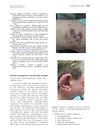
A 72-year-old man was diagnosed with a rare skin form of Rosai-Dorfman disease after years of misdiagnosis.
 88 citations
,
August 2019 in “Nature communications”
88 citations
,
August 2019 in “Nature communications” Researchers found a specific immune receptor in patients that causes severe skin reactions to a drug.
July 2024 in “Journal of Investigative Dermatology” 5 citations
,
March 2020 in “Thoracic Cancer” CT-707 is effective and safe for treating certain Chinese lung cancer patients.
37 citations
,
May 1998 in “Journal of Dermatological Science” Basal cell carcinoma shows keratin patterns similar to undifferentiated hair follicle cells.
 November 2023 in “Journal of Investigative Dermatology”
 γδTregs can protect hair follicles from alopecia areata and may help regrow hair.
 February 2016 in “The journal of allergy and clinical immunology/Journal of allergy and clinical immunology/The journal of allergy and clinical immunology”
 A new TP63 mutation was found in a baby with EEC syndrome, showing the need for TREC testing to check for immune issues.
 November 2023 in “The journal of investigative dermatology/Journal of investigative dermatology”
 ARQ-234, a protein designed to treat atopic dermatitis, shows increased effectiveness in early testing.
 April 2023 in “Journal of Investigative Dermatology”
 An elderly woman's upper lip lump, thought to be a mucocele, was actually a rare type of lymphoma usually found on legs, treated successfully with chemotherapy and radiation.
August 2021 in “The journal of investigative dermatology/Journal of investigative dermatology” TAGX-0003 protected hair follicles and reversed alopecia areata in a mouse model.
87 citations
,
January 1999 in “British Journal of Dermatology” Trichoblastic fibroma and basal cell carcinoma are similar but different from trichoepithelioma.
 April 2024 in “Bioscience trends”
 Higher levels of certain DNAs in blood may indicate hair follicle damage in alopecia areata patients.
 February 2025 in “PubMed”
 CS12192 effectively treats alopecia areata with better safety than current options.
November 2024 in “Journal of Investigative Dermatology” γδT cells can protect hair follicles from alopecia areata and promote hair regrowth.
48 citations
,
March 2003 in “International Journal of Cancer” DMBT1 and galectin-3 may help suppress epithelial skin cancer.
 4 citations
,
August 2017 in “Journal of cutaneous pathology”
4 citations
,
August 2017 in “Journal of cutaneous pathology” An 8-year-old girl had a rare, benign skin tumor on her forehead.
 September 2025 in “Experimental & Molecular Medicine”
 Small molecules KY19382 and KY19334 may help treat skin cancer by reducing CDK1 levels and blocking harmful cell signals.
1 citations
,
February 2012 in “InTech eBooks” CK7 and CK20 help identify and classify tumors for accurate cancer diagnosis.
September 2016 in “Journal of Dermatological Science” Hair follicles produce IL-7, which is essential for certain skin lymphoma cells to survive.
 140 citations
,
March 2013 in “The journal of immunology/The Journal of immunology”
140 citations
,
March 2013 in “The journal of immunology/The Journal of immunology” Memory regulatory T cells need IL-7, not IL-2, to stay in peripheral tissues.
2 citations
,
May 2022 in “The journal of immunology/The Journal of immunology” BST2 protein and certain T cells increase in early alopecia areata.
11 citations
,
September 2019 in “The journal of investigative dermatology/Journal of investigative dermatology” A specific group of skin stem cells was found to help maintain hair follicle cells.
 January 2016 in “Human & Experimental Toxicology”
 A specific DNA sequence caused hair loss in male mice by activating immune cells and increasing a certain immune signal.
 August 2016 in “Journal of Investigative Dermatology”
 Blocking the CCR5 receptor may be a new way to treat hair loss from alopecia areata.
16 citations
,
November 2005 in “Journal of Clinical Pathology” CD1d expression in scalp skin and hair follicles changes with the hair cycle and may help protect against microbes.
 April 2023 in “The journal of investigative dermatology/Journal of investigative dermatology”
 People with alopecia areata have fewer IL-10 producing immune cells, which might contribute to the condition.
4 citations
,
September 2011 in “Journal of the American Academy of Dermatology” A man developed a skin cancer called folliculotropic mycosis fungoides after a kidney transplant.
2 citations
,
May 2023 in “The Journal of Immunology” NXC736 significantly reduced hair loss in mice with alopecia areata.