 1 citations
,
July 2018 in “Elsevier eBooks”
1 citations
,
July 2018 in “Elsevier eBooks” Triple horizontal scalp biopsies are 98% accurate in diagnosing hair loss, better than single biopsies.
4 citations
,
September 2020 in “Journal of Cutaneous Pathology” 13 citations
,
June 2011 in “PubMed” The patient improved significantly after treatment, with only one small scar remaining.
 11 citations
,
May 1976 in “Archives of Dermatology”
11 citations
,
May 1976 in “Archives of Dermatology” Starving yourself can cause hair loss, but stopping the diet can improve it.
 March 2023 in “Journal of Cosmetic Dermatology”
 A genetic variant linked to hair thinning in Japanese women was found.
January 1976 in “Revista de Estudios Agrosociales” Frontal fibrosing alopecia and vitiligo might be linked by similar immune issues.
17 citations
,
April 1997 in “American Journal of Dermatopathology” PC-associated alopecia has unique microscopic features.

Aluminum phosphide poisoning can cause horizontal nail grooves and hair loss.
 16 citations
,
July 2006 in “International Journal of Oral and Maxillofacial Surgery”
16 citations
,
July 2006 in “International Journal of Oral and Maxillofacial Surgery” The triple rotation scalp flap technique successfully reconstructed a man's scalp with natural-looking hair growth and minimal scarring.
April 2024 in “International Journal of Women’s Dermatology” Lichen planopilaris should be considered in diagnosing scarring hair loss in Black women.
3 citations
,
April 2018 in “Journal of Investigative Dermatology” CCCA may be a fibroproliferative disorder, and anti-fibrotic therapies could help.
 February 2026 in “Nature Communications”
 Inhibiting connective tissue sheath contraction may improve hair growth in male pattern baldness.
264 citations
,
October 1958 in “Archives of Dermatology” A 4-year-old girl has a rare hair condition causing fragile, short hair.
 10 citations
,
June 2001 in “International Journal of Cosmetic Surgery and Aesthetic Dermatology”
10 citations
,
June 2001 in “International Journal of Cosmetic Surgery and Aesthetic Dermatology” Splitting single-hair grafts seems to improve perceived hair fullness without affecting growth, intact grafts grow slightly better, and the Mantis microscope is clear but slower without reducing damage to grafts.
February 2013 in “Journal of the American Academy of Dermatology”  October 2024 in “Dermatology Practical & Conceptual”
 Using dermoscopy improves diagnosis of scalp and hair disorders in children.
 April 2016 in “Expert opinion on orphan drugs”
 There are various treatment options for frontal fibrosing alopecia.
 January 2020 in “Clinical dermatology open access journal”
 Changing certain hairstyles can prevent worsening hair loss in Mexican women.
20 citations
,
January 2014 in “International Journal of Oral and Maxillofacial Surgery” Using superficial temporal fascia helps prevent Frey syndrome after parotid surgery.
July 2019 in “Medical Science and Discovery” Early diagnosis and treatment can prevent or delay frontal fibrosing alopecia progression in postmenopausal women.
 10 citations
,
December 2010 in “British Journal of Dermatology”
10 citations
,
December 2010 in “British Journal of Dermatology” After menopause, some women lose scalp hair and gain facial hair, with patterns suggesting different underlying causes.
28 citations
,
September 2013 in “Biogerontology”  9 citations
,
January 2017 in “Annals of Dermatology”
9 citations
,
January 2017 in “Annals of Dermatology” The study found genetic differences related to hair development that may explain hair loss in a patient with Trichorhinophalangeal syndrome type I.
 February 2023 in “Cosmoderma”
 An infant with complete hair loss was diagnosed with a genetic disorder affecting hair growth.
 September 2017 in “Springer eBooks”
 Older East and Southeast Asian men need less hair density for hair restoration satisfaction, and natural hairline features should guide surgery plans.
9 citations
,
June 2017 in “American journal of ophthalmology. Case reports” A new mutation in the CDH3 gene causes hair loss and vision problems in a young girl.
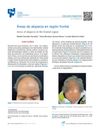 January 2025 in “Revista del Centro Dermatológico Pascua”
 Early diagnosis and treatment can help manage fibrosing alopecia in older women.
2 citations
,
June 2021 in “Sultan Qaboos University medical journal” Familial frontal fibrosing alopecia is rare, mostly affects women, and often occurs between sisters or mother-daughter pairs.
 1 citations
,
December 2018 in “Journal of genetic medicine”
1 citations
,
December 2018 in “Journal of genetic medicine” A small change in the TRPS1 gene leads to a less severe form of a syndrome affecting hair, nose, and finger development.
 2 citations
,
August 2019 in “International Journal of Cosmetic Science”
2 citations
,
August 2019 in “International Journal of Cosmetic Science” Older age and certain lifestyles are linked to thinner, weaker hair, while how you see your hair relates to its thickness.