13 citations
,
February 2025 in “ChemMedChem” Lipid nanoparticles improve treatment delivery and are key to future therapies, but challenges in manufacturing and safety remain.
15 citations
,
June 2021 in “International Journal of Molecular Sciences” CMC2.24 and CMC2.23 reduce melanin safely and effectively.
1 citations
,
December 2025 in “International Journal of Molecular Sciences” Chitosan-based nanocomposites, especially with polyphenols, show promise for treating chronic wounds.
January 2018 in “Refubium (Universitätsbibliothek der Freien Universität Berlin)” Nanocrystals and nanoparticles can enhance drug delivery for skin applications by improving solubility and dissolution rates.
 August 2023 in “International Journal of Molecular Sciences”
 Liposomes show promise for delivering CRISPR for gene editing but face challenges like delivery efficiency and safety concerns.
 21 citations
,
January 2019 in “Elsevier eBooks”
21 citations
,
January 2019 in “Elsevier eBooks” Green-synthesized nanoparticles can effectively target cancer cells, reducing side effects and improving treatment.
22 citations
,
February 2024 in “Heliyon” Exploring fermented foods from various regions can lead to discovering new fibrinolytic enzymes.
November 2025 in “Drug Delivery and Translational Research” 44 citations
,
November 2012 in “International journal of nanomedicine” A new method improves silicone oil coating on hair, enhancing moisture and lubrication.
12 citations
,
May 2022 in “Plants” Nano-phytopharmaceuticals show promise but need more research for safe, effective use in treating certain disorders.
25 citations
,
January 2024 in “International Journal of Nanomedicine” The hydrogel is safe, reduces oxidation, and helps heal wounds effectively.
7 citations
,
March 2023 in “Arabian Journal of Chemistry” Cepharanthine may help treat COVID-19 by targeting multiple pathways.
7 citations
,
April 2025 in “Science Advances” Silicate-based therapy may help treat inflammatory heart disease by reducing immune inflammation.
 30 citations
,
December 2017 in “Advanced Healthcare Materials”
30 citations
,
December 2017 in “Advanced Healthcare Materials” Nanoencapsulation creates adjustable cell clusters for hair growth.
31 citations
,
September 2019 in “Acta Pharmacologica Sinica” Encapsulating curcumin in nanoparticles improves its stability, release, and absorption in the body.
 109 citations
,
March 2011 in “Journal of controlled release”
109 citations
,
March 2011 in “Journal of controlled release” New micelle solutions greatly improve skin delivery of certain antifungal drugs.
 42 citations
,
July 2014 in “European journal of pharmaceutics and biopharmaceutics”
42 citations
,
July 2014 in “European journal of pharmaceutics and biopharmaceutics” Caffeine nanocrystals for skin products stay stable with the right stabilizer, but grow in size at higher temperatures.
January 2018 in “ScholarWorks @UVM (University of Vermont)” Selenium in proteins helps prevent over-oxidation and supports chemical reversibility.
 February 2026 in “Nano Research”
 A special treatment speeds up chronic wound healing by fixing cell energy issues and reversing aging in cells.
 29 citations
,
June 2014 in “Drug delivery”
29 citations
,
June 2014 in “Drug delivery” The new formulation improved the skin absorption of the drug Thiocolchicoside.
1 citations
,
June 2016 in “DOAJ (DOAJ: Directory of Open Access Journals)” The Enterobacter isolate AMS1-S8 is effective for removing selenium from wastewater.
 1 citations
,
December 2022 in “Frontiers in Bioengineering and Biotechnology”
1 citations
,
December 2022 in “Frontiers in Bioengineering and Biotechnology” New pharmaceutical biomaterials, especially nanomaterials, show promise for improving cancer treatment and disease diagnosis.
9 citations
,
October 2025 in “MedComm” PROTACs offer new ways to treat hard-to-target diseases, with promising drugs for cancer in advanced trials.
 82 citations
,
December 2015 in “Nanomedicine”
82 citations
,
December 2015 in “Nanomedicine” Nanoparticle systems make cancer treatment less toxic.
 January 2026 in “Journal of Emerging Technologies and Innovative Research”
 Zinc oxide nanoparticles made from Tridax procumbens leaves show strong antibacterial and anticancer effects.
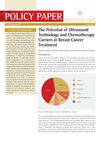
Ultrasound and nanocarriers could make breast cancer treatment safer and more effective.
The research shows how certain drug molecules form stable structures with polymers, which could help create new drug forms.
 January 2026 in “Nanoscale Advances”
 The nanocomposite effectively targets lung cancer cells without harming normal cells.
October 2014 in “Microscopy” The method using ionic liquid improves observation of cell structures with less damage.