May 2014 in “Nursing Made Incredibly Easy!” Pancreatic cancer had a very low survival rate and was hard to treat effectively.
 1 citations
,
September 2020 in “Endocrinology, Diabetes & Metabolism Case Reports”
1 citations
,
September 2020 in “Endocrinology, Diabetes & Metabolism Case Reports” The conclusion is that thorough investigation of hypertension and hormonal dysfunctions is important, and there may be a link between these conditions and cancer.
4 citations
,
December 2024 in “International Journal of Dermatology” Mohs micrographic surgery is more effective than surgical excision for treating pilomatrix carcinoma, with no recurrences.
July 2019 in “Journal of the ASEAN Federation of Endocrine Societies” The woman had a rare adrenal tumor removed, and she recovered well with no signs of the tumor returning.
 3 citations
,
August 2024 in “Frontiers in Oncology”
3 citations
,
August 2024 in “Frontiers in Oncology” Targeted radionuclide therapy shows promise for improving head and neck cancer treatment but needs more research.
 14 citations
,
January 2001 in “Current Treatment Options in Oncology”
14 citations
,
January 2001 in “Current Treatment Options in Oncology” Treat limited stage small cell lung cancer with chemotherapy and radiation, and consider preventive brain radiation for better survival chances.
 5 citations
,
May 2013 in “The American Journal of Dermatopathology”
5 citations
,
May 2013 in “The American Journal of Dermatopathology” The author now believes tricholemmal carcinoma is a rare type of infundibular squamous cell carcinoma and more research is needed on these tumors.
 180 citations
,
January 2003 in “American Journal of Clinical Dermatology”
180 citations
,
January 2003 in “American Journal of Clinical Dermatology” Menopause can lead to skin and hair problems due to hormonal changes, but hormone replacement therapy might help slow these effects.
 141 citations
,
January 1984 in “Journal of The American Academy of Dermatology”
141 citations
,
January 1984 in “Journal of The American Academy of Dermatology” Pregnancy can cause skin darkening, varicose veins, more sweating, hair growth, hair loss after birth, nail changes, and gum inflammation.
 96 citations
,
January 1997 in “Clinics in Dermatology”
96 citations
,
January 1997 in “Clinics in Dermatology” Pregnancy can cause skin pigmentation, stretch marks, and changes in hair, nails, and sweat glands, with most resolving after birth.
 80 citations
,
April 2017 in “Frontiers in Pharmacology”
80 citations
,
April 2017 in “Frontiers in Pharmacology” PDRN helps repair tissue and improve wound healing with a high safety profile.
 78 citations
,
November 2008 in “Fertility and Sterility”
78 citations
,
November 2008 in “Fertility and Sterility” Amenorrhea is relatively rare and initial testing should check FSH, TSH, and prolactin levels.
 54 citations
,
April 2010 in “Baillière's best practice and research in clinical endocrinology and metabolism/Baillière's best practice & research. Clinical endocrinology & metabolism”
54 citations
,
April 2010 in “Baillière's best practice and research in clinical endocrinology and metabolism/Baillière's best practice & research. Clinical endocrinology & metabolism” Impaired androgen production in 46,XY DSDs causes ambiguous genitalia and requires long-term care.
 38 citations
,
October 2006 in “Fertility and Sterility”
38 citations
,
October 2006 in “Fertility and Sterility” The document concludes that identifying the cause of amenorrhea is crucial for proper treatment.
 30 citations
,
July 2004 in “Fertility and Sterility”
30 citations
,
July 2004 in “Fertility and Sterility” Amenorrhea is when a woman doesn't have periods, with primary amenorrhea starting by age 15 or within five years of breast development, and secondary amenorrhea when periods stop for three months. It affects 3-4% of women not pregnant, breastfeeding, or in menopause, mainly due to polycystic ovary syndrome, hypothalamic amenorrhea, hyperprolactinemia, and ovarian failure.
 28 citations
,
January 1991 in “Reproductive Toxicology”
28 citations
,
January 1991 in “Reproductive Toxicology” Finasteride temporarily lowers male rat fertility without affecting libido.
 21 citations
,
September 2004 in “Fertility and Sterility”
21 citations
,
September 2004 in “Fertility and Sterility” Amenorrhea, or the absence of periods, should be evaluated by age 15 or within five years of early breast development, and is most commonly caused by conditions like polycystic ovary syndrome and hypothalamic amenorrhea.
 11 citations
,
March 2020 in “American Journal of Medical Genetics Part A”
11 citations
,
March 2020 in “American Journal of Medical Genetics Part A” A mutation in the EDNRA gene causes Oro-Oto-Cardiac syndrome, affecting face and heart development.
 9 citations
,
May 2017 in “Gynecological Endocrinology”
9 citations
,
May 2017 in “Gynecological Endocrinology” Transvaginal hydrolaparoscopy is effective for increasing ovulation and pregnancy rates in women with PCOS who didn't respond to clomiphene.
 9 citations
,
August 1952 in “The Journal of Clinical Endocrinology & Metabolism”
9 citations
,
August 1952 in “The Journal of Clinical Endocrinology & Metabolism” A 17-year-old female with adrenogenital syndrome produces very high levels of androgens, which prevent complete feminization despite high estrogen doses.
 5 citations
,
September 2016 in “Journal of Cosmetic Dermatology”
5 citations
,
September 2016 in “Journal of Cosmetic Dermatology” Nourkrin® with Marilex® may increase hair count by 35.7% in postpartum hair loss.
 4 citations
,
September 2011 in “American Journal of Clinical Dermatology”
4 citations
,
September 2011 in “American Journal of Clinical Dermatology” Ethinylestradiol/chlormadinone acetate may be an effective and well-tolerated treatment for skin conditions caused by excess androgens.
 2 citations
,
January 2023 in “Annals of Dermatology”
2 citations
,
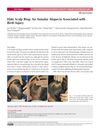
January 2023 in “Annals of Dermatology” A hairless patch on a boy's scalp from birth injury improved with minoxidil treatment.
 2 citations
,
January 2005 in “The Japanese Journal of Veterinary Dermatology”
2 citations
,
January 2005 in “The Japanese Journal of Veterinary Dermatology” Abnormal adrenal function is not the cause of alopecia in Pomeranians; it may be due to breed-specific hormones.
 1 citations
,
October 2022 in “Curēus”
1 citations
,
October 2022 in “Curēus” Diagnosing simple-virilizing congenital adrenal hyperplasia can be difficult and requires thorough testing and expert advice.
 1 citations
,
May 2018 in “Clinical chemistry”
1 citations
,
May 2018 in “Clinical chemistry” The girl's unexpected pubic hair growth led to a diagnosis different from complete androgen insensitivity syndrome.
 October 2025 in “Animal Bioscience”
 Key genes linked to important traits in Chinese sheep and goats have been identified, but challenges remain in breeding improvements.
 July 2023 in “Journal of ayurveda and integrated medical sciences”
 Ayurvedic treatment can help manage PCOS symptoms.
 May 2023 in “International journal of Ayurveda and pharma research”
 Ayurvedic treatment helped a woman with PCOS conceive and deliver a healthy baby.

Different drugs are used to manage breeding, prevent or end pregnancy, and treat reproductive issues in dogs and cats.