 April 1974 in “Pediatric Research”
 The Naked (N) trait in mice is linked to lower glycine and tyrosine in hair proteins.
 1 citations
,
June 2023 in “Journal of applied crystallography”
1 citations
,
June 2023 in “Journal of applied crystallography” The technique showed that human hair has two main parts, with 68% being rigid and the rest flexible, and water swelling affects its structure.
175 citations
,
December 1980 in “Archives of Dermatology” Trichothiodystrophy is a condition with brittle hair and various physical and mental issues due to low sulfur in proteins.
 June 2023 in “British Journal of Dermatology”
 The protein called small nuclear ribonucleoprotein polypeptide E is identified as a cause of a type of hair loss without other symptoms.
 April 2018 in “Journal of Investigative Dermatology”
 The keratin network in mouse skin changes during cornification and affects the skin's protective barrier.
 15 citations
,
July 2004 in “Journal of morphology”
15 citations
,
July 2004 in “Journal of morphology” Monotreme hair structure and protein distribution are similar to other mammals, but their inner root sheath cornifies differently, suggesting a unique evolution from reptile skin.
17 citations
,
July 1984 in “British journal of dermatology/British journal of dermatology, Supplement” The four patients have a unique type of ichthyosis affecting hair follicles.
27 citations
,
July 1993 in “The journal of investigative dermatology/Journal of investigative dermatology”  13 citations
,
June 2010 in “Journal of The American Academy of Dermatology”
13 citations
,
June 2010 in “Journal of The American Academy of Dermatology” A man with Cronkhite-Canada syndrome had all 20 nails detach but improved with treatment.
1 citations
,
July 1991 in “PubMed” MRI can show unusual brain changes in adrenomyeloneuropathy.
27 citations
,
July 1997 in “PubMed” The harlequin ichthyosis mouse mutation causes thick skin and early death, resembling a human skin disorder.
5 citations
,
August 2005 in “Anatomy and Embryology” Rat skin has a linear system of nerve fibers linked to hair follicles and muscles.
June 2011 in “European Journal of Pediatric Dermatology” An 11-year-old girl with hair thinning was diagnosed with monilethrix and early androgenetic alopecia.
 3 citations
,
January 2011 in “Intestinal Research”
3 citations
,
January 2011 in “Intestinal Research” Cronkhite-Canada syndrome can cause multiple gastrointestinal polyps and various physical symptoms.
 11 citations
,
December 2010 in “Archives of Dermatology”
11 citations
,
December 2010 in “Archives of Dermatology” A man with rare skin changes on his fingers was diagnosed with multiple myeloma-linked amyloidosis.
29 citations
,
January 2003 in “Genomics” A new mouse mutation causes skin and hair issues, influenced by another gene.
21 citations
,
November 1969 in “Journal of Investigative Dermatology” A new staining method clearly shows nerves around eyebrow hair follicles.
15 citations
,
April 1970 in “PubMed” Netherton's syndrome may have a familial link and doesn't always include atopy.
 March 2025 in “Molecular Medicine”
 Cholesterol helps hair grow by activating nerves and boosting hair follicle stem cells.
2 citations
,
January 1993 Trichohyalin is a versatile protein involved in hair and skin structure.
53 citations
,
August 2015 in “The Italian Journal of Pediatrics/Italian journal of pediatrics” Excessive body hair can signal complex health issues.
21 citations
,
January 2010 in “International journal of trichology” Trichoscopy can diagnose monilethrix, a genetic hair defect causing hair thinning and loss.
 12 citations
,
August 1984 in “Genetics Research”
12 citations
,
August 1984 in “Genetics Research” The N gene affects the protein makeup of mouse hair.
December 2025 in “International Journal of Advanced Biochemistry Research” Malvi cattle hair varies in color and pattern across different body regions.
34 citations
,
November 1998 in “Journal of Investigative Dermatology” A common mutation in the hHb6 gene is linked to monilethrix, but other factors may also play a role.
 26 citations
,
September 1969 in “The American journal of medicine”
26 citations
,
September 1969 in “The American journal of medicine” Cronkhite-Canada Syndrome often leads to death within 6-18 months.
5 citations
,
August 2003 in “AIDS” A new form of lipodystrophy in HIV patients causes neck fat buildup.
30 citations
,
January 2013 in “Human Mutation” A mutation in the HOXC13 gene causes hair and nail problems in a Syrian family.
187 citations
,
May 1988 in “Differentiation” Trichocytic cytokeratins are found in hair, nails, tongue, and thymus cells, showing complex regulation in tissue development.
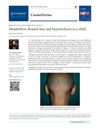 January 2026 in “Cosmoderma”
 A 9-year-old girl has a rare hair disorder causing beaded, sparse hair.