 February 2025 in “Stem Cell Research & Therapy”
 Maintaining healthy mitochondria may help treat hair loss.
85 citations
,
January 1990 
Collagen, curcumin, and glutathione can improve skin health in aging women with low estrogen.
3 citations
,
January 2025 in “International Journal of Molecular Sciences” EGCG shows strong electron transfer interactions when bonded to DPPG lipids.
 January 2025 in “Applied Sciences”
 Sulforaphane from broccoli may help treat certain cancers, hormone issues, and hair loss.
70 citations
,
May 2023 in “Molecules” Ginkgo biloba has health benefits but also contains toxic compounds, driving interest in its use in medicine and food.
 52 citations
,
January 2005 in “International journal of experimental pathology”
52 citations
,
January 2005 in “International journal of experimental pathology” Melatonin may reduce skin damage caused by X-rays in rats.
 13 citations
,
October 2012 in “Free Radicals and Antioxidants”
13 citations
,
October 2012 in “Free Radicals and Antioxidants” The red Hibiscus rosa-sinensis flower has the highest antioxidant activity.
 27 citations
,
August 2006 in “Laboratory Investigation”
27 citations
,
August 2006 in “Laboratory Investigation” SCF and ET-1 together significantly increase skin pigmentation and melanin production.
 51 citations
,
December 2003 in “The FASEB Journal”
51 citations
,
December 2003 in “The FASEB Journal” The substance AS101 can help hair grow by slowing down hair cell aging and boosting a hair growth protein.
50 citations
,
August 2021 in “Stem Cell Research & Therapy” Adipose-derived stem cells help heal radiation skin damage by reducing cell death and inflammation.
49 citations
,
November 2021 in “Annual review of pathology” Lysophospholipids like LPA and S1P are important for hair growth, immune responses, and vascular development, and could be targeted for treating diseases.
2 citations
,
June 2023 in “Research in Pharmaceutical Sciences” Bhamrung-Lohit may help with inflammation and oxidation.
January 2015 in “Journal of the turkish academy of dermatology” Phototherapy is effective in treating vitiligo.
19 citations
,
January 2023 in “ACS Omega” SEF cryogels effectively kill bacteria, stop bleeding, and speed up wound healing.
June 2026 in “Cancer Research Communications” The treatment combination is safe and effective for some patients with this type of breast cancer.
Ayurvedic treatment may improve quality of life for cancer patients undergoing chemo and radiotherapy.
 April 2017 in “Journal of Investigative Dermatology”
 Chemotherapy and radiation therapy cause skin and hair damage by altering gene expression and signaling pathways.
9 citations
,
April 2006 in “International Journal of Dermatology” DFMO may help control hair growth and treat cancer.
 159 citations
,
July 2006 in “Endocrine Reviews”
159 citations
,
July 2006 in “Endocrine Reviews” Estrogens significantly influence hair growth by interacting with receptors in hair follicles and may help regulate the hair growth cycle.
99 citations
,
July 2005 in “Ultramicroscopy” The research improved understanding of hair and skin properties across different ethnicities and conditions.
97 citations
,
January 2005 in “Wear” Human hair and skin friction vary by ethnicity, hair type, and environmental conditions.
 70 citations
,
January 2000 in “Drug Development Research”
70 citations
,
January 2000 in “Drug Development Research” New butyric acid prodrugs show promise for cancer treatment, anemia management, and protecting hair from chemotherapy damage.
 20 citations
,
November 2013 in “The Open Cancer Journal”
20 citations
,
November 2013 in “The Open Cancer Journal” Hair loss from cancer treatment is very distressing for women due to its impact on self-image and social stigma.
 20 citations
,
July 2010 in “Skin Research and Technology”
20 citations
,
July 2010 in “Skin Research and Technology” Aging makes hair thinner and rougher, with less clear edges.
 19 citations
,
March 2013 in “Journal of Cutaneous Pathology”
19 citations
,
March 2013 in “Journal of Cutaneous Pathology” The study found unique skin changes in a rare type of alopecia linked to a skin condition called linear morphea.
 10 citations
,
August 2012 in “Current Problems in Pediatric and Adolescent Health Care”
10 citations
,
August 2012 in “Current Problems in Pediatric and Adolescent Health Care” Hair changes can indicate systemic diseases or medication effects.
 8 citations
,
September 2015 in “Journal of the European Academy of Dermatology and Venereology”
8 citations
,
September 2015 in “Journal of the European Academy of Dermatology and Venereology” Hair and scalp pain is more common and severe in breast cancer patients on chemotherapy than those on tamoxifen.
 8 citations
,
February 2005 in “British Journal of Haematology”
8 citations
,
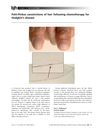
February 2005 in “British Journal of Haematology” Chemotherapy caused the patient's hair to have alternating thick and thin segments.
8 citations
,
September 2015 in “Radiotherapy and oncology” Scalp cooling does not stop hair loss from radiotherapy.